- Tuesday, 9 June 2026

Coherent Higher Education Model In Need


It has become increasingly clear that Nepal’s higher education system has reached a point of directionlessness in its further development and disorder in its management. Over the past seven decades, the country has expanded universities and colleges across the nation with little consideration for quality or relevance. Growth without a guiding framework or model has produced confusion, duplication, and mediocrity. Orchestrated dramas are played in the name of meritocracy. There is a growing realisation that the current quality of higher education in Nepal cannot compete with international standards, prompting many Nepali students to pursue studies abroad.
It should be noted that a model of higher education provides far more than a mere plan to satisfy politicians or those close to power—as often happens in Nepal. A coherent higher education model serves as a framework that defines institutional types, roles, relationships, and responsibilities. It is also anchored in a clear vision that integrates higher education with global trends and national development goals through research and human resource development. Without such a model, the sector grows in a fragmented manner, shaped by political, regional, or private interests rather than national priorities. This is exactly what is happening in Nepal.
Political interests
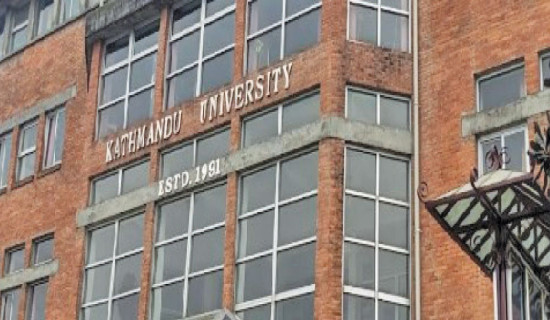
At present, Nepal’s higher education landscape is a patchwork of inconsistency under the influence of political interests. Universities are established arbitrarily; they differ in how they are named, governed, funded, and guided. They are a clear demonstration of the absence of a national vision of higher education. For instance, Tribhuvan University (TU) is led by the Prime Minister as Chancellor, Gandaki University by a professor as President, and Bagmati University by a professor as a trustee member. Affiliated colleges become constituents under political pressure, not based on academic assessment. Does this not reflect a confused mindset among the country’s leadership in governance? Such inconsistency, of course, undermines credibility and coherence. It fails to inspire today’s students, who have instant access to information about global higher education standards.
As a result, students increasingly choose to study abroad, abandoning Nepali colleges that once attracted many teachers and students. Foreign university-affiliated colleges, often operating with the tacit support of the Ministry of Education (MoE) and the University Grants Commission (UGC), further entice students overseas for hidden benefits. All this contributes to the decline of universities like TU, which is gradually losing its gained global ranking in its history. There is a glaring absence of professionals within both TU and the UGC who understand these dynamics and their damaging effects on the sector—particularly the student exodus.
When TU was established in 1959, it carried the sole responsibility for higher education in the country. Today, Nepal has nearly two dozen universities, hundreds of constituent and affiliated colleges, and tens of thousands of students enrolled nationwide. Yet this numerical expansion has not resulted in improved quality or relevance. The time has therefore come for Nepal to adopt a clear and coherent model for higher education development—one that gives purpose, structure, and direction to the entire system. Valuable insights can be drawn from models in countries such as the United States, the United Kingdom, and India.
Most Nepali universities offer overlapping programmes and compete for limited resources and students. Governance structures remain highly centralised and politicised, leaving little space for innovation. The MoE has become a politically driven institution, lacking ethical professionals who appreciate university autonomy and recognise the sector’s potential to contribute to national development. Adding to the problem is the pervasive politicization of student and teacher organizations, which prioritise political loyalties over academic excellence.
Graduates, meanwhile, face a widening gap between education and employment. Employers often report that university degrees fail to match market needs, while young graduates struggle to find meaningful work. This mismatch exposes a deeper structural flaw: the absence of a national design ensuring that universities collectively serve Nepal’s educational and developmental goals. Recent surveys reveal that many +2 graduates are dissatisfied with the quality of higher education offered in Nepal, leading them to opt for studies abroad and causing several campuses to shut down.
Nepal need not reinvent the wheel. Many successful countries have already developed models that balance access, quality, and relevance. One such model is the ‘California Model’ of higher education in the United States, which organises the system into three tiers—research universities, state universities, and community colleges—each with distinct missions but coordinated goals. This structure ensures mass access without compromising excellence. During my tenure as Vice-Chancellor, TU developed, with the involvement of senior professors and academic persons, the ‘TU Vision 2020–2030’ in 2018, inspired by the California Model. It was widely recognised that adapting lessons from this model could help restructure TU for greater quality and relevance.
Transformation
Unfortunately, subsequent leadership after 2019 ignored this initiative, allowing the university to fall further in global rankings. Nepal could still learn from this model to design a national higher education framework that embraces diversity while maintaining coherence among all institutions. It is necessary to prepare a competent plan combining both the Californian insights and Nepali vision for restructuring the whole system of Nepali higher education. A coherent model would transform Nepal’s fragmented system into a well-organised higher education network. It would provide direction, ensure quality, and connect education with national development priorities. Such a model would help Nepal shift from expansion to excellence—producing skilled, innovative, and globally competitive graduates.
This would, in turn, assure young +2 graduates that quality higher education is attainable within the country. Nepal should learn from how the Nepali +2 system, without adequate support of the government, was fully successful in stopping SLC graduates from going to India and elsewhere for further education. To achieve this transformation, the government, universities, educators, and policymakers must engage in a ‘national dialogue’. Reform should not be limited to establishing more universities but should instead focus on defining how each institution contributes to a national vision.
Only when Nepal develops and adopts a coherent model of higher education will its universities truly become engines of transformation—preparing the next generation not only for employment but also for leadership, innovation, and nation-building. This is the urgent demand of our time.
(The author is former vice-chancellor of Tribhuvan University.)