- Sunday, 7 June 2026

Resource centres sever ties of disabled children with families

By Raman Paudel, Kathmandu, Dec. 7: For the past few months, a young boy with a disability has been begging at Melamchi Bazar, Sindhupalchok, after escaping from a hostel operated by an organization.
According to locals, the26-year-old boy is not only physically disabled but has also developed psychological issues. Looking at him in such a condition, many people in Melamchi criticize the organization from which he fled. In fact, the boy developed his psychological instability only after staying in the hostel.
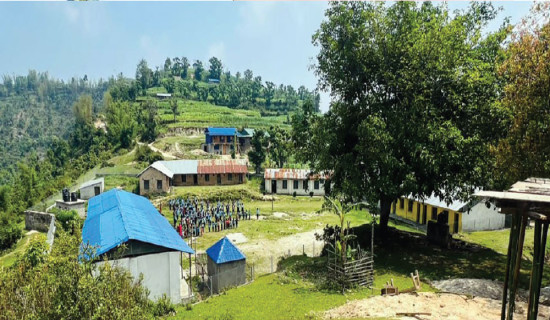
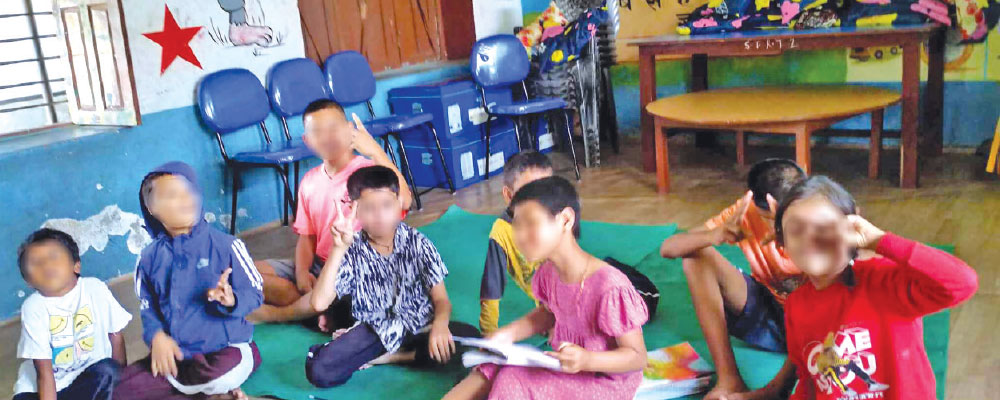
Like him, more than 8,000 children with disabilities are currently spending difficult lives in about 400 hostels under the name of education, as directed by their donors. At the same time, they have been deprived of the opportunity to reintegrate into their families, relatives, communities, cultures, and rituals.
Rabindra Panta, hailing from Kavre and a person with a disability, has been operating an IT company with five employees. Panta lives with his family in Kadaghari, Kathmandu.
He has created jobs for at least five youths with disabilities and also provides IT-based part-time work to many freelancers. Living with a physical disability and using a three-wheeler motorbike, Panta never imagined he would have such a lifestyle. He is currently known as a young entrepreneur and is considered a role model for many youths.
However, he has left behind a dark history of hostel life in the name of education. In search of quality education, he spent 10 years in seven different hostels.
“I am a person with a disability, cerebral palsy to be specific. When I was around 12 years old, I was sent to a hostel operated by an organization. My legs don’t move. But that doesn’t mean I can’t do anything or think. Inside the hostel, I felt even more helpless. I consider those 10 years of my hostel life as years of dependency, shame, and discouragement. In fact, I couldn’t enjoy my struggle or independent life inside the hostel,” recalled Panta.
He added that the organization instilled hesitation, shame, dependency, and deep social stigma in him. “You can’t imagine what it feels like to be sheltered for 10 years, shifting through seven hostels without your consent. We were often made to queue up to welcome donors. The hostel operators would introduce us as helpless children, which always triggered painful reflections. When my mom visited me, we both cried at the hostel gate before she left. It took me two years after escaping the hostel to overcome the trauma,” Panta shared emotionally.
Similar to Panta, Shiva Acharya shares a story of spending many years in a hostel, during which he lost his identity and dignity.
Acharya, a blind person and also a rights activist from Gulmi district, spent his entire school life in a hostel in Pokhara. Unfortunately, he was never told his surname or date of birth, and he didn’t even know where his village was.
“The international-standard education was quite good. However, I feel like I lost everything I had in my family and community. I never knew any festivals, including even my own date of birth and surname,” said Acharya.
After leaving the hostel, he struggled to communicate with family members and neighbours. In fact, he found it difficult to reintegrate into his community.
He later realized that Nepali society often views persons with disabilities as bichara—a term implying pity, curse, and the need for charity.
“We no longer need grace; we seek our rights. As a blind person who can walk, my challenge lies in the streets that are not blind-friendly. Since the state hasn’t built accessible roads, forcing us to stay in hostels is not a solution,” Acharya argued.
“We need rights, not sympathy”
Ordinary people commonly consider persons with disabilities as those in need of sympathy. The Nepali term bichara is used widely and is offensive. “Naturally, we are all equal. Someone is black, someone is white, someone has hands, someone doesn’t. It’s diversity, not discrimination. Colour, height, weight, and the structure of body parts are not discriminated by nature,” said Acharya.
Right to education within family
Research shows that resource classes in hostels neither teach them independence nor reintegrate children with their families. Rather, these are being noticed as symbols of social stigma or a shelter of sympathy.
The Constitution of Nepal ensures that every person with a disability has the right to family and education. The essence of the constitution is to make local governments and the concerned communities responsible and active regarding education and social security of children with disabilities.
However, in reality, the government allocates a large amount of budget to resource classes and hostels, rather than local levels and communities every year.
Many children, including youths, prefer to stay with their families rather than in resource classes. They expect the facilities provided by organizations to be available within their families.
Sudarshan Subedi, a rights activist and former president of the National Federation of Disabled, argued that many children are forced to forfeit their right to stay at home in the name of education. “More than 8,000 children have been separated from their families, relatives, and society in the name of education. Living in a hostel is not their choice, as most hostels fail to maintain basic disability-friendly facilities,” said Subedi.
According to a recent research conducted by three TU professors, Ganesh Bahadur Singh, Dhruba Prasad Niure, Rabindra Shiwakoti, many resource classes and hostels fail to provide teaching materials, teacher training, decent living standards, food hygiene, disability-friendly structures, modern technology, and parental participation.
Why are resource classes getting outdated?
Nepal has four decades of experience with resource classes for children with disabilities. Introduced in the 1980s as temporary support, they were meant to provide educational access.
Many rights activists argue that after 40 years, the system remains limited and segregated, proving the model has failed. Even DANIDA, the main Danish donor, now acknowledges that the concept was a mistake.
Instead of promoting inclusion, resource classes entrenched segregation, concentrated resources in a few settings, and slowed systemic reform.
Activists also argue that the government is confused about the concepts of rehabilitation, habilitation, and the role of organizations operating rehabilitation centres.
Manish Prasai, a rights activist and person with a disability, claimed that although the government has signed the UN Convention on the Rights of Persons with Disabilities (CRPD), constitutional contradictions still exist.
“While the concept of rehabilitation centres is supposed to be community-run, the government seems to consider NGO-run hostels as rehabilitation centres. The government allocates a large budget to these hostels, whereas actual community-based rehabilitation receives no budget,” Prashai said.
He emphasized that services for persons with disabilities should be provided through a rights-based approach rather than a welfare-based one.
The research by the three professors suggests that closing residential resource classes is not about reducing support; rather, it is about redirecting resources toward inclusive, municipality-based education that aligns with Nepal’s rights commitments.
Every rupee spent on segregation is a rupee taken away from inclusion. Nepal’s federal government must support municipalities and invest in mainstream schools, teacher capacity, and accessible environments so that children with disabilities can live with their families.
A research from six resource centres in six districts shows that, despite national and international laws prohibiting institutionalizing children with disabilities in the name of education or protection, many are still in institutional care in Nepal.
The CRPD ensures that children with disabilities have the right to inclusive education within their families and communities. It also states that they should not be separated from their families against their will. Nepal has also committed to the International Declaration on De-institutionalization. However, several government actions contradict these commitments.
Nepal currently has 380 resource classes, 33 special schools, and 23 integrated schools. Yet more than 8,000 children remain in hostels in the name of education and protection.
Resource classes established under the Basic Primary Education Programme of 1990 were meant to support inclusive education, but their implementation has contradicted this purpose.
Parents are often forced to send their children to resource classes because no services are available in their communities. According to research, 66 per cent of parents report that there are no disability-related services in their communities. Teachers lack training, and 25 per cent of parents say there is no nearby school accessible to their children. Many parents are poor and unaware of alternatives.
The research also found that 57 per cent of children are frustrated for being separated from their families. Thirty-eight per cent are dissatisfied with the institution’s services, including food, care, clothing, and sanitation.
Many experience poor learning, discrimination, and abuse. Most children feel lonely and miss their families and cultural functions, including festivals.
The study also revealed that the annual investment per child in residential resource classes is Rs. 130,000, while for children studying in mainstream inclusive classes, it is only Rs. 18,000, more than seven times less. Despite this huge cost difference, learning outcomes for children with disabilities remain unsatisfactory.
The research further found that 72 per cent of parents believe it is necessary to send their children away from home, but they would prefer not to if good schools and services were available nearby.
What is the solution?
Rights activists, including many who spent long periods in various hostels, suggest that NGO-run hostels are not the choice of persons with disabilities.
Instead, local governments should support families and provide community-based services, as emphasized by the constitution, international standards, and natural justice that protect the right to family life.
In the meantime, the previous government had attempted to amend some laws on disability rights. However, the government’s approach was not clear on fundamental issues such as rehabilitation centres and habilitation.
And also, what are the roles of rehabilitation centres and habilitation centres? Rights activist Shiva Acharya suggested that the government should consult with affected people and experts while responding to the issues.