- Sunday, 3 May 2026

Honey Bees On The Decline
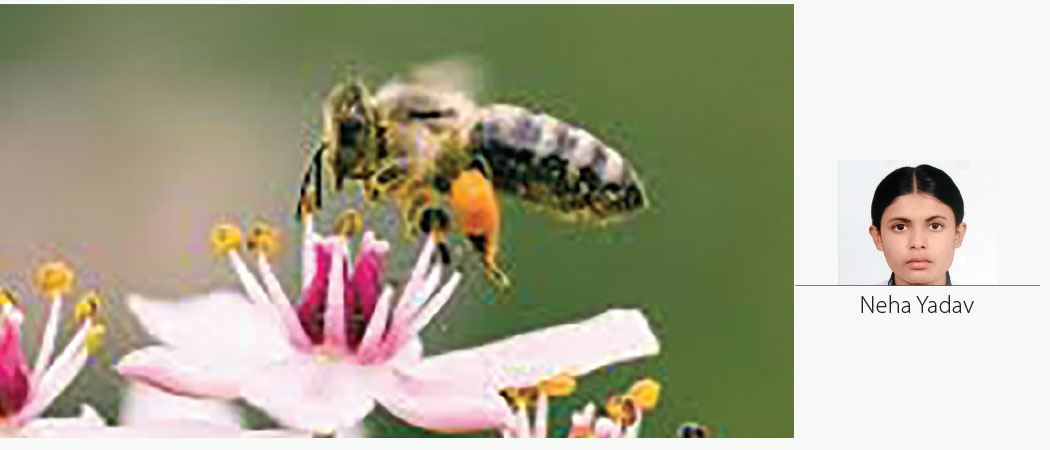

Earth shelters two to four-legged animals that walk on the ground to peculiar flying organisms; many colourful and a few pallid. Amongst the inordinate creatures that call “Earth” home are an insect of diverse types and sizes. Best known for their ability to convert sweet nectar to golden antiseptic honey – honey-bee.
Renowned for their camaraderie, honey bees work together; however, the task is divided between them based on their bodily size and gender. The largest bee is called the queen bee, who undertakes the responsibility of laying eggs and emanating pheromone to maintain balance and control in the hive. Likewise, drone bees are the male bees whose sole task is to mate with the queen bee to facilitate the process of reproduction. Lastly, the bees that we see collect nectar and dare to sting us are called worker bees. Worker bees also oversee the security, cleanliness and nurturing of the young bees in the hive.
But, how do they convert nectar into honey? When a honey-bee wanders from flower to flower, it absorbs carbohydrates from nectar and protein from pollen. The collected material is stored in their second stomach and converted into simple and digestible sugars. After that, the bees regurgitate the sweet liquid to one another for five minutes or more to gather more enzymes. The extra inclusion of enzymes helps to preserve honey and maintain steady sugar levels. Finally, the golden liquid is deposited in honeycombs, a part of the beehive. The extra water in the liquid is dried out with their wings and the remaining substance is extracted as delicious honey.
Honey bees also produce royal jelly, which is a protein-rich substance and believed to render health benefits, though there’s a lack of evidence to back it up. They also create beeswax, an integral product in the manufacture of cosmetics and candles. Another formation of bees is beebread, which is full of antioxidants and nutrients to aid overall human health. Propolis, a widespread substance in medicinal products, is also naturally manufactured by honey bees.
The sweet service of honey bees is not just bound to mankind but also extends to the environment. When they dance back and fro from flower to flower, they spread their pollen to enable plants to reproduce and facilitate the production of different fruits and vegetables. This helps to feed all the living species on the earth and sustain our ecosystem. Likewise, many farmers are reliant on beekeeping for their livelihood.
Irrespective of their contributions, honey bees are slowly diminishing from our planet. Mostly, due to human-induced activities, they are on a large scale of decline. The unhealthy use of pesticides is making it difficult for these tiny creatures to suck pollen. Pollens are crucial for bee health as they provide imperative health benefits. Similarly, global warming has created an imbalance between plants and insects. The loss of bees has created a wide difference in the yield production and accelerated the loss of farmers.
Hence, we must adopt major to minor practices to prevent the extinction of bees. Some practices are as follows:
Utilising spaces in the balcony or one’s front yard to plant colorful and vibrant flowers, such as zinnia, lavender, to attract bees for pollination. Encourage the government to protect forests and natural areas where bees thrive. Promote reduced usage of pesticides and chemical fertilisers. Be mindful when using overhead sprinklers to water plants during daytime hours when bees are active, as the flow of water can break their wings. From beekeeping or bee protection offices in your locality to track and keep an account of the bee population and support beekeeping initiatives. Inspire adolescents, kids and youths to partake in beekeeping to boost the bee population.
Class 10
St.Mary's High School, Jawalakhel