- Friday, 5 June 2026

Trial seedling transplanting ceremony held in China–Nepal Southern Agricultural Science and Technology Park
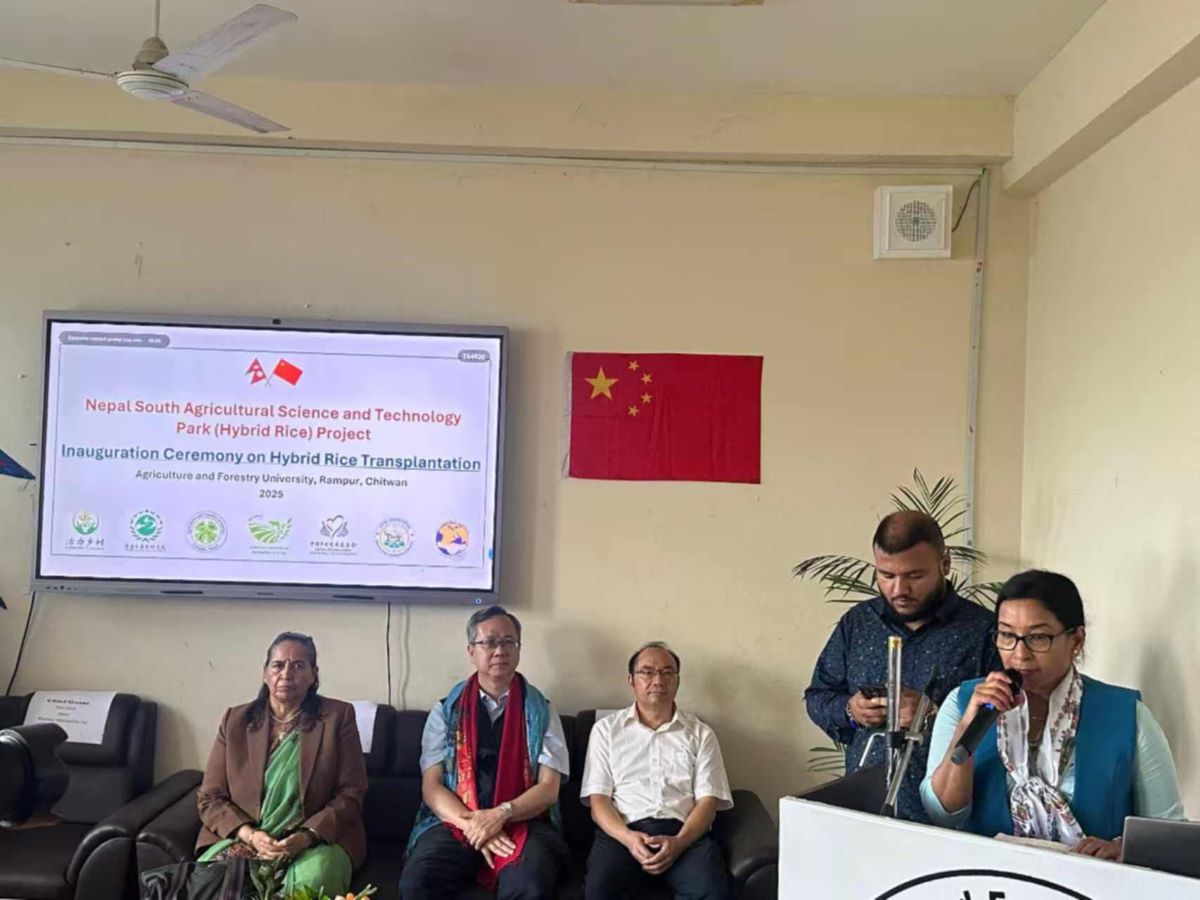
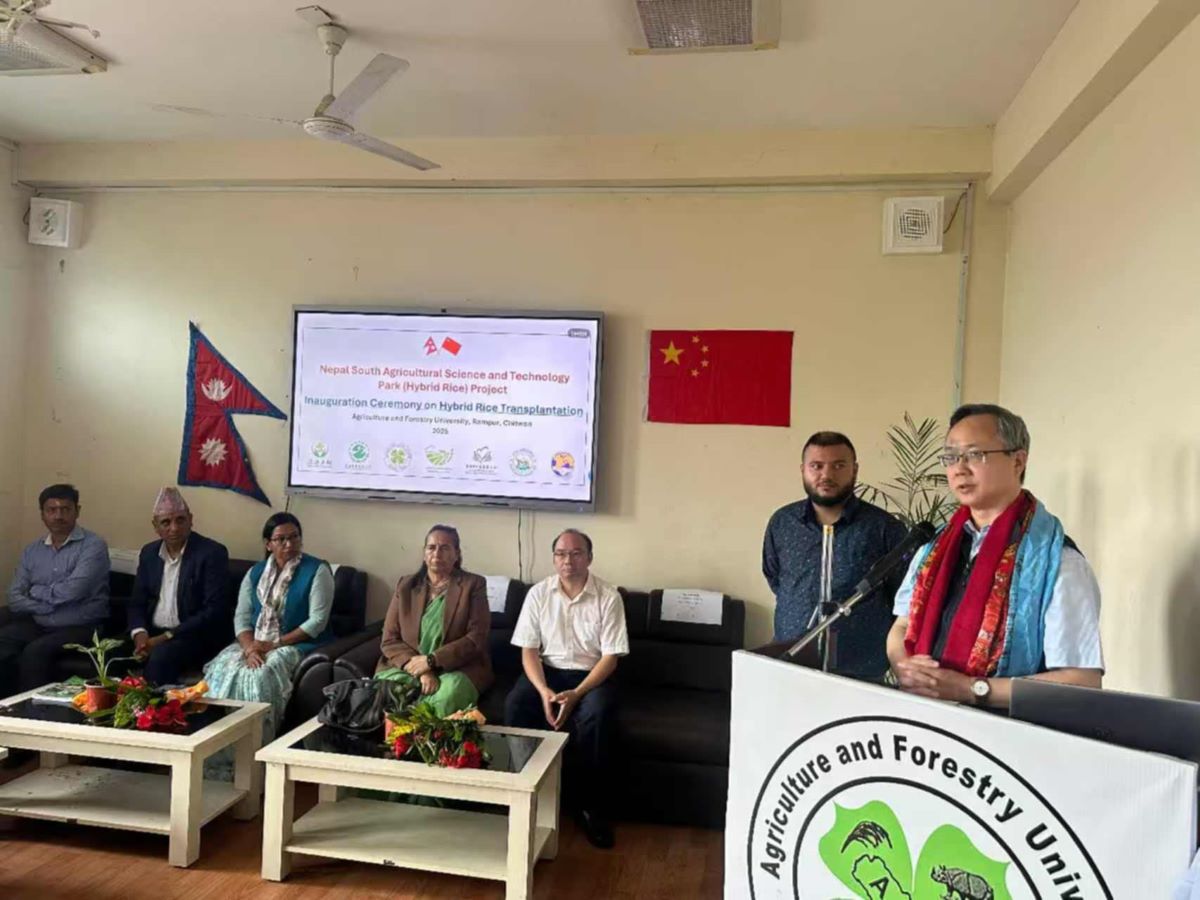
By TRN Online, Kathmandu, Aug 11: The China Foundation for Rural Development (CFRD), in cooperation with the Agriculture and Forestry University of Nepal (AFU), held today the first trial seedling transplanting ceremony for the China–Nepal Southern Agricultural Science and Technology Park Hybrid Rice Demonstration Zone in Rampur, Chitwan.
This marks another encouraging achievement in agricultural cooperation between the two countries in celebration of the 70th anniversary of the establishment of diplomatic relations between China and Nepal. At this ceremony, 37 high-yield hybrid rice varieties will be transplanted, according to a press note issued by CFRD.
The press note stated that the attendees included Chinese Ambassador to Nepal Chen Song, the Mayor of Bharatpur Metropolitan City, the Vice Chancellor of AFU, the Secretary of the Ministry of Agriculture and Livestock Development Dr. Deepak Kumar Kharel, CFRD Nepal Office Country Director Zou Zhiqiang, Chinese and Nepali agricultural experts, researchers, representatives of partner organizations, the Chief District Officer of Chitwan, senior AFU officials, and nearly a hundred local villagers.
During the ceremony, Ambassador Chen Song emphasized that promoting China’s hybrid rice technology is a key direction for global agricultural technology cooperation and one of China’s contributions to global governance. Through international cooperation and technology exchange, China hopes to help more developing countries, including Nepal, achieve food self-sufficiency and promote collective global agricultural development. At present, agricultural experts from Chongqing, China, are working closely with AFU and other research institutions in Nepal to jointly select and cultivate high-quality hybrid rice varieties best suited to Nepal’s local climate, soil, and farming conditions for testing and trial planting. They are also helping Nepal establish a “good seeds + good practices” planting system.
 Future technical cooperation will cover a systematic and efficient cultivation management system, including precision seedling raising, scientific fertilization, efficient irrigation, and green pest and disease control. In addition, Chinese and Nepali scientists will jointly cultivate a localized talent team. If the three-year hybrid rice demonstration is implemented successfully, the goal is to build a core technical team covering agricultural technicians, managers, and rice farmers, forming the key force for the localization of Nepal’s own hybrid rice technology, said the CFRD.
In his remarks, AFU Vice Chancellor Professor Dr. Sharada Thapaliya stressed that this cooperation is not just about testing seeds but also about strengthening Nepal’s food security, climate resilience, and agricultural modernization efforts. “Hybrid rice technology has the potential to transform Nepal’s rice sector. By combining China’s technical expertise with Nepal’s local knowledge, we can accelerate progress towards sustainable agriculture and improved livelihoods for farmers,” said Mr. Suman, an AFU project leader, said the CFRD.
The Mayor of Bharatpur Metropolitan City expressed gratitude to the Chinese government, the Chongqing Academy of Agricultural Sciences, CFRD, and all members of the China–Nepal team for their steadfast commitment to this transformative project, which is expected to become a symbol of impactful cooperation for Nepal’s farmers and the nation. She noted that the introduction of hybrid rice technology is expected to enhance agricultural productivity, improve food security, and uplift community livelihoods. “We are proud to work alongside our Chinese friends in this effort, which strengthens the friendship and cooperation between Nepal and China,” she added.
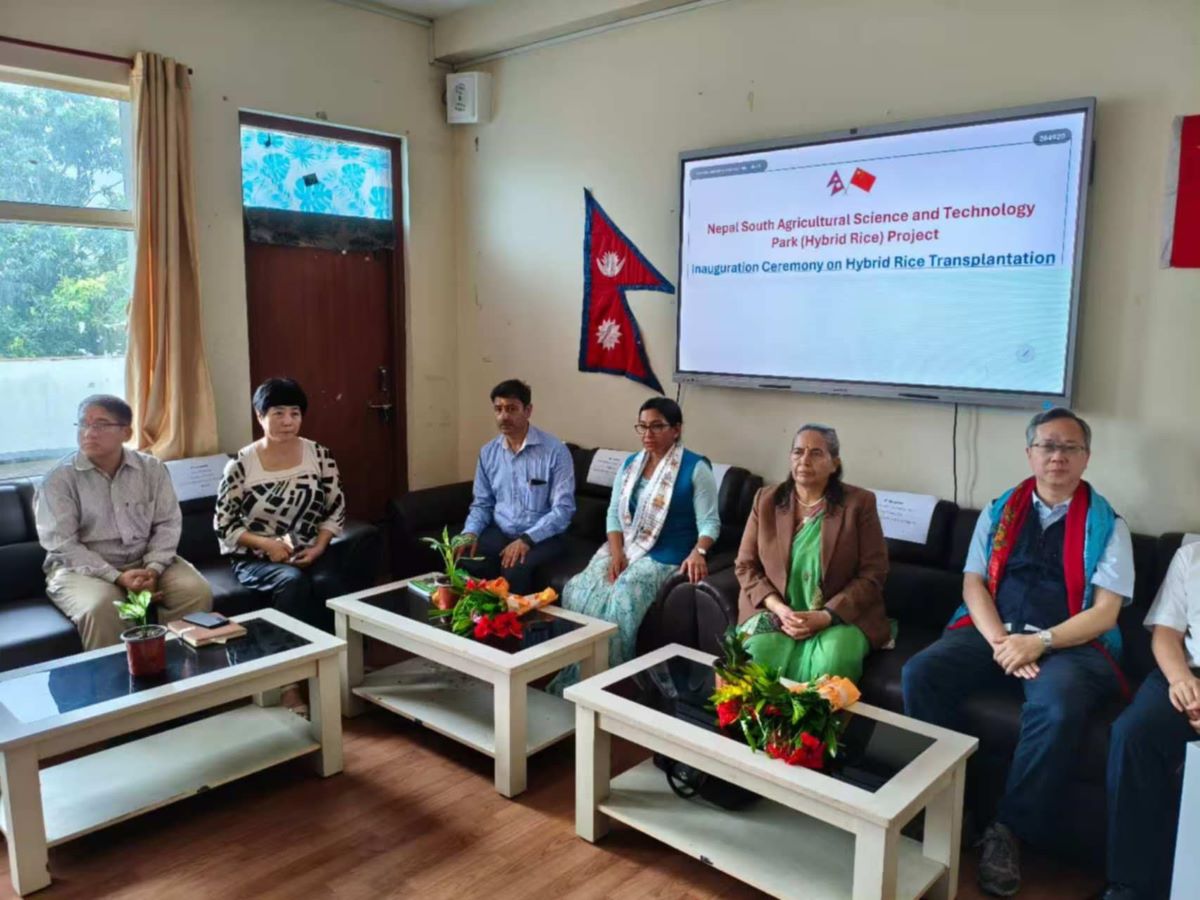 CFRD Nepal Office Country Director Zou Zhiqiang said she was deeply honored that today’s ceremony was held on the occasion of the 70th anniversary of China–Nepal diplomatic relations. She expressed her sincere gratitude to all the guests, media representatives, Chinese and Nepali agricultural scientists, and local people participating in the transplanting work, as well as to the Chongqing municipal government and the Chongqing Academy of Agricultural Sciences for their trust. She also thanked Ambassador Chen Song and the Chinese Embassy, the Mayor for participating in the transplanting work, and partner organization GCD for their efforts in helping obtain approval from the Ministry of Agriculture and facilitating project implementation.
“Without the hard work of everyone present today, there would be no successful seedling testing and transplanting. We will leverage the Foundation’s local operational advantages, live up to the expectations of the leaders of both China and Nepal for this project, and ensure its complete success,” she concluded.

-original-thumb.jpg)