- Wednesday, 6 May 2026

India need not fear BRI agreement: Mahaseth
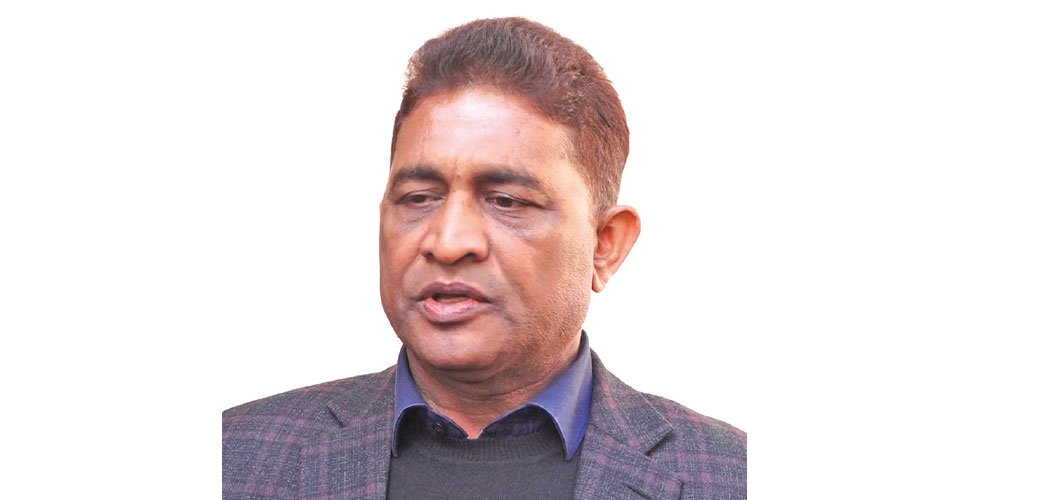

By A Staff Reporter,Kathmandu, Dec. 7: Former Foreign Minister and secretary of the ruling CPN-UML Raghubir Mahaseth has stated that India need not fear the Belt and Road Initiative (BRI) agreement inked by Nepal and China.
He explained that the signing of the BRI agreement is not an anti-India move, and neighbouring countries should not be concerned about it.
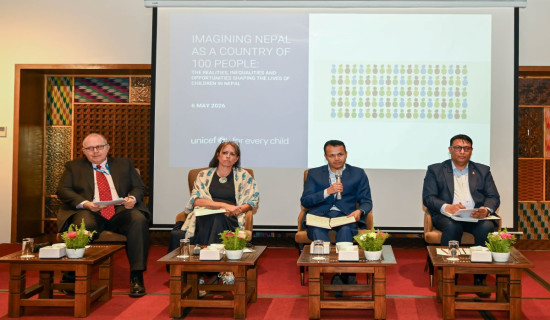
Speaking at an interaction organised by News Agency Nepal on ‘Implementation of BRI after Prime Minister KP Sharma Oli’s visit to China’ in Kathmandu on Friday, Mahaseth said India could also benefit from improved rail, road and other connectivities.
“Once the Nepal-China rail and road routes are built, it will be possible to reach India from China in a day,” he said.
“India should not fear the BRI, as we are not accepting plans motivated by anti-India sentiment.”
Mahaseth, who is also the chief of the foreign department of UML stressed the importance of studying the agreement before raising concerns, pointing out that many are intimidated by the Sri Lanka incident.
He clarified that if loans are mismanaged, they may lead to issues, but China’s BRI does not pose an inherent risk.
He also emphasised that the BRI’s core focus is on economic cooperation, policy frameworks, open markets and connectivity.
Prime Minister Oli’s recent visit to China, which resulted in the signing of the BRI Framework, has sparked widespread debate about the potential impact of these accords on Nepal’s economic development and foreign relations.
As several of these agreements relate to China’s Belt and Road Initiative (BRI), stakeholders have called for greater transparency, institutional strengthening, and strategic planning to ensure Nepal maximises the benefits of its international partnerships.
BRI Framework Task Force expert member, Advocate Semant Dahal, reiterated that Nepal retains the right to decide whether to take loans or grants under the BRI framework, and no controversial document has been signed.
He explained that the BRI’s financing modality could include both grants and loans, depending on Nepal’s needs and preferences.
“It is written that we consider Nepal’s development and needs in financial cooperation. Agreements are not bound to loans; they are adaptable to Nepal’s project-specific requirements,” he stated.
Dahal also refuted claims that the government had committed to unfavourable terms, explaining that the signed documents align with the task force's proposals and international principles of cooperation.
“We have the flexibility to collaborate with other countries and organisations for financial assistance,” he added.
MP and chief of the foreign department of Rastriya Swatantra Party, Shishir Khanal, criticised the government for not disclosing the BRI agreement, claiming it has led to public suspicion about whether the agreements involve loans or grants.
He argued that by not making the documents public, the government was creating unnecessary suspicions.
MP Khanal accused the government of compromising Nepal’s foreign policy by turning it into a partisan issue, rather than strengthening formal mechanisms.
He expressed concern over how political leadership is framing the agreements as if they reflect the views of only two major parties.
Chandra Prasad Dhakal, Chairman of the Federation of Nepalese Chambers of Commerce and Industry (FNCCI), hailed Prime Minister Oli’s visit to China as a positive signal for investment in Nepal.
He noted that it provided an opportunity for the private sector to inform Chinese businessmen about potential investment areas, existing laws and the initiatives being undertaken.
Dhakal informed that discussions during the visit included reforms to facilitate foreign investments and proposals for direct flights between major Chinese cities and Pokhara and Gautam Buddha International airports.
He also lauded China’s declaration of 2025 as “Visit Nepal Year,” terming it a positive step for bilateral tourism.
Former Secretary Arjun Jung Thapa expressed concerns about Nepal’s lack of preparedness for international agreements.
“Our preparations are weak. There is a lack of courage and coordination in the administrative mechanisms to select and implement income-generating projects,” he said.
He stressed the importance of reviving the National Planning Commission, pointing out that lack of coordination within the administrative machinery poses challenges in project implementation.
The discussion focused on the visit’s potential impact, opportunities for economic growth, and areas where greater transparency is needed.
The participants urged the government to prioritise developmental needs, foster effective implementation mechanisms, and uphold public accountability in future agreements.