- Monday, 8 June 2026

Develop Chundi Ramgha as revered literary destination: President
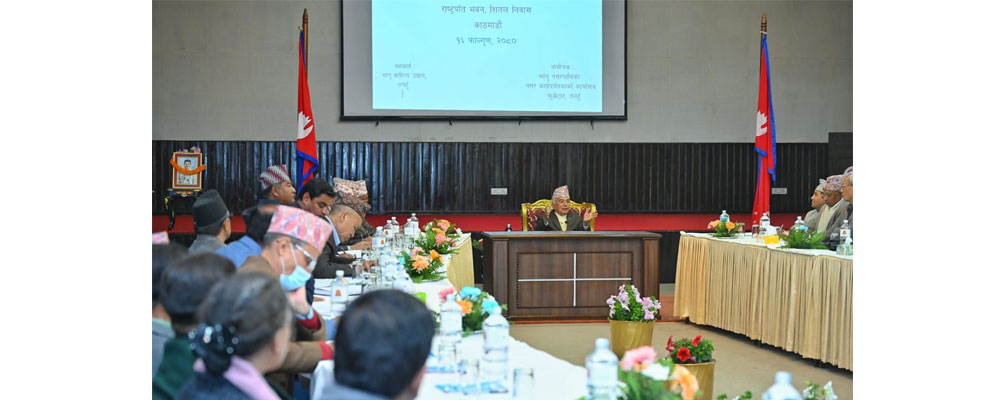

By Ammar Raj Naharki,Tanahun,Mar. 1: President Ramchandra Paudel has stressed the need for transforming Chundi Ramgha of Bhanu Municipality-4 in Tanahun, the birthplace of pioneer poet Bhanubhakta Acharya, into a hub of national unity and a revered literary destination.
Addressing the master plan concept paper and consultation programme of Bhanu Literary Udyan organised by Bhanu Municipality of Tanahun in Kathmandu on Wednesday, President Paudel advocated for its development as a symbol of national unity and a literary sanctuary drawing visitors from across the globe to experience the essence of Nepal.
He proposed linking all seven dhams of the country into one location, harnessing the literary prowess across various Nepali languages, and pooling financial resources alongside embracing the natural and artistic beauty to materialise the vision outlined in the master plan for Bhanu Literary Garden.
President Paudel stressed the imperative nature of this endeavour, expressing his conviction that it would revitalise the spirit of Nepali nationalism and establish it as an essential literary pilgrimage and tourist destination for all Nepalis to visit at least once in their lifetime.
"I firmly believe that this initiative will kindle the flames of Nepali patriotism and elevate it to a literary pilgrimage site and tourist destination that every Nepali should aspire to visit," said President Paudel.
He suggested erecting the statue of Bhanubhakta at the heart of the garden, alongside statues of eminent poets from various languages, thus transforming Chundiramgha into a melting pot of diverse literary talents and evolving it into a cherished literary pilgrimage site.
He proposed a Bhanu circuit encompassing various Bhanu Memorial sites such as Chundibensi, Bhanu Smriti Bhawan, Ramghako Dando, Arghaurchle, the birthplace of Nepali poet Shiromani Lekhnath Paudel, Batulechaur, the birthplace of folk poet Keshari Dharmaraj Thapa, Kundahar, the birthplace of folk singer Ali Mia and the residence of national poet Madhav Ghimire, ensuring the perpetuation of devotees' memories for eternity.
Reflecting on his inspiration drawn from his visits to Darjeeling and Sikkim, President Paudel recounted placing the statue of Lord Shiva atop the hill of Chundiramgha as at Char Dham of Sikkim, and positioning the statue of Bhanubhakta strategically at the axis of the grand Batulo building to be visible from afar, encompassing sights like Bandipur, Chhimkeshwari in the south, Manung, Tanahunsur in the north, Mirlungkot, and Turlungkot in the east, and envisioning a connection to Gorkha Kalika and Mankamana via Liglig Kot.
He proposed configuring this park as a symbolic representation of the seven provinces of Nepal and the Sapta Gandaki region, urging for the execution of construction activities in alignment with the master plan, leveraging suggestions and support from Nepalis worldwide.
"It is my earnest desire for this park to evolve into a literary sanctuary for Nepalis globally and an emotionally charged centre of national unity," he said.
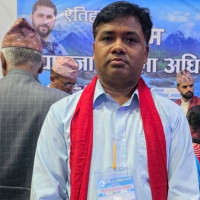
During the programme, Members of the House of Representatives Pradeep Paudel and Krishna Kumar Shrestha ‘Kisan’, and Shishir Khanal emphasised the necessity of developing the site with intricate structures and incorporating digital and technology-friendly features to enhance its allure.
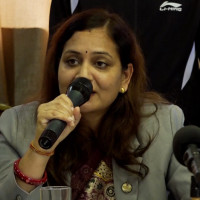
In the Kathmandu-held programme, Anandraj Tripathi, the head of Bhanu Municipality, shed light on the municipality's efforts and planning in this regard, while Dr. Vratraj Acharya, vice-president of the committee, elaborated on the master plan concept paper of Bhanu Sahitya Udhyan, and General Secretary Kashiraj Acharya provided insights into the content.
The programme featured contributions from eminent writers such as Vasudev Tripathi, Rama Sharma, Vice-Chancellors from various institutes, professors, and other dignitaries, who illuminated various facets of Bhanu Literary Garden.
-square-thumb.jpg)