- Sunday, 7 June 2026

Koshi dairy farmers await Rs. 90M dues
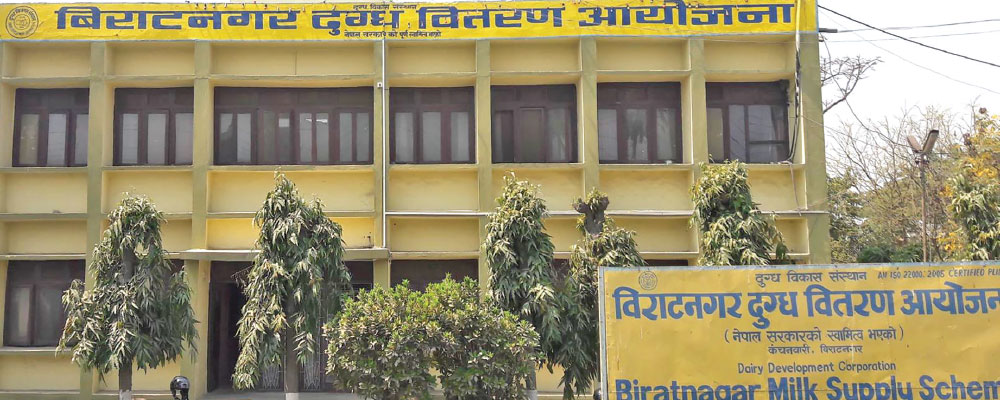

By Shashidhar Parajuli, Biratnagar, June 7: Sales and revenue at the Biratnagar Milk Distribution Project under the state-owned Dairy Development Corporation (DDC) have increased in recent months, driven by rising demand for dairy products such as yoghurt and ice cream during the summer season.
According to the project, daily sales revenue has now reached around Rs. 600,000, compared to approximately Rs. 400,000 four months ago, indicating some improvement in business.
However, despite the increase in sales and earnings, the project has been unable to pay dairy farmers for milk supplied over a prolonged period. The Biratnagar project currently owes nearly Rs. 90 million to milk producers, with many farmers yet to receive payments since mid-January.
Although sales of DDC products have increased, farmers say they are facing growing hardship as they have not received payment for the milk they supplied months ago.
Consumers face higher prices, farmers left behind
The Board of Directors of the DDC increased the prices of several dairy products effective from May 10, citing rising production, transportation and management costs. The price hike applies to products including ghee, paneer, yoghurt and sweets.
Under the revised rates, one litre of ghee in a container now costs Rs. 1,300, while one litre of pouch-packed ghee is priced at Rs. 1,250, an increase of Rs. 50 per litre. Likewise, a 500ml container of ghee now costs Rs. 650, while the pouch version is priced at Rs. 625.
Similarly, the price of one kilogram of paneer has increased to Rs. 830. Yoghurt, a commonly consumed product, is now priced at Rs. 160 per kilogram, while a 500ml pouch costs Rs.75. DDC has also fixed the price of a 10-piece box of sweets at Rs. 310 and a 200-gram pack of table butter at Rs. 310.
Despite raising prices for consumers, DDC has not increased the price paid to farmers for raw milk. While the corporation’s board approved higher retail prices for dairy products, procurement rates for milk producers have remained unchanged. As a result, consumers are paying more for dairy products, while farmers, the primary producers, continue to sell milk at the same price and are still waiting for months to receive payment.
The Biratnagar Milk Distribution Project currently collects an average of 9,000 litres of milk daily. Of this, around 5,000 litres are sold as milk and dairy products, while the remaining 4,000 to 4,500 litres are processed into milk powder.
As of Friday, the project had a stockpile of 94 metric tonnes of milk powder and 45 metric tonnes of butter.
“Our stock is not excessive. Demand increases in markets, such as Kathmandu, during this season, so the products are usually sold,” said Nabin Sharma, head of the Biratnagar project.
The project has also begun selling one to two tankers of milk per week to a private company in Jhapa, Agro Food, under a formal agreement.
A factory that previously purchased chhena (curd cheese) from DDC for making churpi has reportedly stopped buying, while Agro Food has now started purchasing milk to produce peanut juice.
Frustration among farmers has been growing due to delayed payments. Farmers say rising production costs, stagnant milk prices and delays in payment for several months have made it increasingly difficult to sustain their livelihoods.
The project collects milk from various areas of Ilam, Jhapa, Dhankuta and Morang. Although payments have been made up to mid-March in some locations, most farmers are still awaiting dues dating back to mid-December, 2025, mid-February this year.
The Biratnagar Milk Distribution Project says it plans to clear the outstanding payments to farmers soon by selling its existing stock of dairy products.