- Sunday, 7 June 2026

Nepali mangoes replace Indian imports
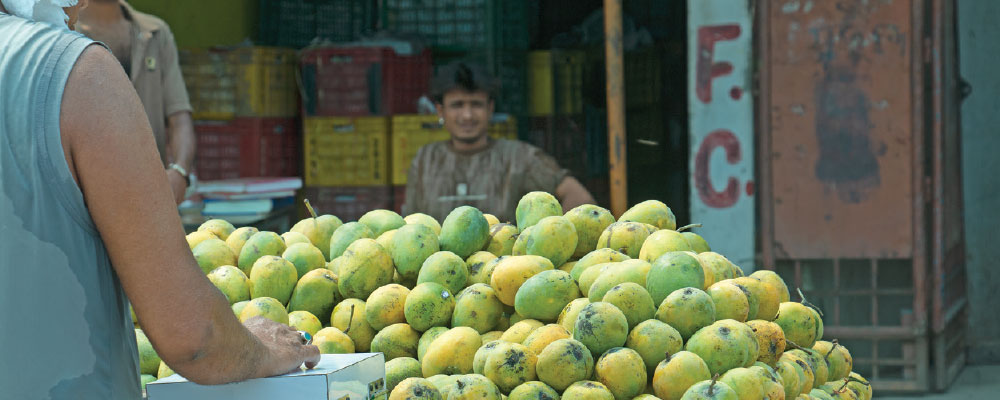

By Laxmi Chaudhary,Janakpurdham, June 7: Following the federal government’s sudden restriction on the import of mangoes and several other fruits from India, markets in Janakpurdham are now largely stocked with locally grown mangoes, while fruit traders say the decision has left them increasingly worried about supply and business sustainability.
Mangoes, one of the most popular fruits during the summer season, are in particularly high demand and traders say disruptions in supply are already beginning to affect the market.
According to local traders, promoting domestic agricultural produce is a positive move, but the abrupt restriction, introduced without adequate preparation or a long-term strategy, has created difficulties for businesses.
While Nepali mangoes are considered tasty and of good quality, their production season lasts for only around two months, making Indian imports important for meeting demand throughout the year.
Bhuvaneshwar Purbe, general secretary of the Fruit and Vegetable Traders’ Association in Janakpurdham, said demand for mangoes is exceptionally high in shummer, and the halt in Indian imports could create shortages in the market. He said that although more than 50 tonnes of mangoes arrive daily in Janakpurdham from districts such as Saptari, Siraha, Mahottari, Dhanusha and Sarlahi, local production alone may not be sufficient to meet overall demand.
Purbe suggested that instead of imposing a complete import ban, the government should strengthen quarantine systems and allow Indian fruits to enter after proper quality testing.
“Our businesses operate throughout the year,” he said. “If trade is limited only to the Nepali fruit season and remains inactive during the rest of the year, it could seriously affect us.” He also added that Indian bananas have traditionally been cheaper, but supply disruptions have now pushed up prices. Since domestic banana production falls short during winter, traders often depend on imports from India.
Fruit sellers have warned that if the import restriction continues for an extended period, consumers may have to pay significantly higher prices, while traders could face major financial losses.
Some traders are attempting to identify alternative supply sources, but say it will be difficult to ensure adequate fruit availability immediately. Consumers, too, have begun to express concern over rising prices. Locals say the cost of mangoes and bananas has already increased in recent weeks.
According to consumers, bananas had reached as high as Rs. 300 per dozen around a month ago and are still being sold at around Rs. 200 per dozen, a price many consider expensive for ordinary households.
Traders fear that if the disruption persists, shortages of mangoes, bananas and other fruits could become more severe not only in Janakpurdham but across several districts in Madhes Province.
Meanwhile, Manish Kumar Pal, spokesperson for the Ministry of Land Management, Agriculture and Cooperatives of Madhes Province, described the promotion of local produce as a positive development.
He said that in previous years pesticide-contaminated mangoes had occasionally entered markets, but the restriction has now created greater opportunities for people to consume locally produced and healthier fruit.
Pal added that the government has continued prioritising agriculture through various programmes and subsidies and aims to further strengthen the sector in the coming years.
“The federal government’s decision will provide additional encouragement to local production, while citizens will have access to healthier and safer produce,” he said.
The long-term impact of the restriction, however, is likely to depend on future market conditions and the capacity of local producers to meet consumer demand.