- Sunday, 10 May 2026

Air pollution, politics pose cross-border challenges in South Asia
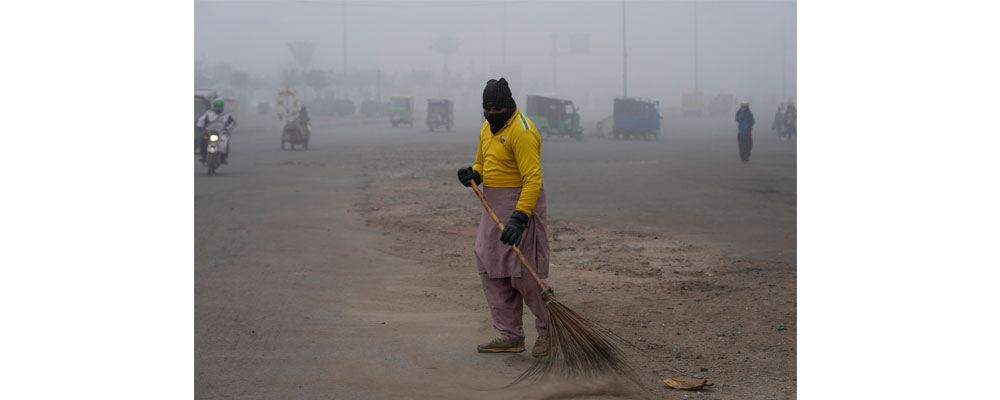

Pakistan, Jan. 22: The air smells burnt in Lahore, a city in Pakistan's east that used to be famous for its gardens but has become infamous for its terrible air quality.
Toxic smog has sickened tens of thousands of people in recent months. Flights have been cancelled. Artificial rain was deployed last December to battle smog, a national first. Nothing seems to be working.
Lahore is in an air shed, an area where pollutants from industry, transportation and other human activities get trapped because of local weather and topography so they cannot disperse easily. Air sheds also contribute to cross-border pollution. Under certain wind conditions, 30% of pollution in the Indian Capital New Delhi can come from Pakistan's Punjab province, where Lahore is the capital. There are six major air sheds in South Asia, home to many of the world's worst polluted cities.
Experts are calling for greater cross-border cooperation among countries such as Pakistan, Bangladesh and India to address air pollution together rather than working in silos on a city-by-city basis. But it's a tall order when political relations in the region are fraught.
Ties between India and Pakistan are broken. Their interactions are riddled with animosity and suspicion. They have fought three wars, built up their armies and developed nuclear weapons. Travel restrictions and hostile bureaucracies largely keep people from crossing the border for leisure, study and work, although the countries make exceptions for religious pilgrimages.
"There's a recognition among the technical and scientific community that air pollution doesn't need a visa to travel across borders," said Pakistani analyst Abdi Solera, from the non-profit Sustainable Development Policy Institute. The culprits and problems are the same on both sides of the India-Pakistan border, he said, so it makes no sense for one province to implement measures if a neighbouring province across the border isn't adopting the same practices.
Regional and international forums offer opportunities for candid discussions about air pollution, even if governments aren't working together directly or publicly, Suleri said, adding that countries should treat air pollution as a year-round problem, rather than a seasonal one arriving with cold weather.
"Airshed management needs a regional plan," he said. "But 2024 is an election year in India and Pakistan, and government-to-government cooperation hasn't reached that level."
Pakistan is weeks away from voting in national parliamentary elections. So far, only the former foreign minister and political party leader Bilawal Bhutto Zardari has pledged heavy investment in climate adaptability, following record-breaking floods that killed more than 1,700 people.
In India, air pollution doesn't figure as a core issue that people would vote on, said Bhargav Krishna, a fellow at the New Delhi-based Sustainable Futures Collaborative think-tank. But the experience or impact of climate change could make people think about how they vote.
Krishna said that regional elections sometimes see air pollution-related promises. "It was a feature of every party's election manifesto in the New Delhi elections in 2020," he noted.