- Sunday, 10 May 2026

Women's rights and wronged in 2023
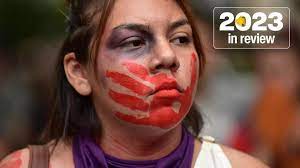

France, Dec. 30: The year saw progress on women’s rights in some countries, such as Spain’s introduction of menstrual leave, France’s bid to enshrine abortion rights in the constitution and the arrival of the #MeToo movement in Taiwan. But there were also setbacks in 2023, from Taliban edicts tightening restrictions on Afghan women to what the UN called a “global epidemic of femicide”.
The year 2022 was marked by major convulsions in women’s rights across the world, from the US Supreme Court’s overturning of Roe v. Wade to the "Woman, life, freedom" chants in Iran, which were followed by a massive government crackdown.
This year saw more gradual developments, from the continuing assaults on and pushback against diminishing abortion rights in the US to the steady disappearance of women from public life in Afghanistan.
Spain becomes first European country to introduce menstrual leave
In February, Spain became the first European country to pass a law creating menstrual leave for women suffering from painful periods. Equality Minister Irene Montero – from the far-left Podemos party, part of the Socialist-led ruling coalition – called it "a historic day for feminist progress".
The law, which passed by 185 votes in favour to 154 against, entitles employees experiencing period pain to time off, with the state social security system – not employers – picking up the tab.
As with paid leave for other health reasons, it requires a doctor's approval. The length of sick leave was not specified in the law. The new legislation also allows minors aged 16 and 17 to have an abortion without parental permission, reversing a requirement introduced by a previous conservative government in 2015.
The effect was instantaneous. Over the weeks that followed, several Taiwanese women broke social taboo to reveal their experiences at work. Female employees of the ruling Democratic Progressive Party kicked off the first major wave by accusing powerful politicians of sexual harassment and assault. The phenomenon spread to cultural and academic circles, with alleged victims accusing celebrities, doctors and professors.
In its June 2022 ruling that overturned Roe v. Wade, the US Supreme Court ended a half-century federal protection of abortion rights and allowed each state to legislate on the issue.
In 14 states, abortion has been outlawed, in some cases without exceptions for rape or incest. On the other hand, 17 states enacted laws or held referendums to protect abortion rights. In other states, access to abortion is not prohibited, but is threatened by laws designed to restrict or prohibit the procedure. This is notably the case in Montana, Wyoming, Indiana and Ohio.
In April, a legal battle over the abortion pill opened a new front in the US battle for reproductive rights when a Texas district court judge invalidated the Food and Drug Administration’s (FDA) approval of the abortion pill.
Days later, an appeals court struck down parts of the Texas judge’s ruling, but affirmed many restrictions on access to mifepristone, the abortion drug. The Justice Department under the Biden administration as well as the company manufacturing mifepristone sought emergency relief from the Supreme Court, which temporarily halted any changes.
In December, the Supreme Court agreed to hear an appeal by the FDA and mifepristone manufacturer Danco Laboratories. A decision is expected by end-June 2024, making abortion rights a likely campaign issue ahead of the 2024 US presidential election in November. (AFP)