- Sunday, 10 May 2026

Canada says it can fight climate change and be major oil nation
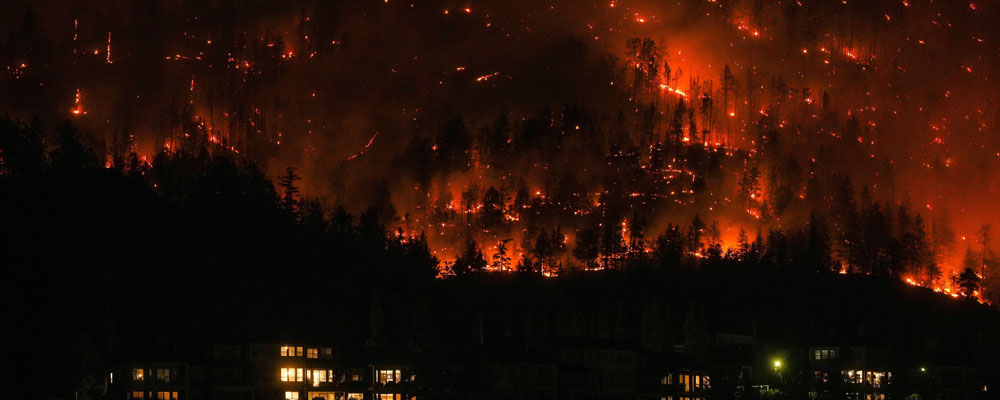

Canada, Nov. 11: During a May wildfire that scorched a vast swath of spruce and pine forest in north western Canada, Julia Cardinal lost a riverside cabin that was many things to her: retirement project, gift from from her husband, and somewhere to live by nature, as her family had done for generations.
"That was our dream home," said Cardinal, a member of the Athabasca Chipewyan First Nation, as she scanned the cabin's flattened, charred remains in September. "It's like a displacement."
Thousands of wildfires in Canada this year have incinerated an area larger than Florida, releasing into the atmosphere more than three times the amount of carbon dioxide that is produced by Canada in a year. And some are still burning.
Home to dense forests, sweeping prairies and nearly a quarter of the planet's wetlands, Canadian leaders, including liberal Prime Minister Justin Trudeau, have long insisted the country can exploit its natural resources while protecting biodiversity and leading the global fight against climate change. But the seemingly endless fire season, which created hazardous air in many U.S. states thousands of miles away, is putting a spotlight on two aspects of Canada that increasingly feel at odds: the country's commitment to fighting climate change and its status as the world's fourth-largest oil producer and fifth-largest gas producer — fuels that when used release carbon dioxide, a greenhouse gas that traps heat in the atmosphere and intensifies the dry conditions for wildfires to swallow millions of acres. "They're portraying Canada as environmental," said Jean L'Hommecourt, an environmental advocate belonging to the Fort McKay First Nation. "But the biggest source of the carbon is here."
Canada is among roughly 100 nations that have pledged by mid-century to reach "zero emissions," or take as much greenhouse gas out of the atmosphere as it contributes. At last year's U.N. climate conference, known as COP27, it also joined other rich nations to promise more money for developing countries to fight climate change.
Yet to the same conference, Canada brought the second-largest delegation of fossil fuel executives of any country in the world, an analysis by The Associated Press found. Eleven executives from major Canadian oil, gas, and steel companies, including Enbridge and Parkland Corporation attended COP27 — where countries set climate priorities and timelines for reducing emissions of greenhouse gases. The only country to send a larger delegation of fossil fuel executives was Russia, AP found.
"We're not there to drive an agenda, but we do have a perspective to offer," said Pete Sheffield, chief sustainability officer at pipeline and natural gas giant Enbridge Inc., echoing what other Canadian energy executives told The AP about their attendance at COP27.
One such perspective is that Canadian oil producers can keep extracting oil at current rates, and with the help of technology, clean up their own operations so the country can still hit its climate targets. But even if Canada's oil producers manage to do so, their plans don't consider the greenhouse gas emissions that result from when customers use their products to power cars, heat homes, take flights, and so forth.
In the western province of Alberta, where many ferocious wildfires burned, huge deposits of thick crude oil, mixed with tarry sand, sit beneath the forest and near the snaking Athabasca River. Extraction from this area, referred to as the "oil sands," uses huge amounts of energy, making Canada's oil — most of which is extracted here — some of the world's dirtiest.
In Alberta, the industry's mark on the landscape is profound: over an area larger than New York City, oil companies have carved chunks of earth into open-pit mines plunging hundreds of feet deep, created lake-sized chemical runoff pools and left otherworldly stacks of neon yellow sulfur by-product. On the sides of roads in the oil sands, air cannons boom periodically to keep birds away from the vast toxic ponds and scarecrows dressed as oil workers float above them.