- Monday, 11 May 2026

Strengthening UN

Parmeshwar Devkota
When António Guterres, the Secretary General of the United Nations, was visiting Nepal and appreciating its’ contributions to UN missions, a country in the Middle East was demanding his resignation from the post. Such irrational demand neither upholds the dignity of that nation nor help strengthen the UN.
After the end of devastating Second World War, the UN was established on October 24, 1945 with the goal of establishing world peace and fostering international cooperation. Today’s reality is that the polarisation of nations is widening and the condition of the people is so rapidly deteriorating that the presence of UN is becoming more important in many parts of the world. The organisation’s mediatory role to contain conflicts, in peace-keeping and humanitarian mission, and works to control climate change are laudable. So, UN has become intimate friend of the people who are suffering from one or more of the aforementioned problems.
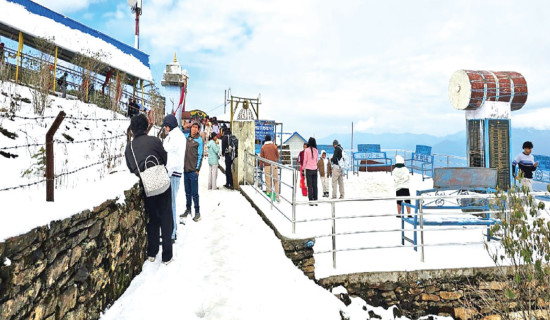
If the industrialised nations which operate in groups and warmongering leaders who devalue the UN’s works and weaken UN institutions, the conditions of people facing conflict, war, hunger and diseases will only exacerbate. The Secretary General visited the Khumbu Region and Annapurna Base Camp to remind us that the UN is behind us. He acquired the first-hand information of the impact of the climate change on us and briefed the world about its unsettling consequences in loud and clear voice. His appeal from Lumbini, the birth place of Gautam Buddha, to restore peace in the Middle East and other parts of the world is significant and timely.
Guterres deserves kudos for mentioning Nepal’s contributio0n to UN missions, as does his commitment to concluding the transitional justice and climate protection Therefore, countries like Nepal should strive to restore and promote the dignity of the UN and its sister organisations because they not only speak but also work in the fields in the time of crisis. The developing and non-aligned countries should be able to democratise the structure of Security Council so that the dominance of a handful of nations and their veto power should be limited. It is because, from the sovereign point of view, all nations in the UN are equal.
The developing and poor nations should also share the economic burden of the UN based on the principle of equality. This is the time of cross-cutting information technology and atomic weapons. If a country uses veto to let the atrocities of one country, every person on the planet knows it. So, the victims may become further dejected and there is chance of using weapons of mass destruction if available like a frustrated driver plunges a vehicle into river and kills all, including himself.
Therefore, the statue of the UN should be changed. Provisions should be made that all nations should contribute on the basis of their national income so that they feel equal ownership of it. The UN need to be developed as the guardian of nations, which helps them in the time of utter humanitarian crisis and disaster.