- Monday, 11 May 2026

Translate Climate Pledge Into Action


Bini Dahal
The recent four-day official visit to Nepal by United Nation’s Secretary-General Antonio Guterres has highlighted two important issues. One is about the stalled peace process and the need to conclude it as fast as possible. And the other being the effects of climate change that the Himalayan nation is currently facing. The discussion of the latter issue comes in light of the 28th Conference of Parties (COP) which is taking place in the United Arab Emirates this month. Nepal remains to be highly vulnerable to the growing incidences of climate change even without aiding much to the phenomena.
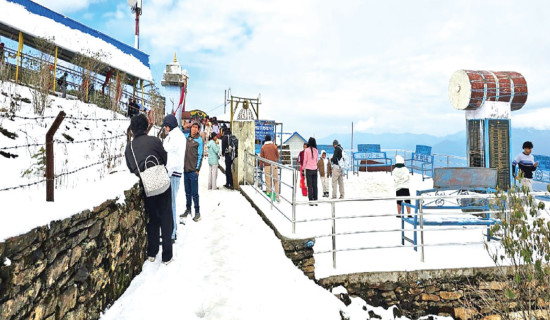
During the visit, Guterres reached two of the country’s most popular tourist destinations — the Khumbu Region and Annapurna Base Camp (ABC). The Khumbu Region is home to numerous peaks, including the world’s tallest peak - Sagarmatha. ABC and its adjacent areas are also abundant in floral and faunal species. Surrounded by various snow-clad mountains, ABC is a picturesque and a challenging destination for trekkers and other nature lovers to experience. These destinations have not only made Nepal known to the outside world but also contributed to the nation’s economy through tourism growth.
In the start of 2023 itself, within three months, around 2500 tourists went on ABC trek. According to the Sagarmatha National Park, the Khumbu Region was visited by around 57,690 tourists in the fiscal year 2022/23. These figures reflect the growing attraction among avid travellers towards these destinations. However, it is necessary to highlight that these areas remain a matter of concern for the environmentalists and the local communities. The locals are forced to face the rising effects of climate change. ABC is suffering from soil erosion and the Everest region is at a high risk owing to rising melting of glacial lakes and flooding.
Discussions on climate change might just be rhetorical for most people around the world. But for someone who is residing in a highly vulnerable region questions their safety and quality of life every single day. If we want to survive in this world for a long period, we have no choice but to join hands and come to terms with the fact that sustainable development is the only way out. What will happen if a developed country does not agree to cut their carbon emissions? Well, the outcome is obvious as figures reflecting economic growth and prosperity could short-live and a disastrous outcome might be unavoidable.
The proposed US$ 100 billion loss and damage fund from COP27 and the target of limiting global temperature to 1.5 degree Celsius as per the 2015 Paris Agreement are some of the commitments that will have to be taken seriously. Developed countries should develop a sense of responsibility, urgency and seriousness when it comes to the rapid global warming being experienced globally. Events like COP should not just be limited to big affairs with no proper outcome. Amidst these issues, the visit of the UN Secretary-General holds great significance for Nepal. His visit highlights the state of climate change and its effect on the local people and the environment. Most importantly he has shown his commitment to aid Nepal in its journey to tackle the impacts of climate change. This is a big plea for the developed countries to find a negotiated solution that will be beneficial for all.