- Monday, 11 May 2026

Commander yesterday, labourer today

By Prem Raj Simkhada,Kalikot, Oct. 28: Jagat Phadera of Raskot Municipality–3 presently lives in Kedarnath, India.
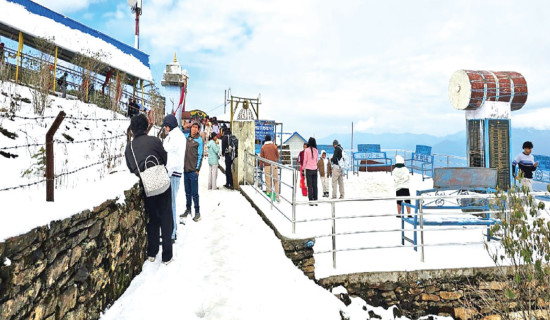
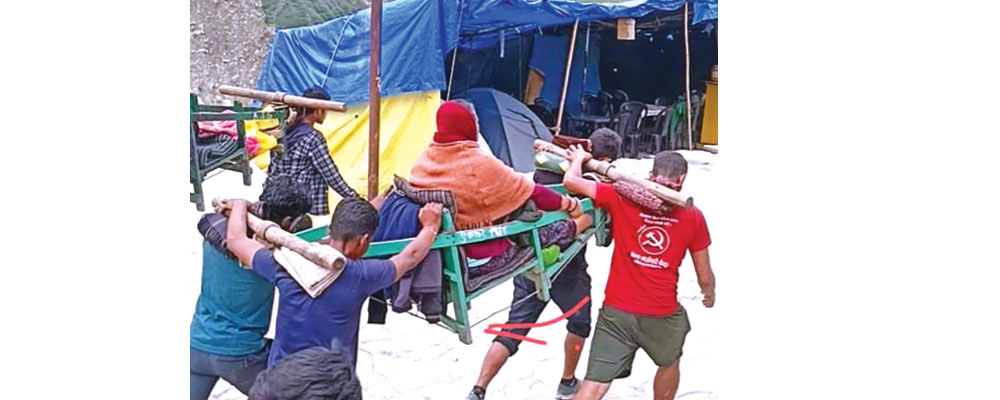
Phadera, who fought for the Maoists during the insurgency, went to Kedarnath a year ago for employment. Currently, he, along with a group of other former Maoist combatants, carry palanquins there for money.
Phadera was a company commander for the Maoist's People's Liberation Army during the conflict years. However, after the signing of the Comprehensive Peace Accord, he moved to the Young Communist League (YCL). He claimed the move happened on the orders of the party and said that it prevented him from participating in the army integration process.
His economic condition, though, worsened over the years and
today, he carries the palanquins of pilgrims who come to pray at the Kedarnath Temple.
"This is the Puja season. So, we have work carrying worshippers to Kedarnath. But once it starts snowing, I and others here will have to descend to lower altitudes and seek other means of income," he shared.
Phadera went underground for the party in 2000 and was bodyguard to prominent Maoist leaders including Janardan Sharma, Lekh Raj Bhatta and Hemanta Prakash Oli.
His friends still tell tales of his commitment to the revolution and its leaders. When the then Royal Nepali Army surrounded Sharma and Oli in Khimdi, Kailali, it was Phadera who risked his life to break the siege and enable the two to escape, said Prabindra Sharma of Raskot.
"Had he not had the courage and backed out, perhaps we would not have Sharma and Oli with us today," Sharma said. "The leaders are living comfortably in Kathmandu today while the person who saved their lives is wandering the Indian streets trying to eke out an existence," he expressed his dissatisfaction.
Phadera, though, does not want to speak ill of anyone. Nor does he have any complaints. But his feelings are hurt. He wanted everyone to know, "I am not incapable. And there are not many top leaders who do not know me. But I did not get ground to stand on. I did not get an opportunity for employment."
Wiping off his sweat with his hand, Phadera said that he only believed in hard work. "That is why I am working hard here."
"I will work in Kedarnath as long as I can. After it starts snowing, I will travel elsewhere and do manual labour for money."
Phadera informed that he knew 200 other former combatants currently working in the region.