- Monday, 11 May 2026

Regular eye checkups a must for proper sight
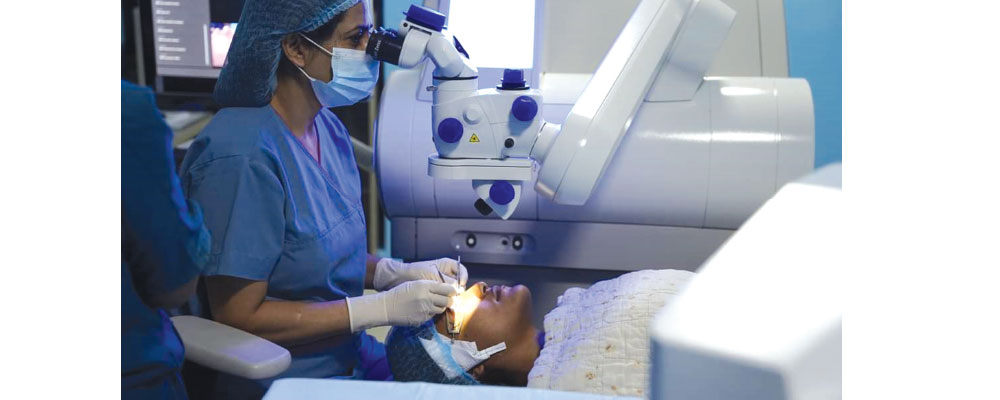

By A Staff Reporter,Kathmandu, Oct. 13: Ophthalmologists have highlighted the need to conduct regular eye checkups to ensure a healthy sight on the occasion of World Sight Day.
World Sight Day is celebrated every year on the second Thursday of October to draw attention to blindness and vision impairment. This year, the theme of the day is ‘Love your eyes at work’.
According to the World Health Organisation (WHO), vision impairment occurs when an eye condition affects the visual system and its vision functions.
“Everyone, if they live long enough, will experience at least one eye condition in their lifetime that will require appropriate care,” states the WHO.
Refractive errors, cataracts, diabetic retinopathy, glaucoma and age-related macular degeneration are the leading causes of vision impairment and blindness.
“While many vision loss cases can be prevented (such as those due to infection, trauma, unsafe traditional medicines, perinatal diseases, nutrition-related diseases, unsafe use or self-administration of topical treatment), this is not possible for all. For many eye conditions, e.g. diabetic retinopathy, early detection and timely treatment are crucial to avoid irreversible vision loss,” the WHO states.
However, eye experts argue that eye conditions, such as dry eye or conjunctivitis, that do not typically cause vision impairment should not be overlooked.
Ophthalmologists say that the consequences of vision impairment can be mitigated by timely access to quality eye care, which is possible if an individual reaches an eye centre once in a while.
According to the Tilganga Institute of Ophthalmology, cataract is the main cause of blindness in Nepal with women suffering more than men. Similarly, the institute states that the use of glasses is one of the main causes of low vision.
“Eyes can remain healthy if they receive proper care. We can prevent visual impairment or blindness if we seek diagnosis at an eye centre on a regular basis,” the institute suggested.
The institute added, “The inability to identify objects at a distance or nearby, blurry vision, headache, and the need to widely open the eyes to see something are symptoms showing problems in vision or sight. If someone is suffering from such symptoms, s/he should seek a diagnosis.”
Ophthalmologists present in an interaction programme organised by the Tilganga Institute of Ophthalmology, on Tuesday, also suggested the need for a change in lifestyle to ensure a healthy sight.
The WHO states that at least 2.2 billion people globally have near or distant vision impairment. In at least 1 billion of these, vision impairment could have been prevented or is yet to be addressed.
The WHO has also launched a mobile application for both IOS and Android users that enables users, who are above eight years old, to check their vision.
“For this year’s World Sight Day celebration, the WHO has launched ‘WHOeyes’, a free app for the general public to check how well they can see things close up and at a distance and learn how they can protect their eyes,” read a statement by the WHO.
Ophthalmologists also urged the need to increase awareness of the need to have regular eye checkups. It has also been estimated that vision impairment poses an enormous global financial burden, with an annual global productivity loss of about USD 411 billion.