- Monday, 8 June 2026

Mayor with vision of addiction-free municipality
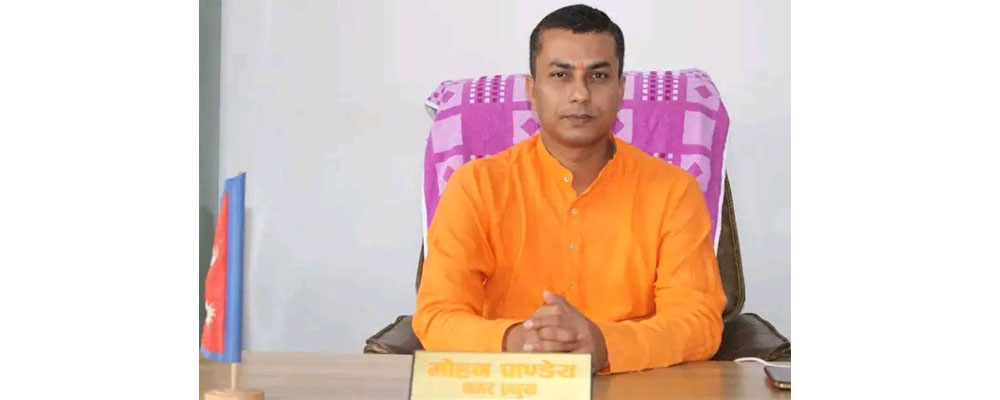

Manara Shiswa Municipality is one of the 15 local levels of Mahottari. Formed by combining the former village development committees of Shiswa Kataiya, Bathnaha, Sandha, Sarpallo, Manara, Itaharawakatti and Sonaul, this municipality is located 12 kilometres south of the district headquarters Jaleshwor.
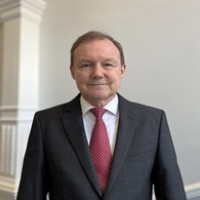
Mohan Pandeya of the Nepali Congress leads the municipality as its mayor. During his time in office, he has promoted Yoga and Sanskrit education and claims to have prioritised actions to dissuade drug abuse. The Rising Nepal's Mahottari correspondent Nagendra Kumar Karna talked to him about his activities. Excerpts:
It has been over a year since you assumed office. What has the municipality done in that time?
I found the municipality in a pathetic state when I assumed office. We were lagging behind in the sectors of education, health, agriculture and physical infrastructure so I concentrated all my efforts here.
We have 23 community schools in the municipality and many of them did not even have desks and benches for the students. The periods were irregular. We immediately worked to change this. Today, our schools have enough benches for their pupils. The students have seven periods every day except Friday, without fail. We have tried to ensure that our children receive quality education.
Similarly, feeling we need to introduce children to our culture and values in addition to teaching them regular courses, we have included Sanskrit in our local curriculum. Parents are happy with this and have reported seeing visible changes in their wards' behaviour after studying Sanskrit.
We have also bettered toilet facilities at our schools and have given them access to drinking water. Nevertheless, we understand more needs to be done and have no plans to slow down or take our focus away from education.
Likewise, we have launched an anti-addiction campaign in all our schools to transform Manara Shiswa into an addiction-free municipality. We began this initiative after the District Police Office of Mahottari told us we had the highest rate of drug addiction in the district. This is hard and risky work but we hope to cure our local level of this affliction within four years.
It is sad but many of our teenagers and secondary-level students are addicted to marijuana. We are working to identify them and treat them through rescue centres and Yoga camps. Many teachers also smoke cigarettes and chew tobacco in the classrooms in front of the students. We have been cautioning and monitoring them.
We are working to improve the quality of our health services too. Our denizens get easy access to medicines and services made available by the federal and provincial governments through the health posts we have in all our wards. Nearly all our health institutions provide free medicines for hypertension (high Blood Pressure) and diabetes.
After our election, we upgraded the Manara Health Post and made it a basic hospital with an emergency room, lab and ultrasound facilities, and a birthing centre. We have also prioritised the development of naturopathy and alternative medicine to keep our residents healthy, especially for diseases not cured by allopathic drugs.
We have also installed tube wells and are building dams to expand irrigation.
You have said that you have focused on education. But many schools in Sakri and Madhawa still lack basic infrastructure. What do you have to say about that?
The previous mayor did not pay adequate attention to the education sector. But I am actively working to change this. We have allocated budget to develop infrastructures of several schools this year. The two places you mentioned are near the Indian border and are not connected to proper roads.
Our works have also been hindered by legal challenges. For instance, we tried to build a road to Maruwahi School but some entities moved the court and forced us to stop. We cannot move forward until that case is decided now.
The situation is so bad that even if we spend all our budget of the whole fiscal year on building educational infrastructure, we will still not have everything we need. We need billions of rupees to uplift this sector. The local government is doing the best it can with the resources it has, despite receiving limited support from the provincial and federal levels.
Our schools also lack teachers. The government has not created new positions for years and the existing number of positions are not enough. I request the federal government to recruit more teachers and ensure local levels get as many educators as they need.
You have complained about the frequent transferring of Chief Administrative Officers and a chronic lack of manpower. How have you been able to work then?
I have said before that we do not have sufficient and updated laws and regulations. We only have the Local Governance Act 2017. The federal and provincial governments are yet to make many important laws to facilitate us. Nevertheless, we have done what we can under the laws we have to serve the people. Our willpower, and cooperation and support from all parties have helped us achieve many things.
Your local level does not have perennial roads. It is hard to travel around during the monsoon. How do you plan to change this?
Yes, that was the situation in the past but now, we have roads we can use year-round. Ward chairs monitored the work very stringently.
How many of your election promises have you fulfilled?
We have been working in line with the pledges we made and the expectations raised by the people. We had promised to enhance agriculture, ensure educational quality and control illegal drugs.
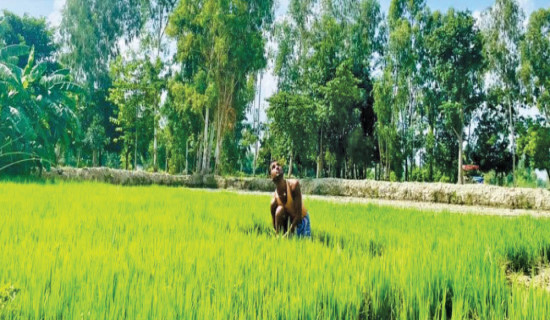
Our local level is completely reliant on agriculture. To boost agricultural production, we need irrigation facilities. But this has proven hard to develop as old canals have been encroached upon. Still, we are implementing projects like installation of small tubewells and construction of dams. But we need to renovate and restore our canals to provide water to all our fields. We are trying to provide irrigation to areas between Jhingasthan and Sakri this year.
Also, since we border India, liquor smuggling is a huge problem here. That is why we moved the municipal assembly to prohibit the sale and distribution of alcohol here. But some alcohol sellers went to the court and we have been ordered to not enact the ban for now.
Government and security agencies have also banned the sale of alcohol within 500 metres of the border. But that ban has also not been fully implemented.
Trucks of alcohol are smuggled across the border through our wards 2, 5, 8, 9 and 10. The residents of those areas call us at night, telling us about armed Indians roaming the streets and creating security threats. Individuals come from across the border in vehicles without any licenses or registration papers. They come here, drink and engage in criminal activities. But security agencies have not extended much support to help us control this.
Half a dozen members of the Provincial Assembly and a provincial minister are residents of this municipality. Has this helped you coordinate with the provincial or federal governments in any way?
We are proud that we have Provincial Assembly members and a provincial minister living in our local level. They provide valuable suggestions and advise us on our work. They also help us reach out to provincial and federal governments.
Your critics say you run the municipality on your whims. Do you?
Our work is completely guided by the Local Governance Act. We have to pass our decisions and policies through the municipal executive and the municipal assembly. We hold two municipal executive meetings every month. We have 55 people representing our 52,000 residents in the local government and every one of those 55 get to have a say and present their inputs in the decision-making process. So, the allegations of me running the municipality arbitrarily are baseless.
Where do you want Manara Shiswa to reach by the end of your tenure?
I want our municipality to be fully literate. I want everyone to have access to free and quality education and I want to see people wishing to pursue advanced degrees be able to do so without leaving home. I want every farmer to have access to irrigation for their fields and every resident of Manara Shiswa to be healthy.

-original-thumb.jpg)