- Wednesday, 3 June 2026

Paris faces bike-lane traffic jams as car culture shifts
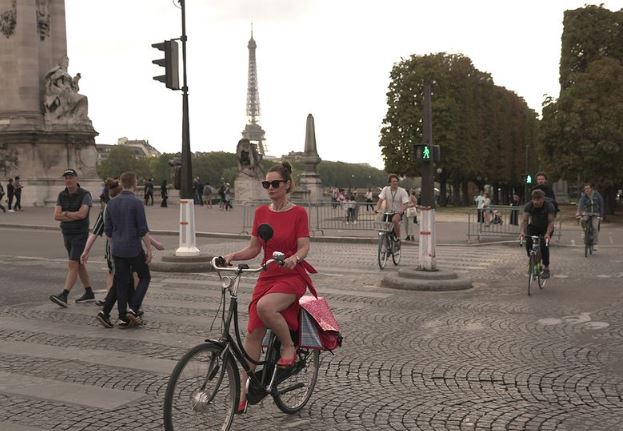

Paris, Sept. 29: Ring, ring! It's rush hour on Paris' Sébastopol Boulevard, and the congestion is severe — not just gas-guzzling, pollution-spewing, horn-honking snarls but also quieter and greener bottlenecks of cyclists jockeying for space.
Until four years ago, motorists largely had the Paris thoroughfare to themselves. Now, its bike-lane jams speak to a cycling revolution that is reshaping the capital of France — long a country of car-lovers, home to Renault, Citroen and Peugeot.
This revolution, like others, is also proving choppy. A nearly decade-long drive by Socialist Mayor Anne Hidalgo to turn Paris from a city hostile for cyclists — except those racing the Tour de France — into one where they venture more safely and freely has become so transformative that bikes are steadily muscling aside motor vehicles and increasingly getting in each other's way. And more bike lanes are coming for next year's Paris Olympics — part of an effort to halve the event's carbon footprint.
Already, on some Paris boulevards, bikes outnumber cars at peak times. Cycle congestion, with wheel-to-wheel lines of riders ringing their bells and sometimes losing their cool, is becoming a headache.
"It's the same feeling as the one I had when I was younger, with my parents driving their car, and it was like traffic jams all over the place. So now it's really a bike traffic jam," said Thibault Quéré, a spokesperson for the Federation of Bicycle Users. "But it's kind of a good difficulty to have. Especially when we think about what Paris used to be."
From a measly 200 kilometers (125 miles) in 2001, cyclists now have more than 1,000 of tailor-made bike paths and marked routes to roam, City Hall says. Motor vehicles have been barred entirely from some roads, most notably a River Seine embankment that used to be a busy highway. It's become a central Paris haven for cyclists, runners, families and romantics since Hidalgo closed it to motor traffic in 2016.
Farther north, the twin-lane bike path on Sébastopol Boulevard has become one of Europe's busiest since its inauguration in 2019. It saw a record 124,000 weekly users in early September, according to tracking by pro-bike group Paris en Selle ("Paris by saddle"). Traffic there now regularly surpasses London's busiest cycleways and at its busiest even approaches the numbers of popular cycle routes in Amsterdam.
North-south Sébastopol empties into another busy east-west route on Rue de Rivoli that passes the Louvre. It also saw record daily and weekly numbers in September, Paris en Selle's tracking shows.
Add to the mix none-too-thrilled motorists, scooters wriggling through traffic, pedestrians trying not to get squished and construction that seems to have popped up almost everywhere in Paris' sprint to the Olympics, and negotiating the busiest streets by bike can feel akin to playing Mario Kart — but with real-life dangers and consequences.
Many cyclists, some clearly new and still feeling their way around, seem to think red lights and road rules don't apply to them. Paris' removal of for-hire electric scooters following a city referendum in April also is driving some ex-users to biking.
"Paris has become unlivable. No one can stand each other," bike-rider Michel Gelernt said as he wound his way past whistle-blowing traffic officers and yelling motorists on Concorde plaza, the French Revolution decapitation site of King Louis XVI in 1793. (AP)