- Wednesday, 3 June 2026

Over 96% Karnali dwellers drink contaminated water

BY LALIT BASEL,Surkhet, Sept. 13: It has been found that 96.5 per cent of the residents of Karnali Province drink contaminated water. According to a health survey, only 19 per cent of the people in Nepal have access to clean drinking water, while 81 per cent consume contaminated water.
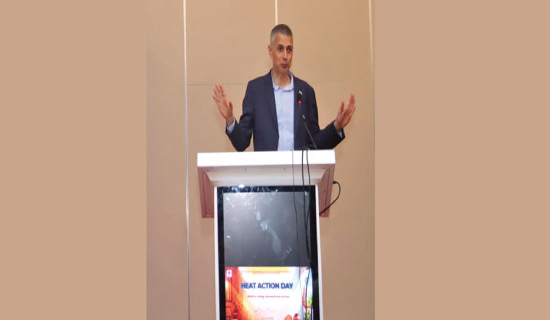
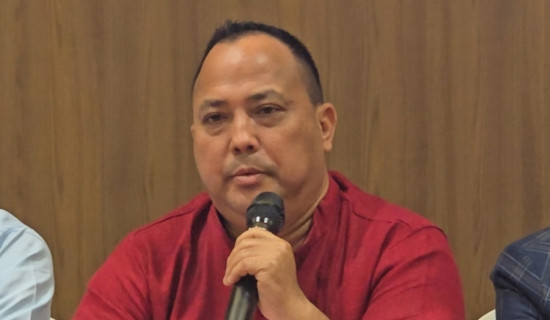
Meanwhile, only 3.5 per cent of Karnali residents are found to have access to healthy drinking water. Dr. Sujan Raj Panthi, National Professional Officer of World Health Organisation, said that 96 per cent of Karnali’s population were consuming contaminated water.
He said that the drinking water in Karnali was contaminated with faecal coliforms and other harmful substances, although arsenic was not found in the water.
He said that the quality of drinking water in Nepal was poor and called for increased attention to water testing. He suggested that the quality of water supplied to Karnali people could be improved by treating it with chlorine, potentially leading to a 30 to 40 per cent improvement.
Kaushal Chandra Subedi, an officer at the Epidemiology Disease Control Division of the Ministry of Health and Population, expressed dissatisfaction with the water quality tests in Karnali.
The Health Service Directorate in Karnali Province has been conducting water tests to assess the quality of the drinking water supplied to Karnali residents. In the Fiscal Year (FY) 2021/022, a total of 291 water tests were conducted in Surkhet district alone. In the FY 2022/023, water tests were carried out in eight other districts of the province except for Jumla, Rukum and Dolpa.
Vector Control Officer of Directorate Shyam Lal Acharya informed that 59 water tests were conducted in Surkhet, 17 in Humla, 10 in Mugu, four in Kalikot, three in Salyan and two each in Jajarkot and Dailekh. He said that the work of water testing would continue in the coming days as well.
Simultaneously, a National Water Quality Monitoring Provincial Committee has been formed to measure and monitor the water quality of Karnali. A 19-member committee, under the coordination of the provincial director of health services, includes heads of the drug supply management centre, provincial public health laboratory, provincial hospital directorate, and health division of the Ministry of Social Development and others.
The committee was formed according to the first amendment to the National Drinking Water Quality Guidelines-2019. In addition to implementing the drinking water safety plan, the committee will work on identifying, monitoring, and verifying the pollution that may occur in drinking water.


-original-thumb.jpg)