- Wednesday, 3 June 2026

Cultural And Spiritual Value Of Food
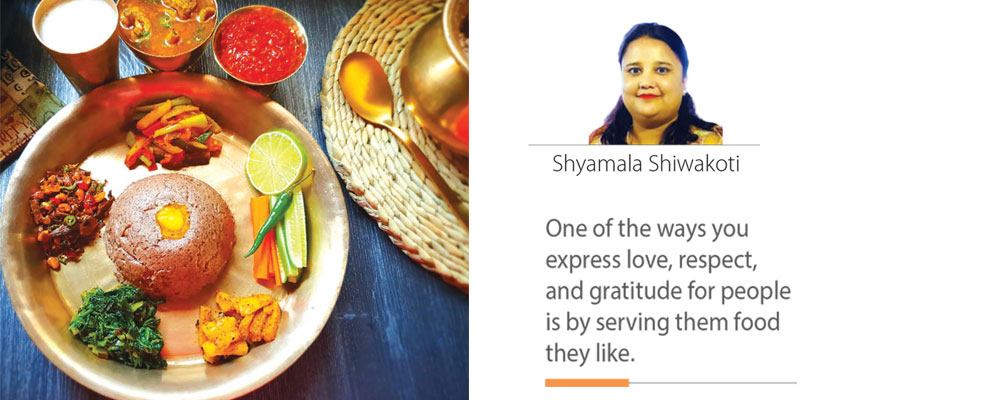

Food is the energy source and the most crucial thing to stay alive. We have eaten food in different forms since we were born. We eat day in and day out, and food is always on our minds. My big daily question is what to eat for breakfast, lunch, dinner, etc. The essential thing that we do as humans is eat. It is a physiological need, as per Maslow’s hierarchy. In a way, we all work and do various things to put food on the table. That food can range from epicurean food like Alma’s caviar to humble food such as rice and daal, depending upon our financial status and the mood of the day.
We had a potluck on Friday at my workplace, and I decided to make biryani on Thursday night. It is tedious work to make biryani. It needs a lot of ingredients and has multiple steps to make. While driving to work on Friday morning, I thought deeply about what drives me to cook and make food for others, even when I am exhausted after a challenging day at the workplace. At a superficial or one-dimensional level, it makes other people happy, and I am also sharing part of my culture, roots, and origins with others worldwide. In addition, I also get content to put on my social media platforms. Food is the glue for social gatherings, where we talk passionately about food and share recipes.
However, if you ponder and think more deeply, food is not one-dimensional. It is not superficial and is profoundly connected to spiritual well-being. I have always noticed food in every place of worship I have been to. I remember my childhood days, and I used to follow Grandpa to Krishna Mandir for evening aarti because they would give us prasad. We all know that if you go to any place of worship, regardless of their affiliated religion, they always provide you with something to eat. The root of serving food and cooking is that serving food is the selfless act of feeding another human being. In our culture, food is also something that connects us to the higher power and our ancestors, who are physically no longer with us. We always serve food to them before we serve ourselves. So, food is profoundly spiritual, multifaceted, and has a lot of gravity.
We all know people who are very near and dear to us. When they visit or meet, we buy or make the food they like the most. It's not only about the taste. It shows that you care about that person and are deeply connected via food. Food is the ultimate love language. One of the ways you express love, respect, and gratitude for people is by serving them food they like. Some friends call me out of the blue and say I have made their favourite food. Please come and eat. Those people love me the most because they took time out of their busy schedules to cook and invite me. I feel blessed to have those people in my life. It is a tiny gesture, but it has a significant impact on life.
Nostalgia hits every year when it hits October/November or Tihar (Deepawali) in Nepal. Even though I do everything I did in Nepal, like making rangoli, lighting lights, making seroti, fini, and other sweets, and buying some expensive marigolds, the vibe is not the same. This festival makes me miss my homeland every year with the same intensity.
When people ask me how long I have been living abroad, in my mind, it's always around ten years. Last week, I did the math. It's been way more than ten years. Growing up, I always heard this conversation about people going abroad and studying. My father went to Canada in 1993, and when he returned, I remember he brought me a wristwatch and an audio cassette with all Bob Marley songs. I remember the song "Buffalo Soldier" very clearly, and he described the song's context and meaning. He mentioned that each household in Canada has a car, like every house has a "doko" in Nepal. As a kid, I used to think that must be cool.
Fast forward to the year, I came to this country (the USA) in 2009—the land of opportunities. This country will not disappoint you. Despite all the negative news in the media, it is still the most welcoming land of opportunity. I started my life with two suitcases and $1,000 in this country. I have built my career and my higher studies here. Thanks to this great nation, I have achieved whatever I wanted. I always tell my husband that coming to this country has helped us break the poverty cycle for us and our family. We got this super-octane fuel for our lives to propel us faster and further than we had imagined. Living abroad and leaving my birthplace has had me thinking broadly, travelling to different places worldwide, and meeting many people I would have never met without coming here. No complaints or dissatisfaction at all.
I sometimes stumble upon these talk shows from Nepal on digital platforms where they speak about people like me who left the country for a better life and opportunity. I sense a lot of judgement and cynicism on these platforms. Some of the common themes are that we are missing out on life, we do not have social connections, and we lack family values. I am not denying these, but just saying no one has any right to judge us. We are doing the best that we can. Going out when you are a full-grown adult and trying to build a life is not an easy job. It takes courage, determination, sacrifices, and hard work. Imagine a full-grown tree that you just uprooted and planted elsewhere.
Consider all the adjustments a tree needs to make to the soil and environment. It is almost impossible to describe this feeling in words. One has to live that life to be able to feel it. When you are a first-generation immigrant like me, there are extra layers of complexity associated with living abroad. You are bound to navigate between your family's younger and older generations. And let me tell you, all those generations are unhappy with you for obvious reasons like the generation gap and not meeting their expectations.
(Shiwakoti is working as a clinical nurse at the University of Colorado Hospital. She has a Master's degree in Health Service Administration.)

-square-thumb.jpg)