- Wednesday, 3 June 2026

As Koshi swells, locals live in terror
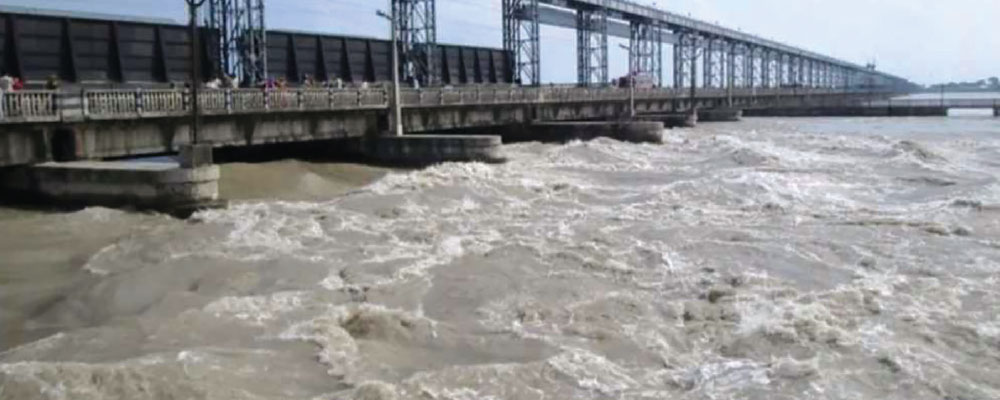

By Baburam Karki,Barahakshetra, Aug. 15: The monsoon rains have again made the Koshi River angry. It has started roaring and flowing ferociously. The water level has risen significantly.
At 4 am on Monday, the flow reached 462,345 cusecs, forcing officials to open all 56 doors of the Koshi Barrage. This has reduced the water level, informed Amit Yadav, an employee at the Koshi Barrage Control Room. But that has not lessened the locals' worry one bit. Past experiences have made them wary. "The water level may have dropped but there still is the possibility of the embankments collapsing," feared Bhim Gurung, a resident of Barahakshetra Municipality–9.
This fear is shared by many living in settlements along the river. Their memories, as well as those of their parents and grandparents, haunt them. They have seen the Koshi, the biggest river of Nepal, nourish the land and sustain life with its waters. But they have also seen it claim lives, destroy homes, wash away property and drown dreams. Although it has the nickname 'The Sorrow of Bihar', it is equally a tragedy for Nepal too. The number of people the river has 'victimised' over the years is beyond counting, shared Lal Bahadur Limbu, vice-chairman of the Saptakoshi Flood and Erosion Struggle Committee. "Those it sweeps away die. But those who remain lose their homes, fields, and their spirit to live," he said.
The areas of Barahakshetra, Mahendranagar, Prakashpur, Madhuvan, West Kusaha, Shreepur Jabdi and Haripur have been unfortunate enough to experience Koshi's wrath in the past. In addition to loss of life and property, their residents also lost farmlands and livestock, which were their only source of income. Koshi floods are as much economic devastations as they are humanitarian ones, Limbu expressed.
Constant terror
Umesh Rai of Barahakshetra–9 said that Koshi was filling with sand, exacerbating the risk of floods. "The river was deep before, now it is shallow," Rai, who has lived near the river for half a century told The Rising Nepal.
"Now, even moderate rains cause the water to reach the danger level."
"The river carries sand, mud, stones and other debris which accumulate and force the water level up," another local Bhim Karki said.
On top of that, the river is prone to changing its course. Rai said that the river used to flow from the west. But it has also flowed from the east. "Its current is seldom stable," he recalled.
Nepal's rights over the Koshi Barrage
The Koshi Barrage was built under the Koshi Plan agreement signed between Nepal and India on April 27, 1954.
Although the river concerns both Nepal and India, this agreement limits Nepal to an advisory and monitoring role on the barrage constructed to control it, explained Land Acquisition Officer Pramod Poudel.
"That is what the signatories agreed to. India was given executive authority and the right to invest in and construct in projects while Nepal only got the right to consult and monitor," he informed.
Because India has the executive authority, they get to decide when to open and close the barrage's doors. Poudel said that were the doors to be opened during times of floods, the powerful flow would carry away the sediment and prevent the water from rising and putting Nepali settlements at risk.
Since the 1960s, the river, that spreads along the plains from Chatara, 10 kilometres south of Barahakshetra Temple, has killed and displaced hundreds. And locals worry that 2023 may add to that number.