- Wednesday, 3 June 2026

Khanun begins blowing into SKorea with strong winds after dumping rain on Japan
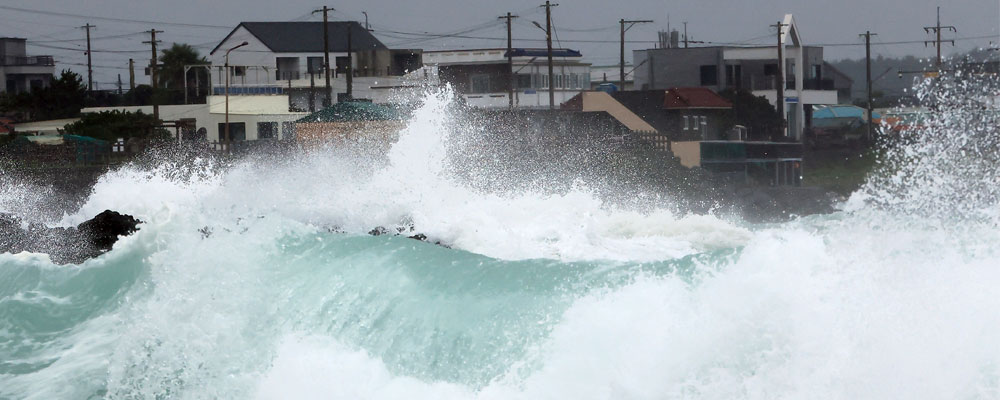

Busan, Aug. 10: Rains and winds were growing in southern South Korea Wednesday as a tropical storm drew closer to the Korean Peninsula, where it was forecast to slam into major urban areas.
Dozens of flights and ferry services were grounded and tens of thousands of fishing vessels evacuated to ports as government officials raised concerns about potentially huge damages from flooding, landslides and tidal waves triggered by the typhoon-strength winds.
The storm, named Khanun, was gaining strength as it moved slowly towards the country, South Korea's weather agency said, with southern and eastern areas increasingly feeling its force.
Khanun is expected to reach the southern resort island of Jeju hours later and then make landfall near the mainland port of Tongyeong Thursday morning.
The agency says Khanun could have a punishing impact as it will likely slice through the centre of the country over several hours, with the storm’s eye brushing the capital city of Seoul, while packing winds blowing at 90 to 154 kph (56 to 97 mph).
The storm is expected to dump 10 to 40 centimetres (4 to 16 inches) of rain in southern and central regions and as much as 60 centimetres (24 inches) in the country’s mountainous eastern regions through Friday. It will be weaker as it blows into North Korea early in the day.
The Korean Meteorological Administration measured Khanun’s maximum winds at 133 kph (82 mph) as of 7:10 p.m. Wednesday (10:10 a.m. GMT), as it passed through waters 250 kilometres (155 miles) southeast of Jeju while moving northward at a speed of 14 kph (8.6mph).
Winds were growing stronger in the country’s southern regions as of 7 p.m., blowing at a maximum 96 kph (60 mph) in waters off Tongyeong and 95 kph (59 mph) in the southwestern mainland port of Yeosu while pouring 14 centimetres (5.5 inches) of rain in some areas of Jeju.
Winds were also picking up in Busan, a major port city on the mainland’s southwest, where pedestrians struggled to hold onto their umbrellas. At the city’s beaches, workers were deflating and tying swimming tubes to trees and setting up sandbags and flood shields in front of buildings.
South Korean President Yoon Suk Yeol has called for officials to be aggressive with disaster prevention measures and evacuations while stressing the perils posed by the storm, which comes just weeks after central and southern regions were pounded by torrential rain that triggered flashfloods and landslides that killed at least 47 people.
In an emergency meeting on Wednesday, Yoon expressed concern that Khanun could inflict huge damage because it was expected to move slowly through the country while sustaining much of its strength for hours. He called for officials to “fully mobilize all available resources” to minimize injuries and deaths.
Japan measured Khanun as a severe tropical storm with sustained winds of 108 kph (67 mph) and higher gusts. Warnings for stormy conditions, potential flooding and other risks were issued for the southwestern part of Japan’s southern island of Kyushu and nearby areas. (AP)