- Wednesday, 3 June 2026

Turkey's post-quake preparedness uncertain even after 6 months
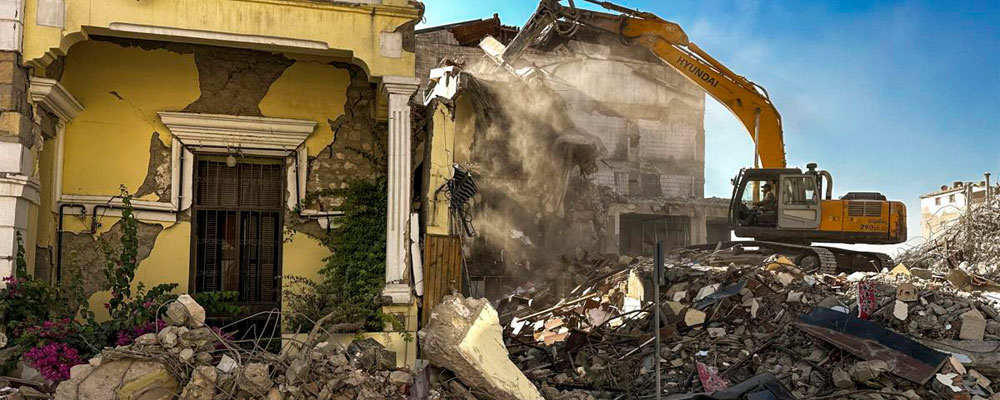

Istanbul, Turkey, Aug 8: Dust and rubble fill the street as an excavator tears off chunks of concrete from an old apartment building. Bystanders and former residents watch from afar as construction equipment tears down the structure. Among the bystanders is Ibrahim Ozaydin, 30, a former resident. He watches the demolition not with worry, but with relief, as his building was marked by officials as unsafe months ago.
Ozaydin and his family were shocked to learn that the municipality deemed his building uninhabitable. "We decided to build our own house," he told The Associated Press as he watched his former home being torn down. "Instead of living in a poorly built house, let us take our own precautions."
The sight of construction vehicles demolishing buildings became engrained in Turkish minds six months ago today, after a devastating 7.8-magnitude earthquake hit Kahramanmaras and 10 other provinces in southern Turkey on the morning of Feb. 6.
Over 50,000 people died, and hundreds of thousands were left homeless, sheltering in tents and other temporary accommodation. The International Labor Organization estimates that some 658,000 people were left jobless. As for the material cost, some 300,000 buildings were damaged. Survivors needed to be rescued, rubble to be cleared and buildings on the verge of collapse torn down.
Yet this latest demolition is taking place in Istanbul, Turkey's largest metropolis, far away from the earthquake zone. This time the building wasn't torn down as part of search-and-rescue efforts, but to prevent such harrowing scenes in the future.
The building was occupied only by Ozaydin and his extended family, who also owned a shop on the ground floor. The family managed to relocate their shop and build a new, sturdier house at a different location, but theirs is an exceptional story in a city where hundreds of thousands of buildings are at risk and property prices are soaring.
Istanbul lies atop a major fault line, one which experts warn could break at any moment. In a bid to prevent damage from any future quake, both the national government and local administrations are racing against time to alleviate the pain of the February quake while also preparing their cities for potential disasters in the future.
However, even preparedness can fall victim to political rivalry: the authorities in opposition-held Istanbul municipality and the national government in Ankara cannot agree on the exact number of buildings at risk of crumbling in the event of an earthquake. But both put the figure at hundreds of thousands.
After the February tragedy, the Istanbul municipality headed by Mayor Ekrem Imamoglu, a prominent figure in the opposition to President Recep Tayyip Erdogan, earmarked for demolition 318 buildings housing over 10,000 people.
Bugra Gokce, an official with the Istanbul municipality overseeing the demolition, said, "We are identifying buildings at risk of collapse and fortifying others, all to reduce the potential loss of life."
During a heated election campaign right before his re-election to a third decade in power, Erdogan pledged to construct 319,000 new homes within the year. He attended many groundbreaking ceremonies as he persuaded voters that only he could rebuild lives and businesses. (AP)
-square-thumb.jpg)