- Tuesday, 2 June 2026

Scholarships have helped displaced Afghan students find homes on US universities
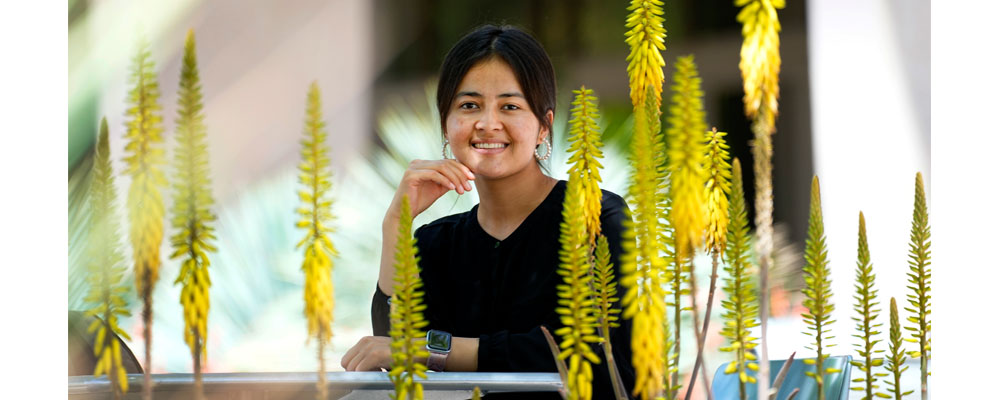

Dallas, July 24: As the Taliban swept back into power in Afghanistan in the summer of 2021, Fahima Sultani and her fellow university students tried for days to get into the Kabul airport, only to be turned away by gun-wielding extremists.
“No education, just go back home,” she recalled one shouting.
Nearly two years later, Sultani, now 21, is safely in the U.S. and working toward her bachelor’s degree in data science at Arizona State University in Tempe on a scholarship. When she's not studying, she likes to hike up nearby Tempe Butte, the kind of outing she enjoyed in her mountainous homeland.
Seeing students like Sultani rush to leave in August 2021 as the U.S. withdrew from Afghanistan after 20 years, colleges, universities and other groups across the U.S. started piecing together the funding for hundreds of scholarships so they could continue their education outside of their home country.
Women of Sultani's generation, born around the time the U.S. ousted the Taliban after the 9/11 attacks in 2001, grew up attending school and watching as women pursued careers. The Taliban's return upended those freedoms.
“Within minutes of the collapse of the government in Kabul, U.S. universities said, ‘We’ll take one;’ ‘We’ll take three;' ‘We’ll take a professor;’ ‘We’ll take a student,’” said Allan Goodman, CEO of the Institute of International Education, a global not-for-profit that helps fund such scholarships.
The fears leading the students to quickly board flights were soon justified as the Taliban ushered in a harsh Islamic rule: Girls cannot attend school beyond the sixth grade and women, once again required to wear burqas, have been banned from universities, parks and gyms and are restricted from most employment.
Sultani is one of more than 60 Afghan women who arrived at ASU by December 2021 after fleeing Afghanistan, where she'd been studying online through Asian University for Women in Bangladesh during the pandemic.
“These women came out of a crisis, a traumatic experience, boarded a plane not knowing where they were going, ended up in the U.S.,” said Susan Edgington, executive director and head of operations of ASU's Global Academic Initiatives.
After making their way to universities and colleges across the U.S. over the last two years, many are nearing graduation and planning their futures.
Mashal Aziz, 22, was a few months from graduating from American University of Afghanistan when Kabul fell and she boarded a plane. After leaving, she began scouring the internet, researching which schools were offering scholarships and what organizations might be able to help.
“You’ve already left everything and you are thinking maybe there are barriers for your higher education,” Aziz said.
She and three other Afghan students arrived at Northeastern University in Boston in January 2022 after first being taken to Qatar and then a military base in New Jersey.
Aziz graduated this spring with a bachelor's degree in finance and accounting management. She plans to start working on her master's degree in finance this fall at Northeastern.
The hurdles for students who left can include everything from needing help to overcome language barriers to getting credit for the courses they completed in their home country to affording tuition, Aziz said.
Just two days after the fall of Kabul, the University of Tulsa in Oklahoma announced it had created two scholarships for Afghans seeking refuge in the U.S. Later, the university created five more scholarships that went to some of the young Afghans who settled in the area. Five more Afghans have received scholarships to study there this fall.
Danielle Macdonald, an associate anthropology professor at the school, has organized a regular meetup between TU students and college-aged Afghans who have settled in the Tulsa area.
Around two dozen young people attend the events, where they talk about everything from U.S. slang to finding jobs. Their outings have included visiting a museum and going to a basketball game, Macdonald said.
“It’s become a really lovely community,” she said. (AP)