- Tuesday, 2 June 2026

Fierce protests have been rocking Israel for months, what's fuelling them?
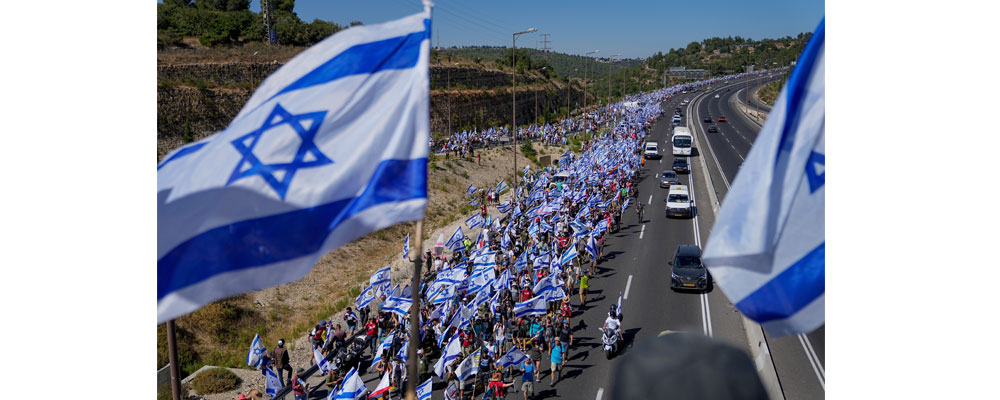

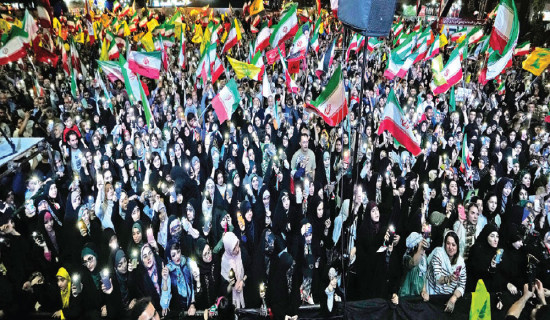
Jerusalem, July 23:Oceans of Israeli flags, steady drumbeats, cries of “Democracy!” Water cannons, police on horseback, protesters dragged off the ground.
For seven straight months, tens of thousands of Israelis have taken to the streets in the most sustained and intense demonstrations the country has ever seen.
The protesters are part of a grassroots movement that rose out of opposition to a contentious judicial overhaul spearheaded by Prime Minister Benjamin Netanyahu and his far-right allies.
The overhaul calls for sweeping changes aimed at curbing the powers of the judiciary, from limiting the Supreme Court's ability to challenge parliamentary decisions, to changing the way judges are selected.
While the government says the overhaul is needed to reduce the powers of unelected judges, protesters, who make up a wide cross section of Israeli society, say the overhaul will push Israel toward autocracy.
With a key portion of the overhaul nearing a final vote early next week, protesters are vowing further “days of disruption" and calling for strikes and general unrest.
Here's a look at why they are still protesting, months into the government's efforts:
Netanyahu's ultranationalist and ultra-Orthodox religious allies say the package is meant to restore power to elected officials. Critics say it is a power grab fuelled by various personal and political grievances by Netanyahu, who is on trial for corruption charges, and his partners, who want to deepen Israel's control of the occupied West Bank and perpetuate controversial draft exemptions for ultra-Orthodox men.
The proposals include a bill that would allow a simple majority in parliament to overturn Supreme Court decisions. Another would give parliament the final say in selecting judges.
On Monday, parliament is expected to vote on a key bill that would prevent the Supreme Court from striking down government decisions on the basis that they are “unreasonable.”
Proponents say the current “reasonability” standard gives judges excessive powers over decision making by elected officials. But critics say that removing the standard, which is invoked only in rare cases, would allow the government to pass arbitrary decisions, make improper appointments or firings and open the door to corruption.
Protesters say Netanyahu and his allies want to change the law so they can appoint cronies to government posts — and particularly so that they can fire the country’s independent attorney general, according to Amir Fuchs, a senior researcher at the Israel Democracy Institute, a Jerusalem think tank. Supporters see Attorney General Gali Baharav-Miara as a bulwark against the overhaul.
The measures “make it more difficult to conduct oversight” over arbitrary decisions of elected officials, said Yohanan Plesner, the institute's president. “This is one chapter of a broader plan and program of the government to weaken the checks and balances.”
In a speech Thursday, Netanyahu dismissed accusations that the plan would destroy Israel's democratic foundations as absurd. “This is an attempt to mislead you over something that has no basis in reality,” he said.
Netanyahu’s government took office in December and almost immediately unveiled its plans to weaken Israel’s Supreme Court.
Protests sprang up in major cities, business leaders balked at the plan and, perhaps most critically, military reservists in Israel's air force and other key units threatened to stop reporting for duty if it passed. (AP)