- Tuesday, 2 June 2026

Brazil's Amazon megaprojects threaten Lula's green ambitions
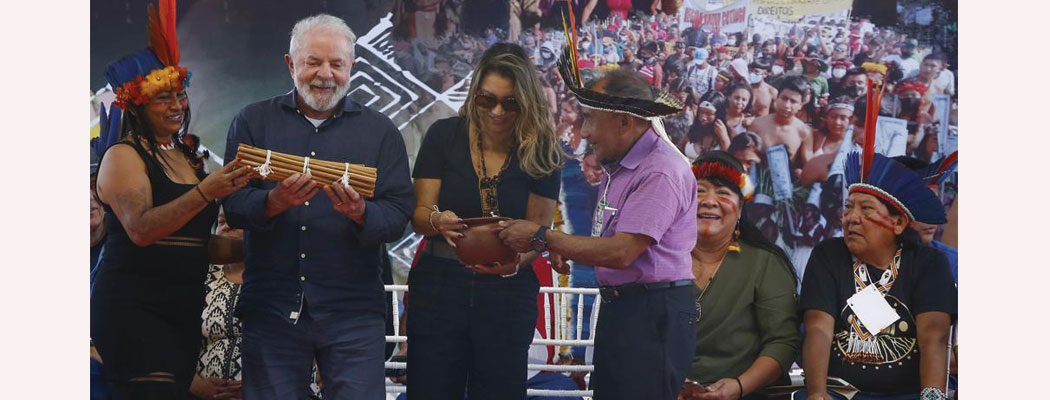

Rio De Janeiro, May 9: After his swearing-in ceremony on Jan. 1, Brazil's Luiz Inácio Lula da Silva walked up the ramp to the presidential palace arm in arm with Indigenous leader Raoni Metuktire, instantly recognizable by his yellow headdress and wooden lip plate.
But a major railway that would accelerate deforestation in Metuktire's ancestral land risks souring relations between the leftist leader and the chief of the Kayapó people. And it's just one of several mega-projects that activists and experts say would devastate the natural world — and seriously dent Lula's newfound image as a defender of the environment — if they proceed.
Others include an oil drilling project near the mouth of the Amazon River; a highway that would slice through some of the Amazon rainforest’s most protected areas; and renewal of a giant hydroelectric dam’s license.
“Lula is talking about the environment, showing preoccupation with illegal mining, demarcating Indigenous territories. He’s already learned a lot, but needs to learn more. We’re still very worried,” said Alessandra Korap, an Indigenous leader of the Munduruku people who recently won the Goldman Environmental Prize for work that included battling illegal mining.
Under Lula’s predecessor, Jair Bolsonaro, deforestation soared to a 15-year high and environmental restrictions were weakened. The far-right leader filled key positions in environmental agencies with agribusiness allies and military officers. Indigenous peoples’ rights were trampled.
After narrowly defeating Bolsonaro in last year's election, Lula has strived to put environmental protection and respect for Indigenous peoples’ rights at the heart of his third term. He resumed successful pursuit of international donations for the Amazon Fund that combats deforestation, launched a military campaign to eject illegal miners from Yanomami territory, committed to ending all illegal deforestation by 2030 and restarted the demarcation of Indigenous areas.
But Lula faces difficult tests in the large infrastructure projects. While opponents regard them as catastrophic, some in Lula's Workers' Party continue to view them as essential for providing jobs and promoting growth. And Brazil, a developing nation, has heavy demand for socioeconomic benefits.
THE OIL-DRILLING PROJECT
Ibama, Brazil’s environmental agency, will decide in coming months whether to license drilling in one sector near the mouth of the Amazon. Approval would surely lead to drilling in the whole region, said Suely Araújo, a former Ibama head now a public policy specialist with the Climate Observatory, a network of non-profits.
“It’s a matter of coherence. Lula’s speeches on environmental protection and the climate crisis are bang on point. But if oil exploration is intensified, it will mean expanding fossil fuels. There would be an inconsistency,” Araújo said.
During Lula’s first terms, huge offshore discoveries became a means of financing health, education and social welfare programs.
“To a large extent, this vision remains, meaning it will be very difficult to persuade the government to give up strategic projects, even when there are significant social environmental risks,” said Maiara Folly, director of CIPO, a think tank focused on climate and international relations.
With existing production set to peak in coming years, there's sharp interest in securing more off Brazil's northern coast. It's a unique and biodiverse location, home to little-studied swathes of mangroves and a coral reef.
Araújo said the project risks leaks that would be carried elsewhere by strong tides. State-run oil giant Petrobras has earmarked almost half its five-year, $6 billion exploration budget for the area. CEO Jean Paul Prates said the first well would be temporary, and that the company has never recorded a leak in offshore drilling. (AP)

-square-thumb.jpg)
-original-thumb.jpg)