- Tuesday, 2 June 2026

Terai welcomes New Year with Satuwain, Jud-Sheetal and Siruwa
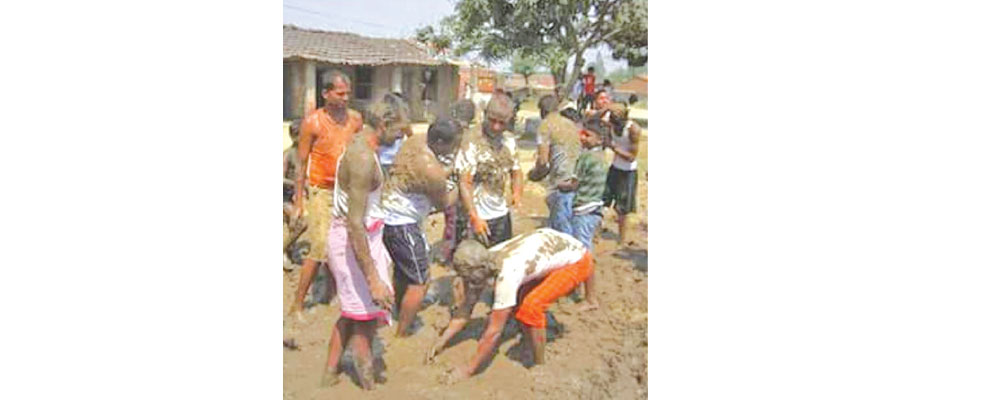

By Mahesh Kumar Das/Bishnu Prasad Pokharel,Jaleshwor/Damak, Apr. 16: The people of Mithila rang in the Nepali New Year 2080 with the Satuwain Festival.
Families across the region, known as the Mithilanchal, woke up early Friday morning, took a bath, worshipped tutelary deities and ate Sattu, a powder of roasted ground pulses and cereals, and pickled green mangoes to welcome the new year.
"This is a tradition that we have been following and passing down for centuries," said Arbind Jha, a priest from Ekdara Rural Municipality, Mahottari district. "Eating Sattu revitalises the body and pickled mangoes are also very healthy," he informed.
Satuwain is the first festival of the year celebrated on the very first day of the year. And on the second day, the people of Mithila mark Jud-Sheetal.
The name Jud-Sheetal means to bathe with cool water. However, there is more to the festival than just this.
On this day, people eat delicious food and celebrate joyously with the belief that starting the new year with fun and merry makes the whole year go well.
On Jud-Sheetal, elders of the family put water on the heads of juniors and give them blessings for a healthy and prosperous life. People also water the trees and plants in their homes and neighbourhoods to express gratitude for them producing oxygen.
A fair was also organised at the Salahesh Temple in Siraha.
This year, the new year fell on April 14, Friday, and the Jud-Sheetal was celebrated on April 15, Saturday.
Meanwhile, local governments in Jhapa have announced a public holiday on Sunday on the occasion of the Siruwa festival. Birtamod Municipality, Kachankawal Rural Municipality, Haldibari Rural Municipality and Jhapa Rural Municipality have holidays in their areas on Sunday.
The Rajbanshi, Tharu, Meche, Urav, Kisan, Dhimal Tajpuria, Gangain, Majhi and other indigenous communities of eastern Terai celebrate the three-day festival which, this year, began on Friday.
According to indigenous rights leader Nityananda Tajpuria, the first day of the festival is Pani (Water) Siruwa when people have fun by splashing water on each other. The second day is Kad Siruwa when people play with mud. And the third day is Rang (Colour) Siruwa when people put colours on each other.
"This festival intends to make people aware of the importance of water and mud (Earth) for life," he informed.
The name 'Siruwa' is derived from the word 'Sirsastha' which means first. Thus, Siruwa means the first festival of the year. As the festival falls in the Nepali month of Baisakh, it is also called Baisakhi or Bais Festival.