- Sunday, 31 May 2026

AI helped a musician with Parkinson’s finish his new album when he could no longer play guitar
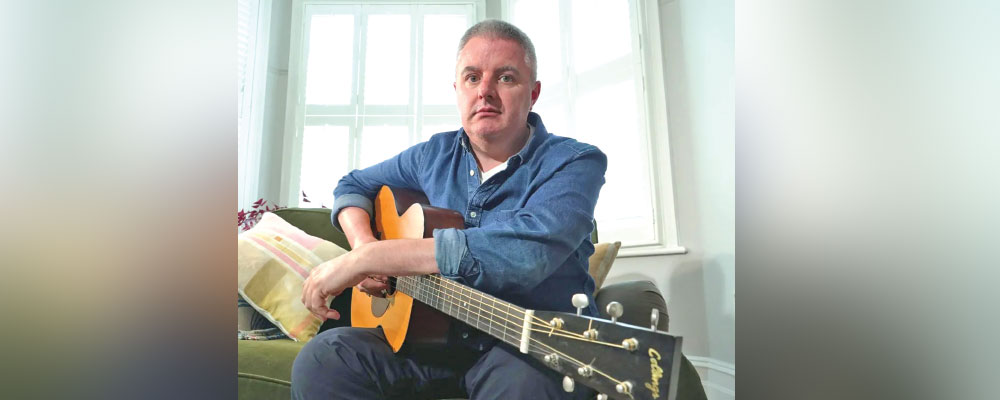

London, May 31: Samuel Smith spent years writing songs with a guitar in his hands. Now, the London-based singer-songwriter is using artificial intelligence tools to help him continue making Americana music after Parkinson’s disease largely took away his ability to play guitar.
Smith, who was diagnosed with the progressive neurological disorder in 2020, recently released his second album, “The Art of Letting Go.” For one of the eight tracks, an instrumental piece titled “Horizon,” he relied on platforms that use AI to generate music to create demo arrangements that would convey his vision to the musicians who recorded the song.
The demos he created by humming rough melodies into his phone and uploading the recordings into song generators like Suno and Udio weren’t for mixing into the final studio version of “Horizon,” Smith stressed. But tremors, stiffness and fatigue, which are common symptoms of Parkinson’s, caused his guitar skills to deteriorate during the more than a year he worked on the album, he said.
“So then I’m faced with a question,” Smith, 49, said. “‘Don’t play, don’t be creative, or find a way out, find a route.’ And for me, this was the route.”
Generative AI has divided the music industry, whose artists and record labels have complained of their copyrighted work being used to train the models behind AI-powered music tools. Sony Music Entertainment, Universal Music Group and Warner Records sued Suno and Udio in June 2024, although Universal later reached a settlement and partnership deal with Udio and Warner did the same with Suno.
Less discussed is what those platforms can do when employed by a serious musician like Smith, whose disease affects the tools central to his songwriting and identity as a guitarist: his hands. He released his debut album, “In the Springtime,” in 2023, saying he wanted to give his two sons a way to remember when he could perform and record music himself.
“I’d always written, I’d also played, I always sung,” he said. “And immediately it became clear to me that I was in trouble, that my music was going to be seriously compromised.”(AP)