- Wednesday, 3 June 2026

Increasing domestic power consumption capacity is my top priority: Minister Basnet
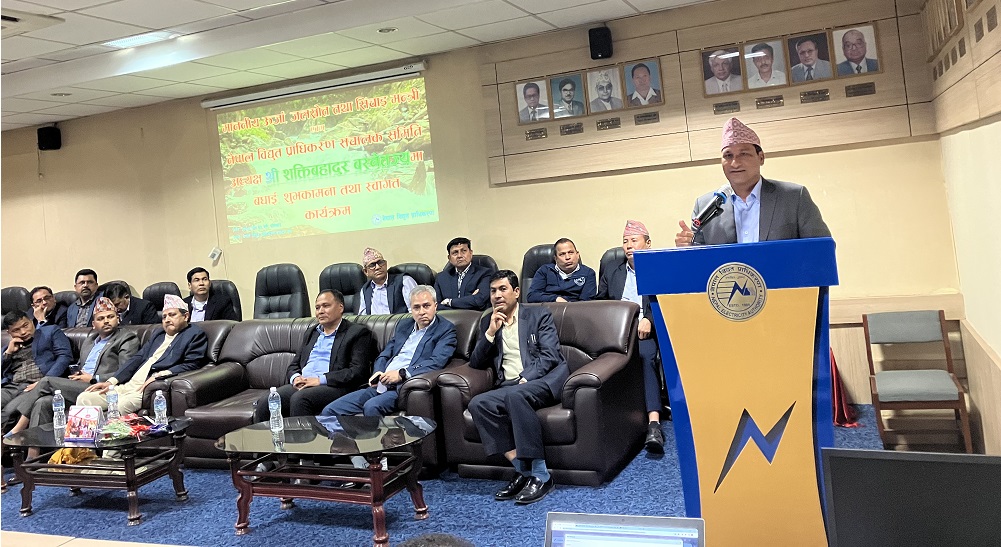

By A Staff Reporter,Kathmandu, Apr. 4: The newly appointed Minister for Energy, Water Resources and Irrigation Shakti Bahadur Basnet has said increasing the capacity to consume electricity produced in the country is his main priority.
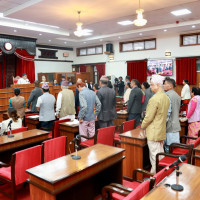
In the welcome programme organsied by the Nepal Electricity Authority on Monday, Minister Basnet said that electricity consumption capacity would be increased by expanding service and improvement in transmission and distribution system infrastructure.
“We should increase the domestic consumption of electricity and manage the excess electricity by exporting it as well," Minister Basnet said. "There will be necessary coordination with the Ministry of Finance and other agencies to ensure necessary investment for infrastructure expansion."
He said that he was aware of the problems of forest area use and tree felling in the construction of hydropower and transmission line projects, and said that he would proactively prevent delays in the construction of projects due to forest and security issues.
He said that among the public institutions, the Authority has established positive standards in the country.
Minister Basnet, who is also the chairman of the board of directors of NEA, directed the employees to be accountable and to play an additional role in enhancing the positive height of the NEA.
In the programme, Secretary at the Ministry of Energy, Resources and Irrigation Dinesh Kumar Ghimire said that in order to increase electricity consumption internally, emphasis should be placed on the improvement and expansion of transmission and distribution system structures, the construction of strategic large reservoir hydropower projects and the expansion of electricity services.
Presenting a detailed report of the organisation, Managing Director of NEA Kul Man Ghising said that management of electricity generated during the rainy season is the main challenge at present.
“More than Rs. 8.5 billion of investment is needed to implement the plans prepared for the next five years for the implementation of projects, including construction for hydropower projects, transmission and distribution, to increase consumption within the country and to export more electricity. But there is a huge investment gap from the government,” he said.
He said that cooperation and facilitation was needed to fill gaps in budget from the government, NEA and donor agencies.
He said that there is a need to export around 1,000 to 1,200 megawatts of surplus electricity during the upcoming rainy season.
-square-thumb.jpg)