- Thursday, 28 May 2026

Saved from death at sea, Syrian refugees face deportation
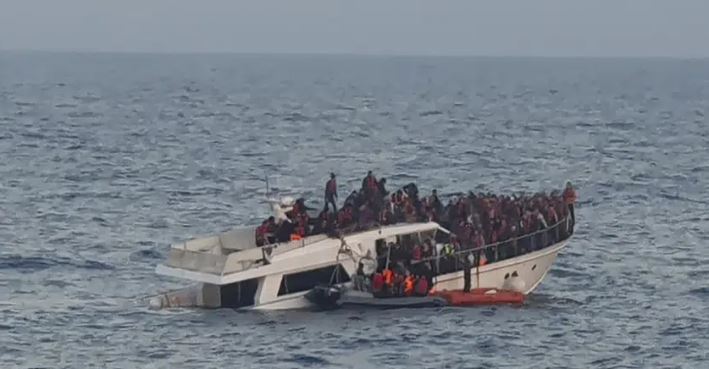

Tripoli, Lebanon, Jan. 19: On New Year’s Eve, a small boat carrying more than 230 would-be migrants, most of them Syrians, broke down and began to sink after setting sail from the northern coast of Lebanon.
Since the collapse of Lebanon’s economy in 2019, an increasing number of people — mostly Syrian and Palestinian refugees but also Lebanese citizens — have tried to leave the country and reach Europe by sea. The attempts often turn deadly.
This time, rescue crews from Lebanon’s navy and U.N. peacekeepers deployed along the border with Israel, were able to save all but two of the passengers, a Syrian woman and a child who drowned. For many of the survivors, however, the relief was fleeting.
After bringing them back to shore, to the port of Tripoli, where they recovered overnight, the Lebanese army loaded nearly 200 rescued Syrians into trucks and dropped them on the Syrian side of an unofficial border crossing in Wadi Khaled, a remote area of northeastern Lebanon, some of the survivors and human rights monitors said.
It remained unclear who had ordered the deportation but the incident marked an apparent escalation in the Lebanese army’s deportations of Syrians at a time of heightened anti-refugee rhetoric in the small, crisis-ridden nation. Officials with the army and General Security — the agency normally responsible for managing immigration issues — did not respond to repeated requests for comment.
Once on the other side of the border, the boat survivors were intercepted by men wearing Syrian army uniforms who herded them into large plastic greenhouses. They were held captive there until family members paid to have them released and brought back to Lebanon by smugglers.
“It was a matter of buying and selling, buying and selling people,” said Yassin al-Yassin, 32, a Syrian refugee living in Lebanon since 2012.
Al-Yassin said he paid $600 — to be split between the Syrian army and the smugglers — to have his brother brought back to Lebanon. Syrian officials did not respond to requests for comment on the allegations.
One of the boat survivors, Mahmoud al-Dayoub, a 43-year-old refugee from the Syrian area of Homs, said he overheard their captors negotiating the price of each detainee.
“I don’t know if it was the Syrian army or the smugglers,” said Dayoub, who has also been registered as a refugee in Lebanon since 2012,
“There were 30 people surrounding us with guns and we didn’t know what was going on,” he said. “All I cared about was not being taken to Syria, because if I’m taken to Syria, I might not come back.”
Dayoub said he managed to slip away and flee back across the border — his family never paid a ransom for him.
Human rights monitors say the case of the boat survivors is a troubling new twist in Lebanon’s ongoing push for Syrian refugees to go home.
Lebanon hosts some 815,000 registered Syrian refugees and potentially hundreds of thousands more who are unregistered, the highest population of refugees per capita in the world. But since the country’s economic meltdown erupted three years ago, Lebanese officials have increasingly called for a mass return of the Syrians.
Lebanon’s General Security agency has tried to coax the refugees into going home voluntarily, with anemic results. In some cases, the agency has deported people back to Syria, citing a 2019 regulation allowing unauthorized refugees who entered Lebanon after April of that year to be deported. (AP)