- Thursday, 28 May 2026

Govt's Common Minimum Programme made public

By A Staff
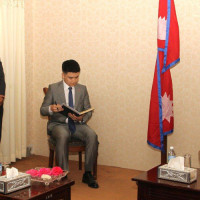
Reporter,Kathmandu, Jan. 10: The government
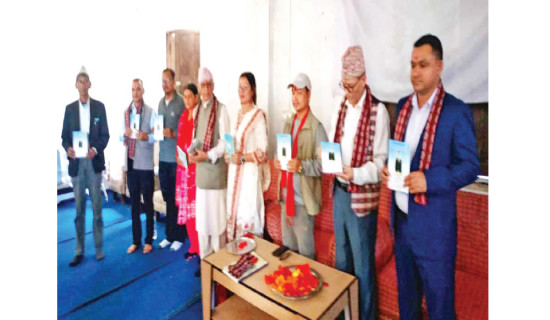
has made public its Common Minimum Programme. Deputy Prime
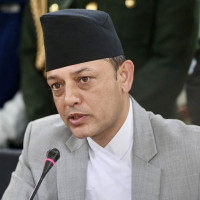
Minister and Minister for Finance Bishnu Prasad Paudel read out the programme,
drafted by a task force comprising leaders from the different parties presently
in the ruling coalition, amid an event at the Office of the Prime Minister and
Council of Ministers on Monday. Paudel also led the drafting force which had Barshaman
Pun from CPN (Maoist Centre), Mukul Dhakal from the Rastriya Swatantra Party,
Dhawal Shumsher Rana from the Rastriya Prajatantra Party and Rakam Chemjong from
Janata Samajwadi Party as members.
The 21-point Common
Minimum Programme of the government focus on solving the issue of citizenship,
control corruption, enhance healthcare, education and service delivery and
introduce a system of time card to reduce crowding at government offices, among
others.
In the programme, the government has also prioritised the consolidation of democracy, political stability, development, prosperity and good governance. The coalition parties have pledged to immediately tackle the citizenship problem and have promised to bring an end to the circumstances currently preventing eligible Nepali citizens from obtaining their citizenship cards.
Similarly, they
have stated their intent to enact or amend at least a dozen legislations in the
first session of the present House of Representatives. These include the Public
Procurement Act, Citizenship Act, Local Administration Act and an e-governance
law.
To instil public
faith in state mechanisms, the government has vowed to crack down on corruption.
Furthermore, it has expressed its commitment to make the tax apparatus
friendlier to taxpayers and eliminate redundant structures to vitalise the
economy. The government will also implement the ‘Make in Nepal’ campaign.
In health, the
programme document states that the government will provide free testing and
treatment to individuals aged 60 and above suffering from hypertension and
diabetes. It will also establish basic hospitals in all local levels and
specialised hospitals in all provinces.
Through the
programme, the government has also announced its plans to provide every
household with 10,000 litres of free drinking water every month. Likewise,
every domestic consumer will also be given 50 units of electricity freely in
the summer months and 30 units in winter.
In the next five years, the government aims to increase electricity production to 6,500 megawatts and per capital consumption to 700 kilowatt-hour. The governing parties have also reiterated their commitment to public welfare and non-aligned foreign policy.
After the
unveiling, Prime Minister Pushpa Kamal Dahal ‘Prachanda’ directed all secretaries
of the Government of Nepal to begin work on implementing the Common Minimum
Programme within a month.
-original-thumb.jpg)