- Thursday, 28 May 2026

Winter Arrived, So Did Energy Bill

At the start of 2023, let reality dawn on all; for the writing on the wall is loud and clear. No one should miss the bus and suffer the kiss of long-term loss.
Traditional powers should give up the idea of their hegemony prevailing for eternity. Times and circumstances change. Prudence should prod all nations and peoples not to put all the eggs in a single basket. After all, the West has been advising the world that changes cannot be prevented. The world does not remain static forever. History reiterates that so often through the millennia.
It’s over for Western hegemony to have the smooth sailing it managed since so long. Although Cold War ended in the early 1990s, NATO was not dismantled but expanded and strengthened. Germany at the end of WW II was severely restricted, Japan was forced to adopt a “pacifist” Constitution that the US gifted. Whether it was Western interests that gained primacy or was it the concern for the security for the entire Planet Earth in the post WW II years needs no answer.
Europe’s 40 per cent gas came from Russia until this time last year. For the error of blindly following the United States, as has been their wont since 75 years, European economy faces a severe test. Average living standards have fallen and inflation increased, even if the poor are getting poorer and the top notch rich find themselves richer.
Old order out
Interestingly, EU and much of the world are in the throes of economic woes. The situation has jolted most Europeans to review and revise their policies toward Russia not out of any love but surely out of pragmatism to end their difficulties caused by the sanctions they imposed on Russia. For that matter, many countries that condemned the military intervention in Ukraine have abstained from applying the sanctions Washington exhorted against Russia.
A global problem, poverty, is also plaguing developed economies. A report released by the US Census Bureau in October 2021 indicated 41 million people living in poverty in the US. This constituted 12.8 per cent of its population. At the same time, 73.7 million people in the European Union are on the brink of poverty.
The number translates into 16.5 per cent of the EU’s total population. In the UK, around 14.5 million people are living in poverty, according to the Joseph Rowntree Foundation's UK Poverty Profile 2022. In other words, 20 per cent of Britons are poverty-stricken.
If the economic conditions of so many million people in the advanced countries are so bleak, the daily difficulty in eking out a living for an average citizen in developing nations are starkly far worse, as figures provided by various financial and research agencies show.
For example, more than 20 million people in Ethiopia, Kenya and Somalia go hungry daily. The billions of dollars’ worth of military and other support that rich nations provide regularly to serve their “strategic” interests make mockery of the vast millions for whom poverty is a daily diet and hunger shadows them mercilessly.
Expecting things to improve on the hunger front in the foreseeable future under the prevailing scheme of policies and strategic outlook would be sheer naive. EU members’ reluctance to host Ukrainian refugees, of late, is a telling story of national comfort and convenience taking precedence over life and death elsewhere.
During the four-decade war in Afghanistan, five million Afghan refugees flocked to neighbouring Iran and Pakistan. Yet, the economically advanced nations that never tire of pontificating about humanitarian considerations spend billions of dollars on vulgar display of wealth and mass killing weapons, while scheming strategies to direct potential refugee influx to poorer and weaker countries.
Europe should shed the habit of relying too heavily on the US for its as well as global agendas. Overreliance on and dictation from Washington on major international issues do not rescue them with relief when worse to worst. Encirclement is vehemently opposed by not only a particular superpower but by any major power worth the tag.
Today, global economic warning lights are flashing red. In October, French President Emmanuel Macron proposed a European Political Community in which leaders from 27 European countries and representatives from other regions participated. This came at a time when most Europeans think that the Ukraine war risks stagnating into stalemate.
Gas bill, winter chill
Russia sparked the war on ground of being encircled by less than friendly countries and Ukraine’s bid to join NATO. As a fallout, the West found itself running out of cheap oil and gas together with the side effects that spiraled inflation and caused adverse effects on the supply chain.
Energy war and consequential economic meltdown should be avoided, though extremely difficult. Germany’s panic buying of oil in order to fill gas reserves is no secret. Other European governments are taking similar measures.
If it is any consolation—or, rather, assurance—the West is not alone in its current discomfort. What might be an experience in extremity to them is routine life for the vast majority of the global population of almost eight billion. Oil politics hooks the big to plod their way and leaves average individuals to learn to live with a crisis, whatever the degree of their trauma.
In October, the 13-member oil cartel OPEC refused to increase oil productions, which Washington took as “hostile” act. The UAE cold shouldered the US President Joe Biden but rolled out a red carpet welcome to Putin shortly after the OPEC decision to cut oil productions. Biden’s administration has been talking aloud of “revenge” against Saudi Arabia.
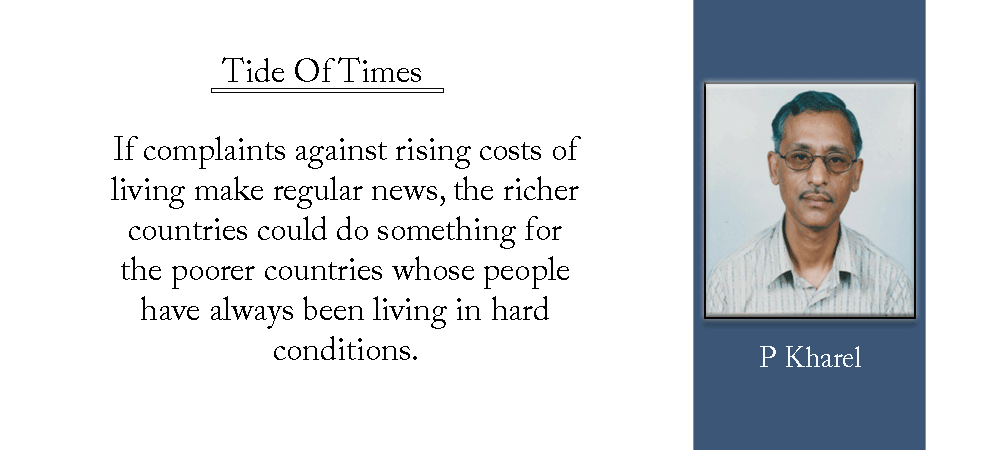
If complaints against rising costs of living make regular news, the richer countries could do something for the poorer countries whose people have always been living in hard conditions. To reiterate the transparently obvious, war takes its toll in many ways. Alternatives need to be probed. Interdependence should not automatically mean overreliance, lest those in advantageous positions weaponise it against the dependent.
(Professor Kharel specialises in political communication.)