- Tuesday, 26 May 2026

Voice Of People, Government To Outside World
Sunil KC
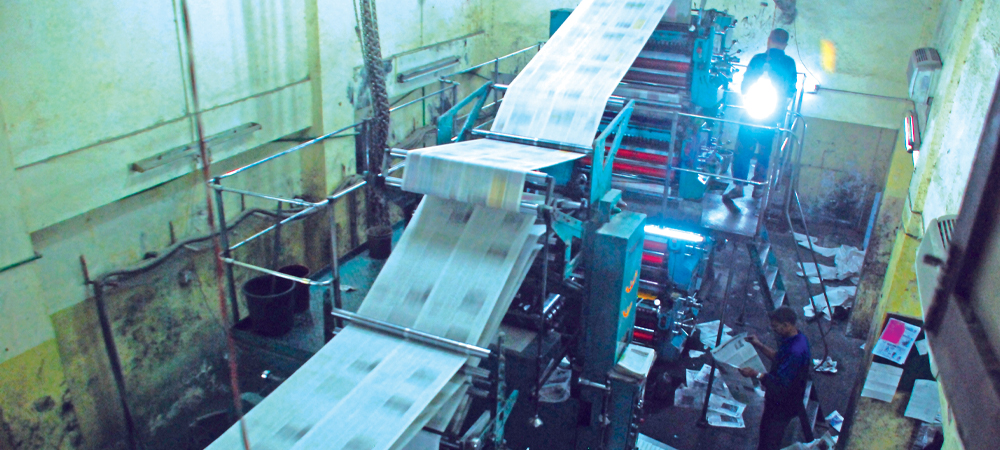
The Rising Nepal, the country’s first English broadsheet daily, is celebrating its 57th anniversary. In its 57-year history, this newspaper has been the voice of Nepal and the government to the outside world.
In the last five decades, The Rising Nepal has been a living testament to the country’s political, economic, and social changes. Whether it is the national referendum of 2036 BS to choose between the then existing one-party or multi-party system, the political change of 1990, the 10-year-long Maoist insurgency, India’s economic blockade of 1989, the fluid
political situation marred by intra- and inter-party discords and contentions, or the massacre of the royal family, this daily has remained steadfast in its commitment to informing the people with factual and unbiased news and reports. One big plus of The Rising Nepal is that
it has always maintained a sober tone, refraining from sensationalism, overstatement, and scandalising events and issues of national importance.
Biggest Strength
The biggest strength of the "Rising Nepal" has been its human resources. Its editorial desks have been led and managed by some of the country's best journalists, editors, and writers, including Barun Shumsher Rana, Manaranjan Josse, Shyam KC, and P. Kharel, to name a few.
The Rising Nepal has presented in-depth reports, expert reviews, and analysis on a wide range of national and international issues by accommodating the country's politicians, policymakers, diplomats, and professionals in its op-eds.Because of the breadth of its journalistic expertise and experience, The Rising Nepal's journalists and editors were instrumental in the establishment of private sector publishing houses.
However, for The Rising Nepal and other publications of the Gorkhapatra Corporation, the journalistic journey has not been smooth. During the panchayat system, the primary role of The Rising Nepal was to promote and endorse the ideology and policies of the then system and the government.
After the political change of 1990, Nepal’s media landscape saw a sea change with the constitutional guarantee of freedom of expression. In that changed scenario, the publications of Gorkhapatra Corporation were looked down upon, wrongly, as a vestige of the Panchayat system, and questions were asked whether they should continue to remain in the hands of the government in the new political system.
That time, then Prime Minister Krishna Prasad Bhattarai even said at an annual function of the corporation that the government should not be running a media house, fueling speculation that the government will ultimately privatise the corporation.
With the media sector still fiercely partisan politically, and newspapers funded by political parties or media operators with political alliances and economic interests, The Rising Nepal and its sister publications were too important for the government to let go of if it wanted to get its voices and policies across the board.
There might still be debate on whether the corporation should be given to the private sector with its narrow political and economic interests or kept with the government for the wider interests of the people.
That issue is now put to rest, with the corporation now fully owned by the government. And, given the competing political ideologies and commercialization in the media sector, this is a wise decision.
Also, when one looks at the failed privatisation of other government entities and industries, one wonders if the history and legacy of The Rising Nepal and other publications of the Gorkhapatra Corporation might as well be lost with its privatization.
However, challenges lie ahead for The Rising Nepal to fulfil a crucial role as a front player to inform people about the government's actions and policies as well as to maintain multiplicity in views and opinions and to disseminate news and information to people in a fair and impartial manner.
The present-day Rising Nepal has risen above the narrow perception of government mouthpieces, covering a wide range of issues through news reports, opinions, and articles to serve the people.
Digital Upheaval
Another big challenge for The Rising Nepal and the whole spectrum of print media is the digital upheaval in the media sector. With people having instant access to news and information, the growth and popularity of digital and social media has resulted in decreased circulation and declining revenue from advertisement and sales for newspapers.
Still, the significance of print media can hardly be understated. Newspapers are still a more authentic source of news as there is no pressure to "break the news," reducing the risk of misinformation. This allows newspapers to stay ahead of the game when it comes to authenticity.
But like all newspapers around the world, The Rising Nepal must face this challenge, and the best way to do it is to blend print and digital media with a digital transition. Digitization will help The Rising Nepal reach a larger audience, both within and outside the country.
It already has electronic versions of the newspaper that are accessible to a wider audience around the world.
Ideally, the media serve several essential roles. The primary purpose of the media is to inform the public with information to make thoughtful decisions about leadership and policy, act as a watchdog, set the agenda for public discussion of issues, and provide a forum for political discussion.
This is where The Rising Nepal must focus: to become a newspaper worthy of its value in content and presentation and, more importantly, to uphold the trust of its readers through objective, impartial reporting and writing in all aspects—political, economic, social, and cultural.
(KC is former chief reporter of this daily)
How did you feel after reading this news?