- Thursday, 28 May 2026

Majority of female journalists face online violence: Report

By A Staff Reporter,Kathmandu, Dec.1 : Online violence against female journalists has increased across the country, whereas Facebook messenger is the main platform for online abuse, a new report has found.
Findings of the ‘Online Violence against Women Journalists’ claimed that 88.6 per cent of the female journalists surveyed had experienced online violence in their lifetime. Of them, 53 per cent said that the online violence they had witnessed was associated with their profession.
Similarly, around 11.4 per cent said they had not personally experienced online violence but had heard about others who faced such problems.
The Media Advocacy Group (MAG) and Friedrich Ebert Stiftung (FES) have published a report that points to a steep rise in online violence against women journalists.
The researchers behind the report reached out to over 500 women journalists across the country, of which 281 journalists of various print, broadcast and online media outlets responded to the survey questions.
Of the respondents, 21.4 per cent said that the violence that started online later developed into threats and physical attacks.
The research found that of the 281 who responded, 116 respondents said the perpetrators of violence were in-house colleagues, 89 said the perpetrators were colleagues from other media outlets and 89 respondents said the perpetrators were strangers.
The report further shows alarming facts that the female journalists surveyed reported being harassed, 63 respondents said they faced online violence from their news sources, 56 respondents said the perpetrators were affiliated with political parties and 26 said the perpetrators were government officials.
More than half - 62.3 per cen t- of the women journalists surveyed said Facebook messenger is the main platform for online violence, 15.3 per cent said Twitter, 12.8 per cent said WhatsApp, 11.7 per cent said Viber, 6 per cent said email and 4.6 per cent said Instagram.
The study found that of those who experienced online abuse, 40 per cent reported that it had negatively impacted their career, while 31 per cent said it had negative impact on their family life.
Similarly, 62.3 per cent of the women journalists who had been exposed to online abuse reported to have mental health issues.
Babita Basnet, Director of MAG, said policy reform and clear legal arrangements are required to deal with the increasing cases of online abuse.
Highlighting the need to make easy procedural arrangements to lodge complaints against online abuse, Basnet said, “The practice or system that makes it difficult to register complaints should be reformed and revised.”
“The compliant of online abuse should be heard quickly in an effective and efficient manner,” she added, adding the media house should also make arrangements to provide essential support to the victims, including psychosocial counseling and legal support to get justice.
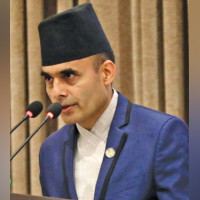
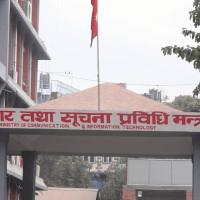
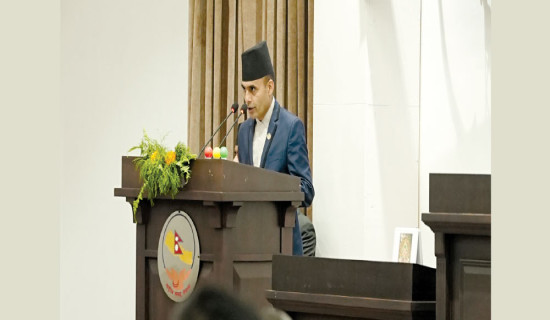
Commenting on the report, Secretary of the Ministry of Communication and Information Technology Dr. Baikuntha Aryal said the report would be used as evidence to formulate new laws and policy.
Stating that the Ministry had been working to bring new policy related to cyber security and crime control, Secretary Aryal assured that the upcoming policy would also include the issue of online abuse faced by female professionals.
He also clarified that the Ministry had been working to conduct digital literacy campaign at local levels to make internet users aware about safe use of internet and gadgets.
“To control the misuse of SIM cards, the Ministry has been working on mobile device managing system,” he added.
In a bid to control online abuse, the Ministry has been lobbying with the head offices of the social media like Facebook, Twitter, among others, to either set up their office or provide agents for Nepal, so that they could address the issue of online abuse and crime, said Aryal.