- Wednesday, 8 April 2026

First Milk Bank For Newborns
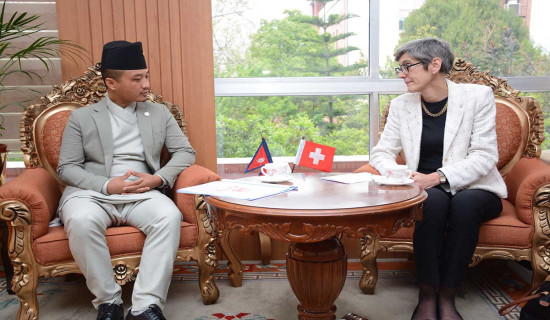
With the establishment of the first-ever human milk bank in the country's major maternity and women's hospital, hopes are now high that many vulnerable neonates will get what they need most: breast milk, which is vital for their survival. Established in partnership with the Government of Nepal, the European Union and UNICEF, the bank functions by collecting milk from lactating mothers and then screening, processing, pasteurisation and finally distributing the milk to needy infants, who are unable to receive breast milk from their mothers owing to various reasons. The milk bank, aptly named 'Amrit Kosh', is an essential component of a breastfeeding-friendly health system, giving vulnerable infants access to the multiple benefits of breast milk when they need it most.
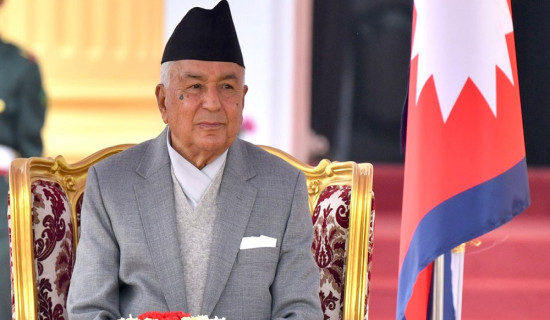
Because of the milk bank's significance in a nation like ours where infant mortality is higher than in many other countries, President Bidya Devi Bhandari termed the establishment of the bank a historic initiative. After inaugurating the bank the other day, the head of the state hoped that the bank would systematically and effectively collect, process and store breast milk donated by lactating mothers and distribute it to infants in need and the bank would help reduce infant mortality and raise awareness about the importance of breastfeeding. Maternity experts say that a supportive breast milk feeding environment is crucial for the survival of neonates. Premature, low birth weight, congenital diseases and other medical conditions often give children problems in sucking their mother's milk directly.
For children suffering from such conditions, breast milk feeding appears to be the best alternative, preferably from their biological mothers. Milk collected from other lactating women can also be fed in case biological mothers cannot lactate or suffer from some diseases. As mother's milk contains antibodies, it is important for the kids as it boosts up their proper physical and mental growth and allows them to have the required level of immunity to keep diseases at bay. While mother's milk helps avoid deaths of infants and young children, exclusive breastfeeding has the potential to prevent 13 per cent of under-five deaths globally each year. Early initiation of breastfeeding within the first hour of birth, in addition to exclusive breastfeeding, can reduce 22 per cent of all neonatal deaths worldwide. In Nepal, only 42 per cent of children under two are breastfed within one birth and 62 per cent of infants under six months are exclusively breastfed.
No doubt, the setting up of the human milk bank at the government's maternity hospital, popularly known as Prashuti Griha, is a good initiation in saving and causing proper physical and mental growth of the vulnerable neonates and young children. However, such banks need to be set up at maternity and other hospitals across the nation. In several other nations, breast milk banks are found at almost every maternity or major hospital. Our authorities must initiate work to establish several such banks in other parts of the nation, especially in villages and remote areas where children face threats to their lives due to several health-related matters. Though the first human milk bank in our country has come relatively late, it should be applauded for being a noble step towards saving vulnerable neonates and young children and helping them achieve proper physical and mental growth.
-original-thumb.jpg)