- Sunday, 12 April 2026

Amnesty International launches global initiative to confront threat to right to protest

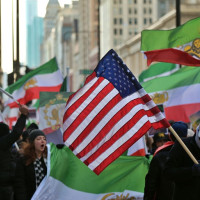
Kathmandu, July 19: Amnesty International says that the right to protest is under unprecedented and growing threat across all regions of the world. In this context, the organization has launched a new global campaign to confront states’ widening and intensifying efforts to erode this fundamental human right.
"From Russia to Sri Lanka,
France to Senegal, and Iran to Nicaragua, state authorities are implementing an
expanding array of measures to suppress organized dissent.
Protesters across the globe are
facing a potent mix of pushbacks, with a growing number of laws and other
measures to restrict the right to protest; the misuse of force, the expansion
of unlawful mass and targeted surveillance; internet shutdowns, and online
censorship; and abuse and stigmatization.
Meanwhile, marginalized and discriminated groups are subjected to even further barriers," the international human rights watchdog said in a press release.
Amnesty International’s “Protect
the Protest” campaign will challenge attacks on peaceful protest, stand with
those targeted and support the causes of social movements pushing for human
rights change.
“In recent years we have seen some
of the biggest protest mobilizations for decades. Black Lives Matter, MeToo,
and the climate change movements have inspired millions the world over to take
to the streets and online to demand racial and climate justice, equity and
livelihoods, and an end to gender violence and discrimination.
Elsewhere, people have stood up in their thousands against police violence and killings, state repression and oppression,” said Agnès Callamard, Amnesty International’s Secretary General.
“Almost without exception, this
wave of mass protest has been met with obstructive, repressive, and often
violent responses by state authorities. Instead of facilitating the right to
protest, governments are going to ever greater lengths to quash it.
This is
why, as the world’s biggest human rights organization, we have chosen this
moment to launch this campaign. It’s time to stand up and loudly remind those
in the power of our inalienable right to protest, to express grievances, and to
demand change freely, collectively, and publicly."
Restrictive legislation, blanket
bans, and emergency powers
A range of issues including the
environmental crisis, growing inequality and threats to livelihoods, systemic
racism, and gender-based violence have made collective action ever more
necessary.
Governments have responded by introducing legislation imposing illegitimate restrictions on the right to protest. For example, we have seen blanket bans on protests, as seen in Greece and Cyprus during the Covid-19 pandemic.
In the UK, a new law contains
provisions providing police officers with wide-ranging powers, including the
ability to ban ‘noisy protests’, while in Senegal, political demonstrations in
the centre of Dakar have been banned since 2011, precluding protests near
government buildings.
Governments of all kinds are also
increasingly using emergency powers as a pretext to clamp down on dissent.
This was seen at the height of the Covid-19 pandemic in countries including Thailand, while in the Democratic Republic of Congo, a government-imposed ‘state of siege’ has provided military and police officers with extensive powers to restrict protest in the provinces of Ituri and North Kivu since May 2021. (RSS)
-original-thumb.jpg)

-original-thumb.jpg)