- Thursday, 28 May 2026


The Rising Nepal

Sufficiently promote the use of EV: Environmentalists
Environmentalists have complained that the government has not given importance to electric vehicles (EV) in public transport in Nepal. Environmentalists at an interaction programme on energy policy dialogue, jointly organised by the Nepal Forum of Environment Journalists (NEFEJ), Prakriti Resources Center, and World Wildlife Fund Nepal, have urged the government to increase the use of EV in public transport. Urban transport expert Prashant Khanal said that 36 per cent of the carbon emissions in Nepal comes from transport sector and petrol-and-diesel-run buses and trucks account for a large share of it.

Lightning kills 10 in 24 hours in different parts of country
Lightning strikes killed 10 individuals in different parts of the country in the last 24 hours. According to the data provided by the National Disaster Risk Reduction and Management Authority (NDRRMA), the deaths were recorded from Kailali, Kanchanpur, Rupandehi, Nawalparasi West, Baglung, Banke, Parsa and Dhading districts. Until 10 am on June 29, the NDRRMA’s daily bulletin showed that three individuals were injured by the lightning strikes.

WB approves US$ 1.03 bn financing to help improve regional trade
The World Bank Wednesday approved US$1.03 billion of financing to help improve regional trade in Nepal and Bangladesh by reducing trade and transport costs and transit time along the regional corridors. The Accelerating Transport and Trade Connectivity in Eastern South Asia (ACCESS) Programme Phase 1 will help the respective governments address the key barriers to regional trade ─ manual and paper-based trade processes, inadequate transport and trade infrastructure, and restrictive trade and transport regulations and processes, according to a press statement of the WB.

Boost Rice Production
The country marked National Paddy Day with the slogan of "Utility of rice in biodiversity, support in import substitution" on Wednesday. The day carries special meaning for Nepali farmers as well as the national economy. It takes place in the midst of rainfall that is crucial for paddy plantation in Nepal. Also known as Rice Day, it brings cheers to the face of farmers that mainly rely on the rice production to maintain their livelihood throughout the year. As the irrigation facility does not cover most of the arable lands, monsoon rain serves as the lifeline for the plantation and production of the paddy. According to a news report carried by this daily, paddy has been planted in 17 per cent of the paddy fields across the country, which is almost 10 per cent less than the pl
Budgeting Is Linked To Human Rights
Local government institutions -- metropolises, sub-metropolises, municipalities and rural municipalities -- have presented their annual policies, programmes and budget on Asar 10 (last Friday) for the upcoming Fiscal Year 2022-23. The date for tabling of the local government budget has been fixed by the Intergovernmental Fiscal Arrangement Act, 2017, and 753 local governments put in their preparedness to announce the policies, programmes and present budget on the date scheduled by law. Needless to say, the Act has also fixed the similar dates
Create Travel-tech Products In Nepal
Travel-tech products in adventure tourism and wellness have gained momentum over the past decade. The travel industry is slowly reviving after the COVID-19 pandemic. According to the Reportlinker, the global travel tech market is expected to reach US$ 13.6 billion by 2027. Nepal’s travel and trekking entrepreneurs are cautiously optimistic of tourism picking up to the pre-pandemic level but the travel-tech industry at the infancy.
No More Comparison
The characteristics of a good student are regular attendance, timely completion of assignments and a nice academic score. While these markers define the standards every student is taught to achieve, it does not take into account factors like home environment, personal health and financial condition of the student. It may appear odd to include these factors but the failure to consider them initiates the process of comparison in the lives of children. This then results in the rise of unsatisfied parents and confused students who are unable to cope with the aforementioned gold standard of education.

Entertainment sector seeks facilities equal to other industries
Stakeholders of film industries, business community and other sectors on Tuesday discussed the problems facing by the entertainment industry and the efforts made by the concerned government agencies to address them. Speaking at a programme on 'Film Song-Music Concerns and Law and Tax Rights' held at the office of the Federation of Nepalese Chambers of Commerce and Industry, FNCCI President Shekhar Golchha urged the government to address the problems and difficulties facing by the entertainment industry.
Floods affect life in southern plains
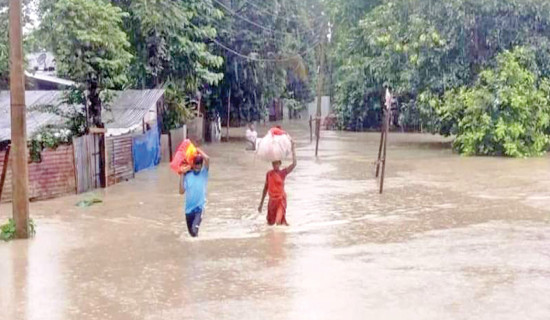
Floods triggered by heavy rains affected life in southern plains on Tuesday. Cities like Birtamod, Biratnagar, Itahari and Inaruwa in Province 1 and Butwal in Lumbini submerged as the highways passing through these cities turned into flooded rivers, affecting vehicular movements. Although only one casualty was reported from flood on Tuesday, 13 persons lost their lives in the floods and landslides in the last weeks, according to the National Disaster Risk Reduction Management Authority (NDRRMA).

69.4 % population vaccinated against COVID-19
Nepal has fully vaccinated 69.4 per cent of its population against COVID-19 so far. According to the Ministry of Health and Population (MoHP), of the total population, 22,995,709 people have received their first dose of the vaccine while 20,267,818 have received their full dose as of Tuesday. In total, 136,996 people were vaccinated in the last 24 hours. They were vaccinated with AstraZeneca, Vero Cell, Pfizer or Johnson & Johnson vaccines.
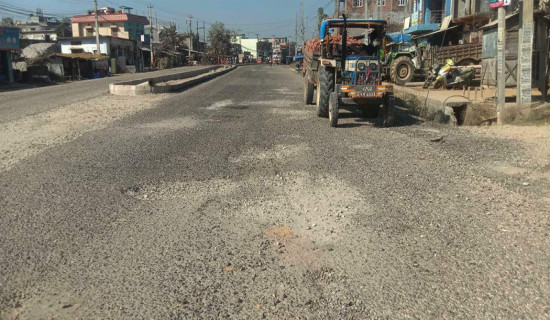
Construction of 1.8km road in limbo for four years
How long do you think it takes to build 1800 metre of road? Six months, one year or two years? But, the road is still incomplete, four years after the construction began. The construction of the four lane road from Area Police Office, Dhanuli to Ward No. 1 market in Khajura Rural Municipality, Banke, is still unfinished. Gajurmukhi Niraman Company Ilam was awarded the contract to complete the project at a cost of Rs. 214,900,000 in April 2017 by the federal government of the day.
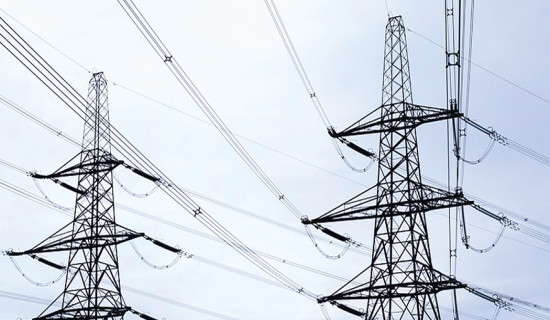
Bharatpur-Bardaghat transmission line in partial operation
A partial section of Bharatpur-Bardaghat 220 kV transmission line from Bharatpur of Chitwan to Bardaghat of Nawalparasi (Bardaghat Susta east) has come into operation. The 56-km transmission line from the Bharatpur Metropolitan City-11 substation at Aaptari in Chitwan to Arun Khola in Nawalparasi was brought into operation on Monday. The Nepal electricity Authority (NEA) has charged the section where the construction was completed through alternative arrangements as it was not possible to send additional power from Bharatpur to Bardaghat due to obstruction at Dumkibas in Nawalparasi.
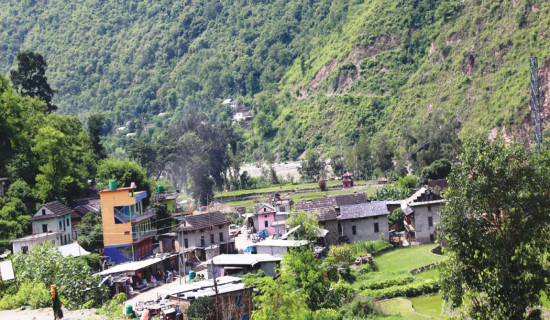
Study of Sunkoshi III reservoir power project concludes
Study of the proposed 'Sunkoshi III' Reservoir Power Project at the Sunkoshi River on the border of Kavrepalanchok and Ramechhap districts has been completed. According to the Department of Power Development, feasibility study of the proposed project on the border of Temal Rural Municipality of Kavre and Khandadevi Rural Municipality of Ramechhap has been completed.
Alarm Bell On Cholera
With the onset of the monsoon season, the risk of the outbreak of water borne diseases goes high in the Kathmandu Valley. Such a public health threat looms large in the nation's capital every year. Probably the most dangerous and deadly in the list of water-borne disease is cholera of which several cases have been reported in the wake of prolonged piling up of undisposed metropolitan waste. And if the cases are not brought under control in time, the disease may spread in pandemic proportion. The Ministry of Health and Population (MoHP) has already confirmed cholera infection in 12 persons in the capital valley as of Monday. Doctors have confirmed the presence of Vibro cholera 01 Ogawa serotype in the tested samples.
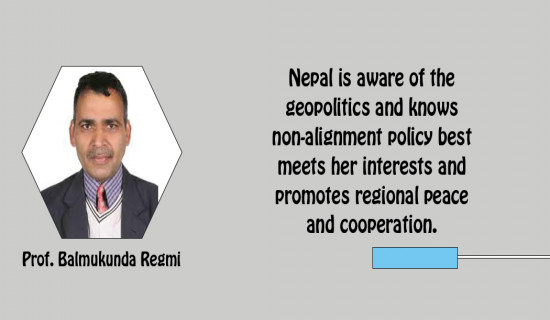
Non-aligned Foreign Policy Reaffirmed
The framer of Nepal’s present day foreign policy, founding king Prithvi Narayan Shah, observed Nepal as a yam between two boulders - China and India. He instructed Nepalis, “Great friendship should be maintained with the Chinese Empire. Friendship should also be maintained with the (British) emperor beyond the southern seas.” In course of time, as a part of survival measures, Nepal entered