Rajuram Bhul had once reached Kathmandu from Baitadi during the Haliya Mukti Movement in 2008 and picketed Singhadurbar carrying a plough. The same ploughman is now a candidate for a deputy mayor in Dasharathchand Municipality, Baitadi. Bhul was also active in the People's Movement and has been continuing his social works and protests for Haliyas, the agricultural bonded labourers who work on others’ land, for the past 25 years.
When the price of fuel was Rs. 70-80 per litre, the industrialists of Morang-Sunsari Industrial Corridor used to operate the industry by running generators. They would call the workers and run the industry while waiting for the electricity to come according the schedule of load shedding at that time. However, industries in Sunsari-Morang Industrial Corridor are close to shutting down due to unscheduled load shedding.
In the cult film The Matrix, unwitting humans’ body heat was siphoned off by machines to use as their energy source. Although that might not be the ideal situation to find ourselves in, the basis of the idea – using the warmth we generate to heat our buildings – could help fight climate change by cutting fossil fuel use. Let’s look at the science. The average human body emits about 100 watts of heat at rest. When exercising, that heat can easily exceed 1,000 watts: energy that could boil one litre of water in six minutes. For comparison, a standard (3 kW) home kettle takes more than two minutes to heat a litre of water.
Patan’s famous Rato Machhindranath (Padmapani Lokeshwor) Jatra is set to begin next week. The idol will be placed on its wooden chariot at Pulchowk on Sunday and the pulling of that chariot will begin on Wednesday. Provided the COVID-19 pandemic does not take a sudden and drastic turn for the worse, this year, the Jatra will be held in its unabridged form after a break of two years. A month earlier, in Kathmandu, another chariot festival for the Seto Machhindranath (Aryawalokiteshwor) was held amid much fanfare.
The museums of the Kathmandu Valley are finally seeing internal and external tourists. The museums, which closed intermittently for two years due to the COVID-19 pandemic, reopened last year after daily COVID-19 infections started declining in the country. However, in the beginning, they struggled to get visitors as foreigners had not yet arrived in satisfactory numbers. That has changed though in the last two months. The Hanumandhoka Durbar Museum, located in the UNESCO-listed World Heritage Site of Hanumandhoka Durbar Square, gets around 500 daily visitors these days, shared Sandeep Khanal, executive director of the museum’s development committee. “That number grows during public holidays,” he said.
A few artistes from the Nepali entertainment industry are also contesting the upcoming local level elections. They have registered their candidacies for various positions. Some of them are party candidates and others independent candidates. Two of the 56 mayoral candidates filing their nominations in the Kathmandu Metropolitan City are celebrities while a candidate for the position of deputy mayor is a former beauty queen. There are other artistes who have registered their nominations for the post of mayor, deputy mayor, ward chairs and ward members in different local levels. Popular rapper Balen Shah has registered his nomination for the post of mayor of Kathmandu Metropolitan City (KMC). He is contesting as an independent candidate.
Wildlife farming is a debatable issue. Nepal has recently legalised and opened wildlife farming. The Nepali government has endorsed the 5th amendment to the National Parks and Wildlife Conservation Act and Rules to legalise it. There are few benefits and many negative consequences of wildlife farming.
With the ceremony to place the idol of Rato Machhindranath on its wooden carriage under construction at Pulchowk, Lalitpur, scheduled for May 1, the nation’s longest chariot festival is set to begin next week. Provided the situation with the COVID-19 pandemic does not aggravate, this will be the first time in two years the festival popularly known as Rato Machhindranath Jatra will be held on full scale, as per the community organisations involved in the chariot fiesta.
Rhododendron is Nepal's officially declared national flower. The areas of Tinjure, Milke and Jaljale, popularly known as TMJ, are the 'rhododendron capital' of Nepal. The blooming of rhododendron means blooming in Nepal. TMJ is the place where Nepal blooms. TMJ's rhododendron capital status was awarded owing to its availability of 28 out of 32 species of rhododendron found in Nepal. These statistics were compiled by IUCN in 2010.
What do we need to start our day? A nice cup of coffee and a morning newspaper, right? How can we forget pieces of paper on which we have set our work plans for the day? We cannot even think of forgetting our beautiful novels and storybooks that we read before bed and many other things made out of the paper we use every day. Maybe, all these things must have reminded you of the significance of the paper and paper-made products in our life.
Learning is an active process of acquiring knowledge, skill, and attitude based on prior experiences. We did not have prior experience with the covid-19 pandemic therefore during the first wave of covid, everyone is in a state of confusion. Neither citizens nor the state was prepared for such a huge-scale crisis. Fortunately, we survived three waves with some economic consequences and some lives. As a rule of thumb, we have to learn from this expensive experience. However, it seems that we have yet to learn many things. The health system was on the verge of collapse. People were not dying due to a lack of expensive medicines like in other major diseases, rather they were forced to die owing to the lack of oxygen. They died because hospitals were either overly occupied or refusing to admit them.
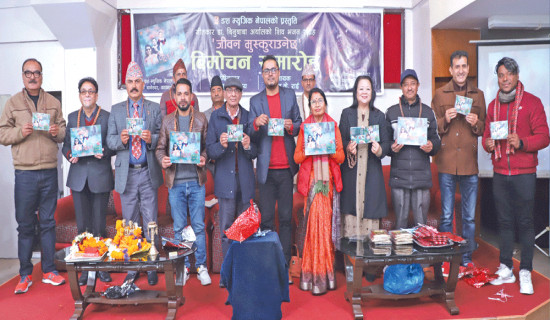
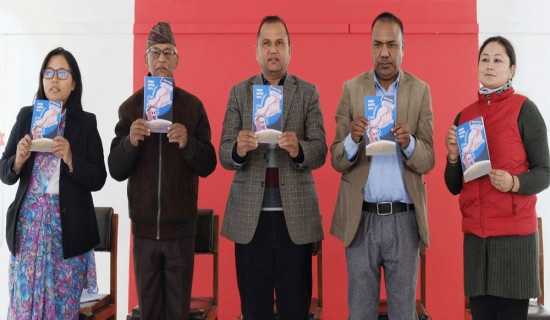
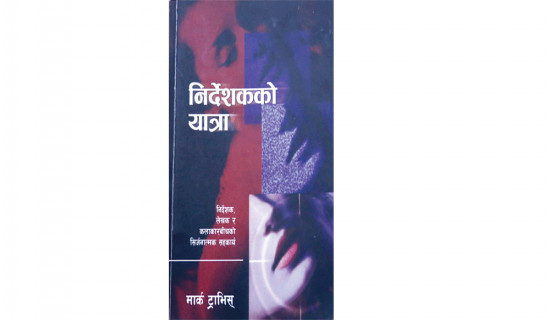
Ballav DahalBeing the key institution of democracy, political parties offer citizens a choice to govern by competing in elections. Parties contribute to inducting and integrating people into the democratic political system. They are prime actors in democratic societies that alone can play vital roles in promoting public accountability. The political parties that have fully adopted internal democracy can carry out their responsibilities in an effective manner. Bearing this view, the Constitution of Nepal, 2015 has a provision for political parties to fully remain democratic internally to promote the principles and values of democracy. The national charter requires them to hold internal elections at least once every five years. As per the constitution, political parties should run more democratically and openly, encouraging more party members at the provincial and local levels to exercise a higher amount of decision-making authority. We see that even when the country has gone for a federal system of governance, the institutional practices of parties remain mostly centralised. This practice was evident in their recent decisions on the selection of mayoral and deputy mayoral candidates for metropolises and sub-metropolises. This publication includes a total of 13 articles focussing on the main theme of internal party democracy. Youth leadership, gender, resources of national parties, Nepali women's struggles and challenges, among others, are also dealt with. While NDI has brought out such a worthwhile publication with the support of USAID, international and Nepali parliamentarians and experts have contributed their quite comprehensive write-ups for it. It is worth mentioning that most of the writers are women with distinct recognition and identity. The booklet highlights some valid concerns from a Nepali and international perspective. Reforms in electoral systems within political parties, issues of women and marginalised communities in parties, training and education processes in parties, and experiences of international practitioners relevant to Nepal are some of such concerns.The publication hints at how internal party reform can help prevent political parties from deviating from democratic practices and how the involvement of youths in political parties is vital for parties to be electorally successful. This provides a lot of insights into how shifting party resources from the centre to the local level could help build up a more active membership base; how the principle of internal party democracy can be revived for the benefit of all party members; and how the introduction of varied internal party reform instruments can help increase participation and representation of women, youths and varied marginalised communities are other topics included in it. As stated by Deborah Healy, Senior Country Director at NDI Nepal, these thought-provoking articles could kindle conversations on how the political parties in Nepal can internally reflect on their structures to help broaden their electoral appeal.In her article ‘Be A Junkiri- Not An Animated Dream', Birgitta Ohisson, NDI's Director of Political Party Programmes, writes: "As half of the population of Nepal is under the age of 25, the country's political landscape desperately needs to change." Ohisson, also a former Swedish Minister for European Affairs, urges political parties to attract young people in general and young women in particular. She calls on every political party to be a firefly symbolising hope, empowerment and inspiration. Similarly, Arta Dade, an Albanian parliamentarian, in her write-up titled ‘Safeguards For International Party Democracy’, calls for drastic reforms within parties. According to her, the more internally democratic political parties are, the more democratic society will become to respond to people's expectations.In her piece ‘Youth Leadership In Political Parties’, Anupa Shrestha underlines the need for political parties to motivate greater youth involvement in politics and provide them with leadership opportunities. Binu Subedi, in her article ‘Internal Democracy In Political Parties’, calls on parties to follow the principles of inclusion, social justice and equality as demanded by women and other marginalised communities. She shows her concern over the apathy on the part of political parties to consolidate democratic values within their structures. She says even the parties that have fought for democracy have been found only linking democracy with periodic elections and citizens’ suffrage. Likewise, Corien Jonker, in her piece ‘Internal Party Reform: The Importance of Gender Equality, suggests implementing the constitutional provisions regarding gender to bridge the gender gap in Nepal. Presenting a Moldovan case study, Corien, a former member of the Dutch parliament, shows how the formulation and enactment of gender action plans had contributed to strengthening and formalising the commitment of political parties to advance gender equality and provide a baseline for progress. In her write-up ‘Democracy and Governance within Political Parties', Dolma Tamang, a member of the Nepal Women's Association of Nepali Congress, suggested that every policy decision should be conducted in a democratic and institutional manner as specified by the statutes and rules of political parties to make tangible inward reforms. Johan Hamels has drawn the party leadership's attention toward transferring resources from the centre to local councillors. The political parties in the country could find the ideas forwarded by all the writers to be worthwhile for promoting democracy within them. Thus, the publication could prove to be a recipe for them to change.
Summer means the celebration of delicious juicy fruits. Again, summer means rotating the sun's rays all day long. During this season, the intensity of heat increases in nature. Due to this extreme heat, excessive sweating from the body occurs. It results the in dehydration in the body. For this reason, it is necessary to drink enough water at this time. Otherwise, the body becomes dehydrated and the risk of heat stroke increases.
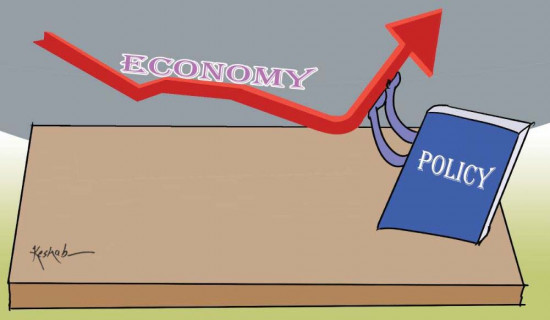
The Central Bureau of Statistics (CBS) has estimated that the economy will grow by 5.84 per cent at consumer price in the current fiscal year 2021/22. At basic price, the growth would be 5.49 per cent. The statistical body under the National Planning Commission (NPC) has made the projections on the basis of the calculation of nine months real statistics and three months estimated economic activities.
Inspector General of Nepal Police (IGP) Shailesh Thapa Kshetri has said that unprecedented works were done in favour of lower level police personnel during his tenure. Speaking at a press conference at the Police Headquarters, Naxal on Wednesday, Inspector General Thapa, who is retiring on May 2 after completing 30 years in service, said, "Every IGP used to be accused of focusing and giving more attention to the promotion of senior police officers, but throughout my tenure, I have tried to clear this misconception by promoting thousands of junior police personnel at one time.”