- Sunday, 3 May 2026

Dialogue Key To Durable Peace

Sambad (dialogue) is a tool of communication. It generates ideas, wills, opinions and perspectives of all sides involved in it and creates common ground for peace. It is a vital part of negotiation and compromise of conflicting issues, desires, perceptions, interests, ideologies and identities at personal, institutional and political levels. Dialogue differs from dialectic, where opposing sides resolve conflict by weakening the rival or eliminating it. In dialogue, rival sides recognise each other’s strength and weakness, position and options for building the edifice of cooperation.
Democracy provides space for opposition and tolerance of various viewpoints. Dialogue facilitators are deemed to play a neutral role in finding a middle path among the rival parties. Genuine dialogues provide a platform for mutual learning. Nepal’s classical practices of shastratha sought to refine old knowledge and search for new ones with three motives: to produce knowledge and norms for socialisation and adopt the relevant one for framing laws and policies to induce social change.
Personal relationships
Regular dialogues improve personal relationships, address the causes of conflicts of various kinds—latent, embedded in structures and laws; cultural, ideological, and value-based; and manifest, which inflicts direct violence and improves the milieu for understanding. Nepali political parties, civil society and citizens often organise dialogue to initiate any worthy initiative, settle differences and set a path to peace. All political changes in Nepal were negotiated among rival sides and even involved outside mediators.
In the past, the government had constituted commissions to settle the demands of armed non-state actors and countless social movement groups -- Madhesis, women, Janajatis, Aadibasis, Muslims, Khash, Chepangs, Badis, etc. It is easy to resolve binary conflict through informed dialogue, but the complex nature of conflicts arising out of unfulfilled basic needs, greed, creed and illicit grievances and generational change in leadership requires matching tools. The Nepali trade unions and institutions of business and industries engage in dialogues for collective bargaining of wages and welfare facilities. Several federations of Irrigation, Community Forestry and cooperatives occasionally enter into dialogues and agreements with the government to realise their demands.
Yet, when the possibility of dialogue and legitimate means of interest are blocked, protest, demonstration and conflict manifest in the public sphere for attention. Legitimate means of grievance articulation are applied by journalists and teachers for legal and educational reforms and trust building through bridging and bonding social capital. Social and political conflicts can be solved if they are diagnosed on a rational basis and political wisdom is applied to address the causes. Lasting social stability and peace cannot be attained if the causes remain unaddressed while only the effects are treated.
The Nepali constitution and the nation’s development policies are rights-based, which is bound to generate expectations. People form organisations, mobilise their resources and strength, frame demands, select representatives and organise collective action for their rights. One weakness of the constitution is that it has given recognition to group rights to organised social classes and formed several national commissions for social inclusion and promotion of their rights. This has fostered identity-based debates which are more vociferous than reason-based and care less for the legitimate concerns of minorities.
Unless mini-identities are transformed into national citizenship, the nature of emotional conflict overshadows the rationality of the optimisation process. This is the reason several villages in Nepal still employ a deliberative approach to mitigating petty disputes related to land, family conflicts, domestic violence, theft, dowry, and resource sharing among villages, among other issues. The local government has also established a mechanism to mediate local disputes and maintain social peace. Nepalis prefer to use local means rather than go to the court, as the former is cost-effective while the latter consumes both time and resources to finance the service of lawyers, which the poor can ill-afford.
The comprehensive peace accord was possible through dialogue among the ruling parliamentary parties and the rebel Maoists. The left-out forces in the peace process had organised several protest programmes for their space in the peace, constitution-making and development process. Social inclusion, proportional representation, quotas, and positive discrimination are the outcome of incessant engagement of people in the dialogues. Local peace committees had organised countless dialogues on human rights, justice, democracy and peace at the grassroots level, which is more humane than the traditional justice system. The tradition of the culture of religious tolerance is evident in Nepal, as religious figures also harnessed spiritual resources and cultivated intra-faith dialogues.
Nepali priests often organise peace rituals, yagnya, wishing peace, tolerance and social harmony and fostering amity across various faiths. The Birthday of Lord Buddha and various religious festivals such as Dashain, Tihar, Chhat, Loshar, etc., demonstrate trust across communities. Justice and security dialogue in Nepal has helped communities and law enforcement agencies to deal with crimes and society-centric conflicts. Dialogue about diversity, democracy and peace in Nepal is critical for nation-building. Multi-stakeholder dialogue was organised to resolve the issue of sub-national governments. Dialogues for peace have been organised to secure post-conflict justice, reconciliation and peace.
Positive change
Such dialogues have settled many issues of federalism, distribution of natural resources, taxation and jurisdiction of federal, provincial and local governments. Civil society’s multi-level dialogues, seminars, workshops and conferences have eased the conversation of an attentive public long subdued under the spell of fear. The current gridlock among the government, mainstream parties, Gen Z and those neglected in the past can be broken by an all-inclusive dialogue. It can create common space to chart a shared democratic future.
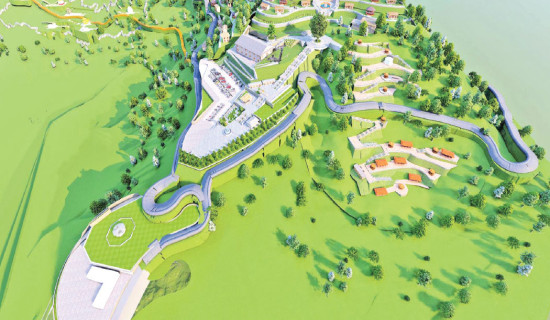
In Nepal, social movements have generated impetus for positive change. So long as actors converse, conflict is less likely to surface. Nepal has set up Buddha University in Lumbini and often disseminates the message of dialogical peace. It reflects the utility of its philosophy to the whole world, racked by violence and wars. Dialogue is related to Nepal’s classical philosophical treatises as well as practical everyday living and shaping civilized conduct.
(Dahal holds an MA in Peace and Conflict from Otto-Von Guericke University, Germany)