- Wednesday, 10 June 2026

Modernisation threatens Sudurpaschim's folk art

By Puskar Bhandari, Dadeldhura, June 10: Discussions on preserving local culture have begun in Dadeldhura as concerns grow that folk songs and dances of Sudurpachim are gradually disappearing due to globalisation and modernisation.
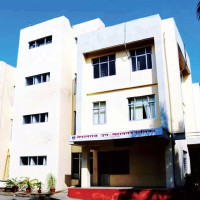
Under the slogan ‘Let Us Preserve Our Identity, Our Culture, Our Indigenous Instruments and Chhaulo Dance,' a discussion and interaction programme was held on Monday at Cambridge Public School in Khalanga, the district headquarters of Dadeldhura. The event featured serious deliberations on the importance of local culture, the challenges of preservation, and future strategies.
Speaking at the programme, organised by Gaunghar Media House with financial support from the Social Development Office, Dadeldhura, under the Ministry of Social Development of Sudurpashchim Province, Doteli culture expert Kailash Kumar Pandey said that cultural preservation should be viewed not merely as a matter of entertainment but as an issue closely linked to the existence and identity of communities.
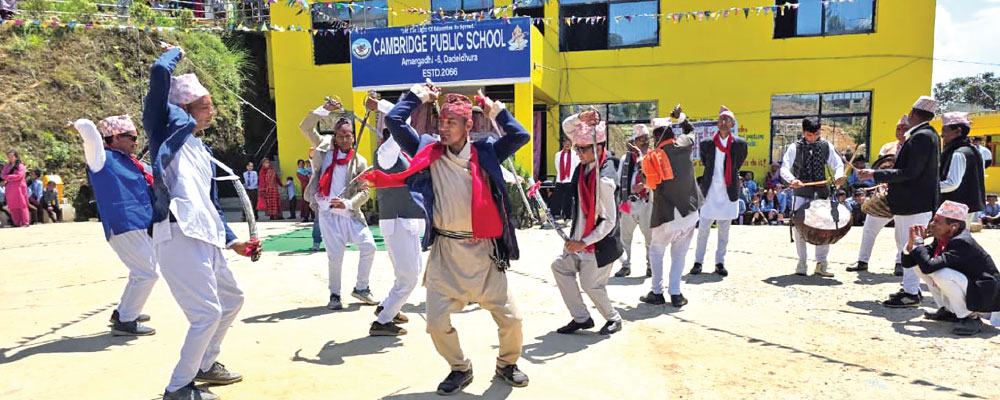
The Chhaulo dance, practised in the hill districts of the Far-West, is regarded as a symbol of bravery, courage, and historical tradition. Pandey explained that the dance, particularly prevalent in the Ganyapdhura-Kailpalmandau and Bhageshwar Rupal areas, is performed with unsheathed swords to the rhythm of indigenous instruments such as the Dain, Damaha, and Jhyali.
The programme featured performances of both Chhaulo dance and Hudkeli traditions.
According to Pandey, these performances not only entertained audiences but also provided an opportunity to take pride in local culture and history.
He said that the artistry and skill demonstrated by performers dressed in traditional attire, moving in harmony with the music, revived memories of earlier generations.
According to culture expert and writer Kailash Kumar Pandey, Chhaulo dance, Hudkeli songs, and other folk traditions are currently facing significant challenges to their preservation.
As younger generations become increasingly attracted to modern music and foreign cultures, the practice of learning and performing traditional arts has steadily declined. In the paper he presented, Pandey discussed in detail the historical background of Doteli folk culture, its social significance, and measures for its preservation.
He argued that safeguarding indigenous culture would be difficult without the active participation of local governments, schools, and communities.
Sudurpashchim is home to numerous cultural treasures, including Chhaulo, Hudkeli, Deuda, Bhuwa, and Chait traditions. However, he added that some of these art forms are at risk of disappearing due to inadequate preservation and promotion. It is hoped that programmes of this kind will raise public awareness of local arts and culture and help create a favourable environment for their protection.
Another attraction of the event was the performance by student artists from Cambridge Secondary School. Through a dance based on the Sudurpachim’s indigenous Hudkeli folk songs, the students conveyed the message that the younger generation is also beginning to show interest in preserving cultural heritage.
According to Min Bahadur Lamichhane, Chief of the Social Development Office, Dadeldhura, imparting education about local culture and history from the school level would facilitate intergenerational transmission and make cultural preservation efforts more effective.
“Culture is not limited to songs, dances, or musical instruments,” he said. “It embodies a community’s history, way of life, values, and identity. The loss of any culture means the loss of an important part of the history and collective social memory associated with it.”