- Saturday, 23 May 2026

Supportive Policies Fuels Nepal's EV Revolution

In Nepal, however, there has been a paradigm shift from an aspirational scenario to actual reality when it comes to EVs. Within a short span of time, the country has evolved into becoming one of the leading countries globally when it comes to adoption of EVs. In fact, as at 2025, about 73 per cent of cars bought were EVs as compared to only 8 per cent in 2019, making Nepal only next to Norway when it comes to adopting EVs. Undoubtedly, this has been achieved within a very short span of time. However, whether such transition of Nepal is sustainable, inclusive, and comprehensive remains to be explored.
It is quite clear that the foundation for Nepal's EV revolution is largely dependent on the policy stance of the government. Nepal is following an aggressive approach with respect to fiscal benefits for EVs. Import duties and taxes on electric cars are substantially low as compared to petrol and diesel cars. This has made the buying of EVs very lucrative which, in turn, has contributed towards higher adoption. It is noteworthy that in 2025 alone, the number of EVs imported to Nepal was more than 44,500.
Energy system
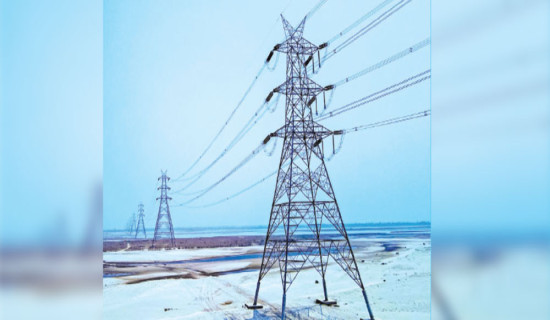
Nepal’s energy system is another important aspect contributing to its success. As opposed to other nations, Nepal relies heavily on hydropower for its energy production. Consequently, the power sources for the EVs in Nepal are clean and sustainable. Thus, electric vehicles have no harmful effects on the environment. On the contrary, in countries that rely on coal for their energy production, electric cars serve as carriers of pollutants rather than eliminating them. Nepal's unique ability to produce energy from clean sources and incorporate them into electric transportation is its unique competitive edge in addressing climate change.
EVs bring significant advantages for the environment and the economy. The transport sector contributes heavily to air pollution in cities, such as Kathmandu Valley, where air quality levels often reach dangerous limits. Researchers report that the transport sector accounts for a significant portion of particulate matter emissions, which may cause severe health issues. Therefore, adopting EVs in Nepal could contribute significantly to the enhancement of environmental conditions and public health. Moreover, EVs minimise Nepal’s need to import fossil fuels. Historically, importing oil products contributed negatively to the country’s economic situation.
However, there are still numerous problems with the implementation of electric vehicles in Nepal. The first challenge that needs to be mentioned here is related to the infrastructure. While the number of charging stations has increased dramatically, from less than 50 stations in 2020 to over 1,500 by 2025, it should be admitted that the availability of such charging points is not uniform throughout Nepal. Therefore, electric vehicle adoption can turn into the privilege of urban centers only. Another problem connected with the transition to electric cars in Nepal is related to their affordability. Electric cars may indeed be more affordable due to lower costs associated with their maintenance. However, they remain quite expensive compared to conventional cars, making it difficult for Nepali people to afford them.
Also, the development of EVs in Nepal is highly skewed toward personal automobiles. Public modes of transportation, like buses and trucks, run primarily on diesel fuel. This is a disadvantage since heavy-duty vehicles are known to pollute the environment significantly. Despite some promising progress in this area, such as the launching of electric buses in Kathmandu, the mass implementation of electric transport systems is taking a while due to high costs and institutional constraints. A challenge that has not received sufficient attention in Nepal is that of sustainability. Nepal does not yet have an adequate mechanism for battery recycling and disposal. As more EVs are bought by people, Nepal would have to deal with the problem of battery disposal. Otherwise, it may lose the environmental advantage it seeks in EV adoption. Furthermore, Nepal still relies extensively on imported EVs.
Ambitious plans
In the future, Nepal plans to be extremely ambitious. The goal for 2030 is that 90 per cent of private vehicle sales and 60 per cent of public transportation should be electric cars. It would take much more than favourable policies to accomplish such a task. Investment in infrastructure, support of electrification of public transportation, improving the finance system, and creating an entire local EV industry would be needed.
Nepali case is an excellent example of how effective and productive policy, technology innovations, and abundance of natural resources can be combined in order to bring great results. At the same time, Nepal shows that developing countries can be pioneers in making the transition to sustainability as well. However, it will be much harder to continue such successful performance in the future. Ultimately, Nepal is at a point where it has to make a choice. It can either go ahead or enhance its development process to serve as a model for other countries regarding sustainable transport, or let its weaknesses impede its progress.
(Rana currently pursuing Bachelor's degree at the St. Xavier’s College Maitighar, Kathmandu.)