- Sunday, 31 May 2026

Hemophilia Patients Struggle For Normal Lives
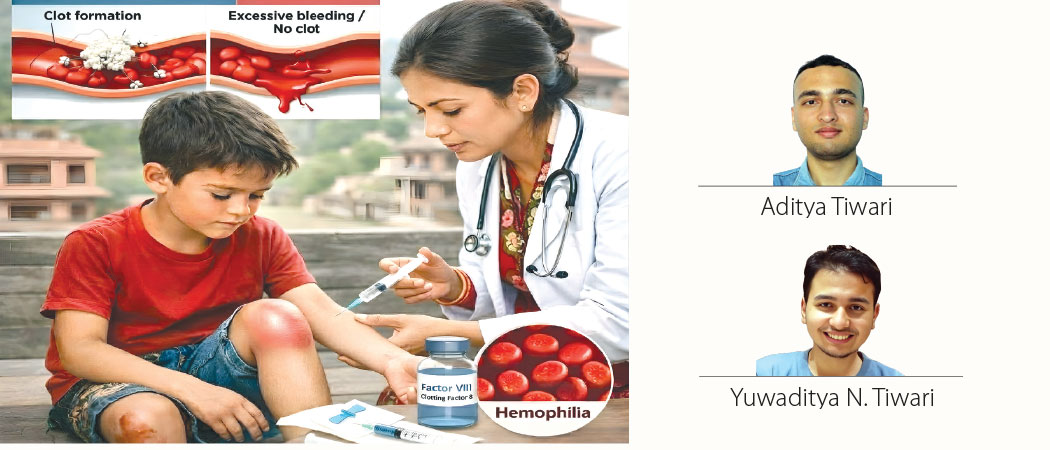

The special day that you are preparing for tomorrow holds great importance for you. The day could mark your graduation or the beginning of your first job. You go to sleep with positive feelings about everything because obviously you feel excited and prepared for the next day. You have reached this point through your previous hardships, preparations, and excitement, which drove you until now. But then the morning comes and you wake up to a sharp and surprising pain in your joints. It can be your knee or ankle. You experience an unknown condition that causes a spontaneous injury without any physical contact. You then know it's another joint bleeding!
You attempt to stand up, but even your body weight has become too heavy for you to carry. Your plans and your dreams need to be suspended because of your current situation. Your situation has reached an emergency level, which requires immediate medical assistance. Even after receiving treatment, you will need to stay in bed for multiple days, which might extend before you can begin walking again. Such an occurrence is what happens with great frequency with people who live with the genetic condition: Hemophilia where a minor internal bleed becomes a major barrier to living a normal life for people who experience this condition. They skip events and lose opportunities to witness their most significant life achievements. Hemophilia is a rare genetic bleeding disorder characterised by the body’s inability to clot blood effectively due to a deficiency in specific clotting factors, proteins essential to stop bleeding. There are two principle forms: Hemophilia A, resulting from a deficiency of clotting factor VIII, and Hemophilia B, from a deficiency of clotting factor IX. Other bleeding disorders also exist, like Factor VII deficiency, Factor X deficiency, Hemophilia C, and Von Willebrand disease, which also can interfere with the body’s clotting abilities to varying levels. The disorder predominantly affects males, while females typically act as carriers, though some may also experience symptoms. The most challenging part of Hemophilia mainly is not only its rarity but also its unpredictability.
Bleeding may not always be external or visible, as well as predictable. Internal haemorrhages in joints and muscles can occur spontaneously, which leads to severe pain, long-term joint damage, and, in some extreme cases, life-threatening complications. The symptoms of hemophilia vary in severity but often include prolonged bleeding even from minor injuries, nose following surgery or dental procedures, easy bruising or unusually large bruises, extended bleeding or unusually large bruises, joint pain with swelling and the presence of blood in urine and stool. In young children, the condition may be projected through persistent irritability, swelling in joints or excessive bruising during early physical activity. Although hemophilia has no definitive cure, modern medicine has made it manageable in a far better way.
The primary form of treatment is the clotting factor replacement therapy, in which the missing clotting factor is administered via the bloodstream. This not only controls active bleeding, but when used preventively as prophylaxis, it can significantly reduce the frequency of the bleeding process. A notable advancement in recent years is the emicizumab (Hemlibra) treatment, which is especially for haemophilia A.
Rather than replacing the missing factor, it replicates its function, enabling more stable clot formation and cutting down the burden of frequent injections. To support the abovementioned treatments, the RICE method requires patients to use rest, ice, compression, and elevation for joint swelling relief while maintaining a healthy lifestyle that includes muscle strength training.
People with this condition need to stay away from common pain medications like aspirin and ibuprofen, as they can thin their blood, which leads to more severe bleeding problems, no matter how much pain and discomfort they may suffer from the bleeding episodes. Research is going through gene therapy, which works to correct their genetic defect so they can create their own natural clotting factors, which is under the trial phase, having had few trials approved for specific hemophilia cases in India. For many years, a diagnosis of hemophilia in Nepal was accompanied by uncertainty.
Curing options were totally scarce, and access to clotting factors was costly and inconsistent at best. Many patients depended on sporadic donations, often receiving insufficient or outdated supplies. In the absence of a proper curing system, plasma transfusions became a fallback, bringing with them the risk of serious infections such as hepatitis C, HIV and more. Pain, immobility, and repeated hospitalisations are part of life, particularly for young patients. Bleeding tendencies could last days or months, significantly affecting mobility, education and the overall quality of life. However, recent years have gradually witnessed meaningful progress. With continuous efforts by national advocates and healthcare professionals powered by the World Federation of Haemophilia partnership, together they have enabled Nepal to achieve better access to medical treatments that use safer and more effective methods. The existing improvements demonstrate the effectiveness of advocacy work and the strength of teamwork and determined dedication.
The continuous work of advocates together with healthcare professionals and support groups has created this achievement, which benefits 4,937 people with hemophilia who live in Nepal, according to the 2021 census, the Nepal Hemophilia Society has identified about 800-850 patients as actual cases, which shows that a large number of people with hemophilia remain undiagnosed or unregistered. Yet, this progress remains constructive and synergised; it’s uneven. Many individuals, particularly in remote regions, still face barriers to timely diagnosis and treatment, followed by few concerning issues still in existence for urban areas, such as regular supply management. We observe World Hemophilia Day every year on April 17th. It is not only a day dedicated to disorder, but also a reminder that such rare conditions, often neglected, require proper attention. As a part of the same, awareness about hemophilia should not be limited to simply having knowledge about it but should also focus on elevating the knowledge to create a meaningful impact. This topic becomes more important in Nepal, where awareness remains limited. Hemophilia is not fully a medical issue, it is a societal one. People with this condition also want dignity, inclusion, and opportunity.
Misunderstanding and underestimating often makes their problems worse. The concerned authorities should advocate to ensure that people receive necessary treatment and resources. The public needs to know more about the disease because it helps them find and treat health problems at an early stage. The disease stays hidden in many communities because people lack knowledge about it.
Empathy needs to replace stigma because it creates safe spaces which allow people to receive help without facing judgement. All our efforts would create major change. Hemophilia may be rare, yet its impact is boundless. It gets in the way of education, careers and personal milestones, often in moments that matter most. As treatments are improving and growing awareness with continued advocacy, there is a tangible shift from a history of silent suffering to a future defined by strength and possibility. The priority now shall be that no individual is left behind, no matter where they live or what their condition is.
(Aditya Tiwari is a Kathmandu-based writer and Yuwaditya N. Tiwari is a media professional.)