- Tuesday, 26 May 2026

Driving licence backlog nears completion
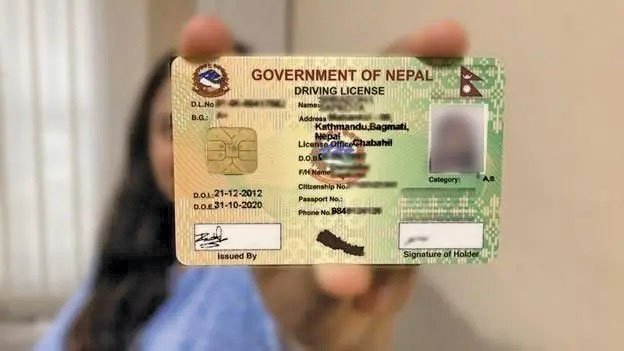

Kathmandu, Apr. 15: After years of frustration, delays, and reliance on temporary slips, nation’s long-standing backlog of driving licences is finally showing signs of resolution, as authorities ramp up printing at an unprecedented pace.
Yet, beneath this administrative acceleration lies a complex web of policy ambiguity, institutional constraints, and evolving technological choices.
At the heart of the renewed momentum is the Security Printing Centre, which has significantly scaled up operations. According to Executive Director Devaraj Dhungana, the centre is currently printing around 40,000 licences daily, with production recently reaching as high as 50,000 per day, double the output recorded just weeks earlier.
This surge comes in response to a staggering backlog of nearly three million pending licences. Authorities now aim to complete printing all pending licences by the end of the current fiscal year (mid-July 2026), with an interim target of producing 1.2 million licences by mid-April.
The acceleration has not occurred in isolation. Minister for Communication and Information Technology Dr. Bikram Timilsina has instructed the printing centre to eliminate bottlenecks and prioritise licence production.
The initiative is also embedded within a broader government reform agenda designed to improve public service delivery, making it more citizen-friendly, efficient, transparent, and technology-driven.
The plan follows a Cabinet decision aimed at modernising governance systems, reflecting growing public pressure to resolve administrative delays that directly affect mobility, employment, and international travel.
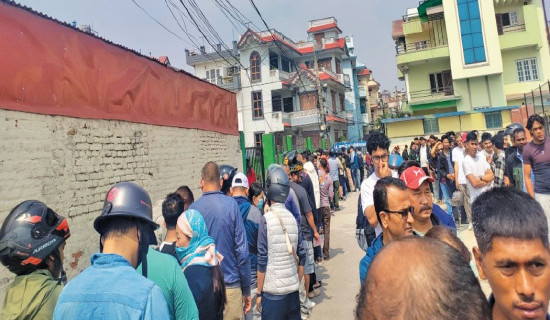
Despite recent progress, the backlog itself highlights deeper systemic issues. For years, limited printing capacity, procedural delays, and institutional inefficiencies forced applicants to rely on temporary paper slips in lieu of official licences.
Previously, the Department of Transport Management (DoTM) had the capacity to print up to 5,000 licences daily using its own mass printer. However, that system was rendered inoperative following damage during the “Gen Z movement,” and has not been restored due to high repair costs, according to the officials.
An earlier plan to decentralise licence printing to provincial governments also stalled. Although provinces such as Bagmati and Koshi had initiated procurement of printing equipment, legal amendments later restricted the printing of key documents exclusively to the Security Printing Centre, halting provincial-level implementation.
Experts note that printing speed alone will not determine success. The pace ultimately depends on how quickly the Department of Transport Management can supply applicant data. So far, only around 150,000 licence records have been provided to the printing centre, though preparations are under way to release data for up to one million additional licences.
There have also been technical changes. Unlike earlier smart licences that stored data in both a card and an embedded chip, the new format contains data only on the card. While this simplifies production, it raises questions about long-term digital integration.
To improve transparency, the Department has begun publishing daily updates on printed and distributed licences through its website, according to information officer at the Department Ganesh Man Singh Rai.
Meanwhile, completed licences are being dispatched via postal services to transport offices across the country, aiming to streamline distribution and reduce congestion at service centres, informed Rai.
Priority printing continues for urgent categories, including students travelling abroad, migrant workers, and the United Nations peacekeeping personnel, said Rai.
-square-thumb.jpg)