- Monday, 8 June 2026

Mustang, Bajura receive snowfall: Risk of poaching high
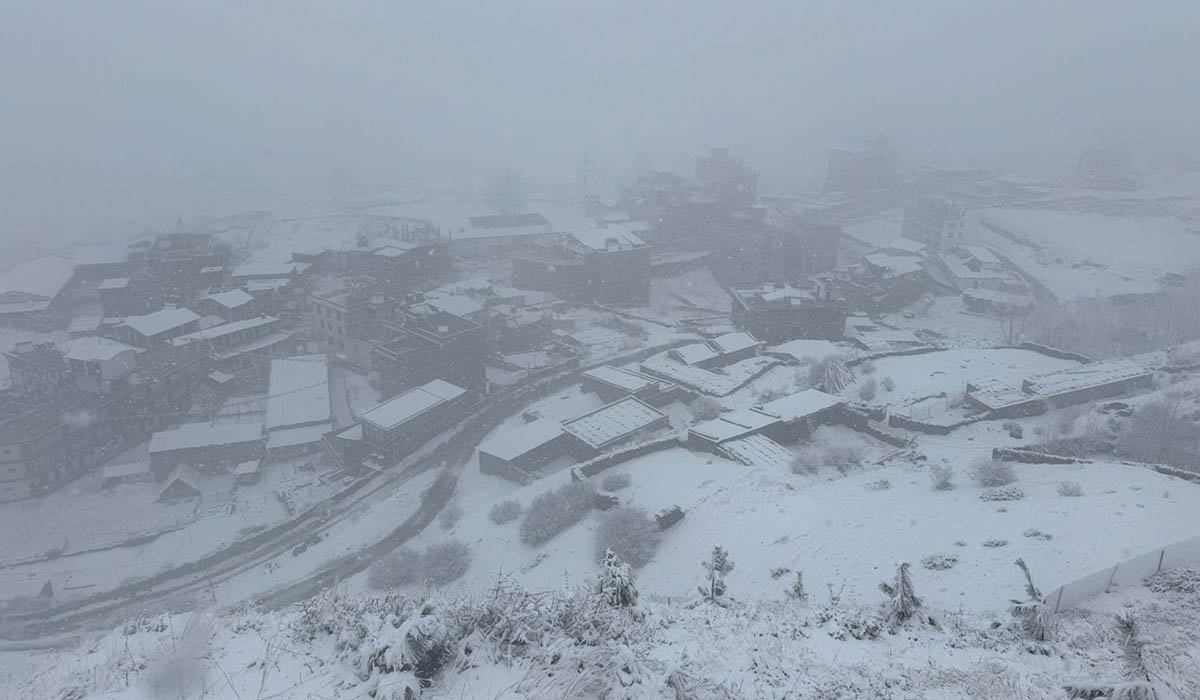

Mustang, March 20: The Baragung Muktichhetra area of Mustang has received its sixth snowfall since October 27, 2025. The snowfall began at 4:00 pm on Friday and continued steadily, covering the high hills around the Muktinath Temple in snow.
According to Muktinath Development Committee manager Dinesh Bhusal, the snowfall did not disrupt significantly to the pilgrims visiting the temple in the morning, but it affected daily life in the area. He added that temperature dropped further due to the snowfall.
Janapriya Youth Club chair Kaisang Thakuri said that Muktinath, Ranipauwa, Jharkot, Khinga, Chhengur, Pudak, and Jhong experienced heavy snowfall. He warned that continued snowfall overnight could lead to road obstructions.
Similarly, Lomanthang and Loghekar Damodar Kunda rural municipalities in Upper Mustang have been receiving snowfall since the afternoon, according to ACAP Lomanthang chief Umesh Paudel. Continued snowfall may disrupt daily life across the region.
In Lower Mustang, highland areas of Thasang and Gharpajhong rural municipalities saw partial snowfall, while rainfall was reported in settlements.
Meanwhile, Bajura has also been experiencing snowfall since morning, with higher areas receiving snow alongside rainfall.
The Department of Hydrology and Meteorology has forecast heavy rain and snowfall in hilly and mountainous regions of Sudurpashchim Province. Areas such as Badimalika, Budhiganga, Tribeni, Budinanda, Khaptad Chhededaha, Gaumul, Swamikartik, and Jagannath have reported snowfall, according to Acting Chief District Officer Laxman Pudasaini.
He said the increased cold following the snowfall may affect vulnerable groups, including the elderly, children, and people with chronic illnesses.
Amidst the heavy rains in the district, public have been urged to take precautions against the heightened risk of floods, landslides and soil erosions. Likewise, the Department predicted the possibility of windstorm along with the rain.
However, the rainfall is expected to be beneficial for Chaite (spring) paddy, and winter crops such as wheat and orange and other fruits farming as well.
With the rains and snowfall, the risk of wildlife poaching has increased. To escape the cold, wild animals are coming down from the hills, making them more vulnerable to poachers, according to the Division Forest Office, Bajura. Species such as the ghaoral (antelope) and barking deer move to lower, warmer areas, creating what poachers consider a “favorable time” for hunting.
The office has urged everyone to refrain from any hunting or poaching of wildlife. “Poaching is punishable by law,” said Office Information Officer Subash Chandra Ayadi. Security forces have been deployed to prevent illegal hunting and protect the animals. (RSS)






-original-thumb.jpg)