- Wednesday, 6 May 2026

RSP to push economic diplomacy

By Pallav Bhusal,Kathmandu, Mar. 17: Nepal’s political scene has changed beyond expectation after the clear election victory of the Rastriya Swatantra Party (RSP) on March 5, 2026. With a strong majority in Parliament, senior leader Balendra Shah is deemed to be the next Prime Minister of the country.
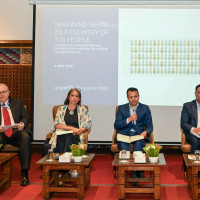
Former Education Minister and newly elected MP Shishir Khanal, who won from Kathmandu-6 and represents the Rastriya Swatantra Party that is set to form the new government, has said the administration will prioritise good governance and economic diplomacy in its foreign policy.
“The Constitution of Nepal has already laid out the framework and policies which define how Nepal engages with its international partners. The RSP, which is all set to form the government, will acknowledge those policies and work to strengthen them,” said Khanal. “The government will focus primarily on economic diplomacy and reform with international partners in order to develop infrastructure in the country, attract foreign investment and boost tourism,” he added.
Khanal added that the new government must work while safeguarding national sovereignty and territorial integrity, and conduct foreign policy in accordance with the Constitution. “We will pursue foreign policies that deliver tangible benefits for the country,” he said.
However, experts say that after the historic win, the new government faces a tough and immediate challenge. It must handle complex international relations while also improving professionalism of Nepal’s diplomatic service, which has often been criticised as weak and overly focused on paperwork.
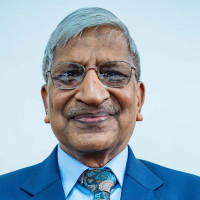
Foreign policy expert Professor Dr. Mohan Lohani said Nepal’s foreign policy has stayed mostly the same across different constitutions, but its execution needs to improve. He believes the Ministry of Foreign Affairs must become more professional and organised. “Nepali diplomats should be clear, confident, and skilled enough to negotiate strongly on the global stage, just like those from our neighbouring countries,” he said.
Another key issue for the new government is maintaining balanced relations with its international partners, specially, India, China and the United States. Former Nepali Ambassador to Australia Mahesh Dahal warned that Nepal must not favour one country over the other. Doing so could damage important relationships. “The new leadership might face pressing bilateral challenges concerning border security and need for infrastructure development,” he said. Dahal suggested Nepal could use economic cooperation with both neighbours and other global partners to improve infrastructure, especially by connecting the Tarai plains with the Himalayan regions.
On the global stage, experts say Nepal should take a more active role rather than just being present. Dr. Lohani pointed to Nepal’s recent firm stance at the United Nations on global conflicts as an example of protecting national sovereignty. “Nepal’s traditional non-aligned position still matters today, as it helps avoid being seen as too close to any major power," he said.
Dahal agreed with Lohani, saying Nepal must show that it has an independent voice when dealing with foreign partners.
Economic diplomacy has been discussed in Nepali politics for more than three decades, but results have been limited. Dr. Lohani noted that a number of task forces have been formed since 1990, yet their recommendations are rarely put into practice. “The new government should not create more institutions but strengthen those that already exist," he said. Dr. Lohani suggested forming a high-level coordination committee led by the Prime Minister to ensure better cooperation between ministries and the private sector.
As the RSP moves from being a rising political force to leading the government with almost a two-thirds majority, attention is now turning to its promises. Dr. Lohani warned that the party could lose public trust if its election commitments are not turned into clear and effective policies. Therefore, the new government has a huge challenge forward in diplomatic front. To handle sensitive foreign relations, Dahal recommended setting up a Diplomatic Expert Group to guide the young leadership.
With strong public support, the government to be led by Shah must prove it can protect Nepal’s sovereignty while building a more capable and professional foreign service
-original-thumb.jpg)