- Monday, 8 June 2026

'Silence period allows quality time to voters'

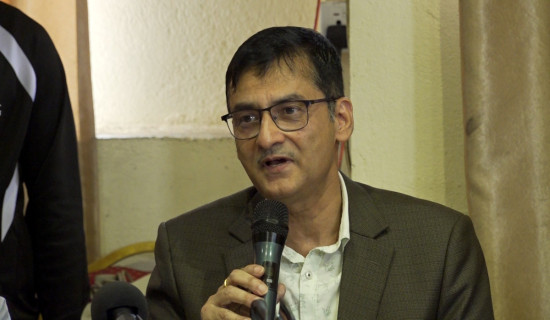
By Pabitra Guragain, Kathmandu, March 1: A keynote speaker at a programme on 'Silence Period and Media', Professor Ramkrishna Regmi said silence period allows voters a quality time to independently choose their representatives.
“Let's respect silence period,” he said, adding that in the context of elections, the silence period marks the end of publicity campaign and enables political parties to review their election-related preparations.
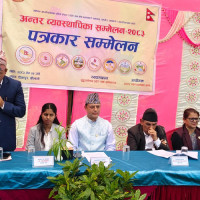
Speaking at an interaction programme on 'Silence Period and Media' organized by the Press Council Nepal in coordination with the Online Journalists' Association in the federal capital on Sunday, Prof Regmi acknowledged the growing influence of digital media alongside traditional mass media, and observed that citizens had highly engaged in digital platforms.
"The silence period should be observed also on digital media. Media are responsible for helping create an atmosphere in which all political parties and candidates can contest the election on an equal footing,” he reminded.
Regmi expressed satisfaction with the progress made in election preparations so far. “It is a matter of pride that the election process has reached this stage and that voting will take place soon,” he added. Emphasizing the spirit of the silence period, he said it means refraining from attempting to influence voters.
He also urged the media to counter the flow of disinformation and provide fact-based and credible content to readers, highlighting the multifaceted importance of the silence period.
Voting arrangement smooth
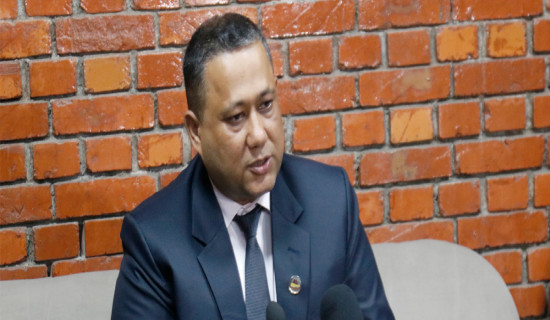
On the occasion, Officiating Chief Election Commissioner (CEC) Ram Prasad Bhandari has said all necessary preparations were completed for conducting voting under the House of Representatives (HoR) elections on March 5.
He said that election materials reached all 77 districts. According to the Joint Election Operation Centre at the Election Commission (EC), the transportation of election materials and the mobilization of human resources for the election, among other arrangements, were over, CEC Bhandari added.
Officiating CEC clarified that the EC was focused on successfully concluding the election since its announcement on September 12, 2025.
He also appreciated the role of the media in creating a favourable atmosphere for the election since its announcement. Media contents highlighting messages such as “Election should take place on the announced date” and “No alternative to election” have significantly contributed to building an election-friendly environment by clearing doubts and confusion.
Bhandari urged journalists, political parties, election candidates, and voters to respect the spirit of the ‘silence period’ during the election. According to him, the silence period is implemented to provide time for political parties and candidates to review their election-related activities and for voters to thoughtfully choose their potential representatives without undue influence. He called for the observance of the silence period both online and offline.
“We are confident that the election will conclude in a highly peaceful atmosphere with a higher voter turnout and a comparatively lower rate of invalid votes than in past elections,” Officiating CEC announced, adding that it was estimated to take a couple of minutes for each voter to cast a ballot. Separate lines will be arranged for senior citizens, persons with disabilities, new mothers and others in need to ensure a comfortable voting environment.
For the March 5 voting, silence period is commencing at 12:00 midnight coming Monday, March 2.
Earlier, Chair of the Federation of Nepali Journalists, Nirmala Sharma, echoed the essence of elections in strengthening democracy. Describing the election as a mega campaign for promoting civic rights and the Constitution, she said elections always require responsible media support and acceptance.
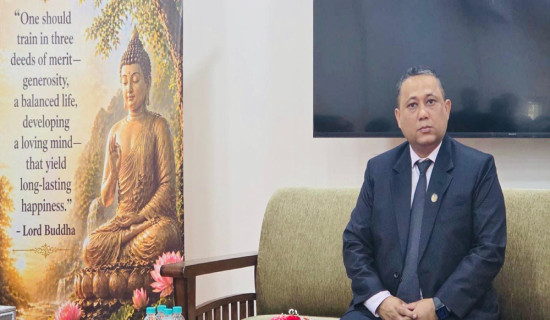
Similarly, Minister for Land Management, Cooperatives and Poverty Alleviation, Dr Kumar Ingnam, said that promoting good governance, conducting the March 5 election successfully, and ensuring the smooth operation of daily administrative affairs are the government’s mandates. He, however, admitted that good governance was not achieved as expected due to various reasons.
Government is about to achieve its major mandate of holding election. He added that daily administrative operations are continuing regularly. (RSS)

-original-thumb.jpg)