- Tuesday, 9 June 2026

Voters in Bhojpur eagerly await for polls

BY GOKUL BHUJEL,Bhojpur, Feb. 26: Voters of Bhojpur district are showing a distinct enthusiasm for the upcoming House of Representatives (HoR) election.
Meanwhile, candidates are adopting various strategies to secure the results in their favour. Carrying their respective agendas and commitments, candidates are reaching out to voters through door-to-door campaigns, direct interactions, meetings, gatherings, and discussions in villages and neighbourhoods to win support.
Gajendra Bahadur Bhujel of Arun Rural Municipality-3, who has been working abroad for the past three years, has returned home to cast his vote. He believed that this election would help create employment opportunities within the country, improve healthcare and education, reduce corruption, and promote good governance.
In the past, electoral competition in the district was mainly limited to candidates from traditional parties such as the Nepali Congress, CPN-UML, and Maoist parties. However, this time, candidates from newer parties, including the Shram Sanskriti Party and the Rastriya Swatantra Party, are also seen as strong contenders.
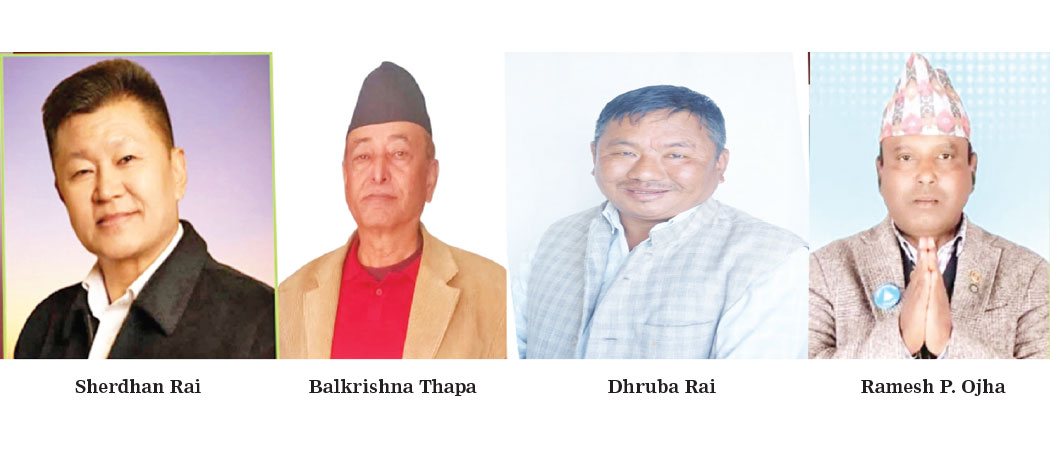
The district has a total of 125,766 registered voters. Here, 12 candidates from 12 different political parties are competing for the single House of Representatives seat. The candidates include: Balkrishna Thapa (Nepali Congress), Sherdhan Rai (CPN-UML), Ajambar Rai (Nepali Communist Party), Dhurba Rai (Shram Sanskriti Party), Jitendra Rai (Rastriya Paribartan Party), Rajaram Basi (Nepal Workers and Peasants Party), Janak Nepal (Rastriya Prajatantra Party), Ramesh Prasad Ojha (Rastriya Swatantra Party), Chandra Prasad Rai (Mangol National Organisation Party), Gopal Kumar Rai (Janata Samajwadi Party), Yuvraj Thapa (Aam Janta Party), and Dewanraj Rai (CPN-Maoist).
The district, often considered a stronghold of the CPN-UML, saw Maoist Centre candidate Sudan Kirati win the elections in 2017 and 2022 through alliance politics. However, this time, parties are contesting independently, providing an opportunity to assess their individual vote strength.
Sherdhan Rai is regarded as a heavyweight candidate. He is the former Chief Minister of Koshi Province, a former minister, and a central secretary of his party, with extensive political experience. His main campaign agenda includes completing previously initiated projects in road construction, infrastructure development, education, and healthcare. He stated, “We are currently busy with door-to-door campaigns and have received positive responses from the public. We are committed to completing the Chuhar bridge and other bridges, roads, infrastructure projects, and addressing demands in education and health sectors, along with creating employment opportunities.”
Congress leader Balkrishna Thapa is aiming to make history by winning the election. As the unified candidate of a reformed Congress, his chances of victory appear strong. He has been actively meeting party workers and engaging with voters at the grassroots level through discussions and interactions to better understand public concerns.
Former UML leader and former Chairman of Temkemaiyung Rural Municipality, Dhurba Rai, is contesting from the Shram Sanskriti Party. Tourism entrepreneur Ramesh Ojha, who previously contested with cane as election symbol, is now running as a candidate of the Rastriya Swatantra Party. The key agendas of these newer parties include good governance and corruption control. They appear to be gaining support from the younger generation and youths working abroad.
Meanwhile, Ajambar Kangbang, contesting with ‘star’ election symbol, has faced accusations of political opportunism, having shifted from UML to Federal Socialist and then to Maoist. He is also actively campaigning, meeting residents, presenting his agenda, and seeking votes, efforts that are common among all candidates and parties.
According to senior Congress leader Nandamani Rai, the current electoral atmosphere in Bhojpur reflects a contest between old and new forces, unified left versus divided left, and traditional bases versus alternative powers.
Local government leadership is also expected to influence the parliamentary election. Local representatives have been conducting door-to-door campaigns to collect plans and programmes while seeking votes for their respective party candidates. Among the district’s nine local levels, four are led by UML, three by Congress, and two by the Maoists. If the influence of local representatives remains strong, newer parties may receive only sympathy votes.