- Saturday, 2 May 2026

Joshi family revives classic song Yauwanya Gacho
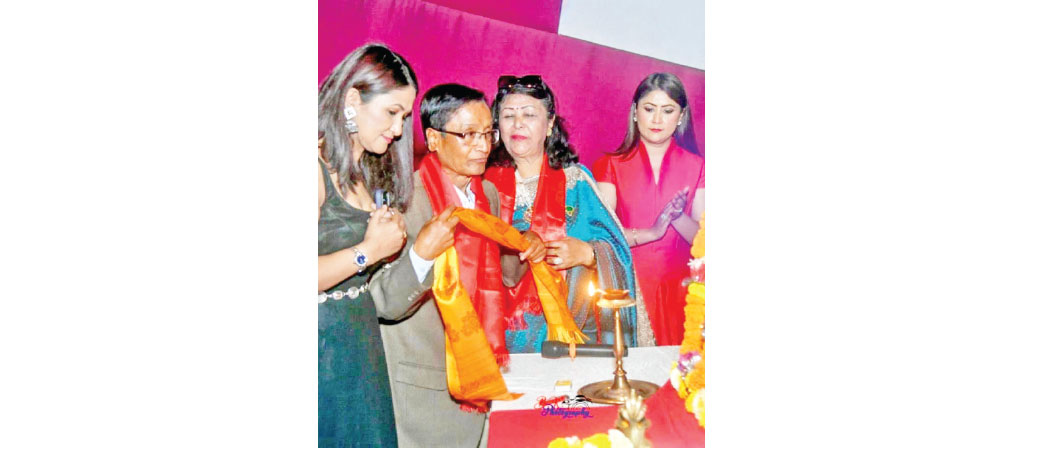

BY A STAFF REPORTER,Kathmandu, Feb. 25: Musical legacies passed down through generations are rare in Nepal, but the Joshi family stands as a remarkable exception. From Ram Lal Joshi to Dwarikalal Joshi and Nagina Joshi, followed by Lasata Joshi, Bhintuna Joshi, and Sharad Joshi, the family’s fourth generation, Lumila Joshi, has also now entered the world of music.
Recently, the Joshi family unveiled a recreated version of the classic Nepal Bhasa song Yauwanya Gacho, originally sung by the late Dwarikalal Joshi and his wife, Nagina Joshi. The song, composed nearly five decades ago by Dwarikalal for his wife, had gained immense popularity at the time.
The recreated version has been sung by their daughter, Lasata and son Sharad Joshi, with Sharad also handling the rearrangement of the music. The music video features performances by granddaughter Lumila Joshi and Nirvan Maharjan, while another daughter, Bhintuna Joshi, choreographed the video. Released under Sangeet Productions, the music video was directed by Bishwas Bajracharya.
Singer Lasata Joshi stated that the project was conceived as a musical tribute to her father on his 29th death anniversary. “Our parents performed this song many times on stage, but there was no recorded version,” she said.
Speaking at the launch event, Mall K. Sundar, Chancellor of the Nepal Bhasa Academy, expressed gratitude to the Joshi family for presenting a remake involving three generations. Film director, producer, and writer Prakash Sayami remarked that the song of Dwarikalal and Nagina had now been successfully passed down to a new generation.
He added that the Joshi family remains one of the most prominent musical families in Nepal. “It is a matter of pride that the fourth generation of the family of Ram Lal Joshi, who sang the iconic line Tasbir tyo dilma rakhi ra Nepali ko chhatima, continues to stay active in the musical field,” he said.
Dwarikalal, who composed and sang numerous songs in both Nepali and Nepal Bhasa, is also remembered for timeless classics such as Maithighar Timro Hoina, Resham Firiri, and Badha Parun Jati Nai.