- Saturday, 6 June 2026

Transparency, Accountability Strengthen Democracy
 Yuba Nath Lamsal
Yuba Nath Lamsal
Yuba Nath Lamsal
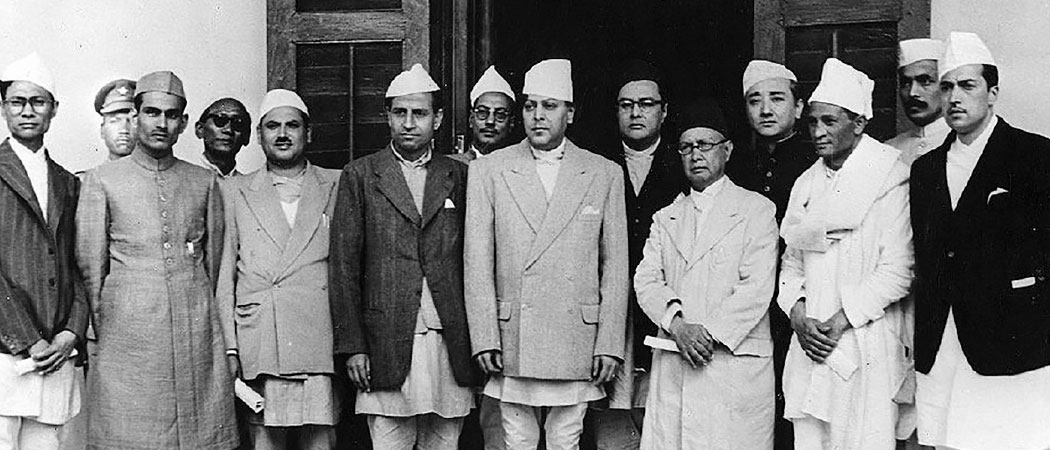
We celebrate Democracy Day today in commemoration of the day that marked the end of a century-old Rana family oligarchy and the establishment of multi-party democracy in Nepal in the face of the popular uprising in 1951. Since then, the day is celebrated annually to honour those who sacrificed to bring democracy to the nation. However, we have yet to do justice to the genuine cause for which the martyrs sacrificed their life.
Democracy is to empower people and ensure the governance that works for the greater interests of the people. However, the people are often found neglected and forgotten, as partisan and personal interests often appear to have eclipsed the overall interest of the people and country.
Although democracy, in principle, is people’s power in which people decide their fate. In genuine democracy, people freely elect their representatives to rule the country, and the government of the people’s representatives governs in the best interest of the general masses and the country. However, in practice, the political change in 1951 marked the shift of power from one dynasty to another. Soon after the political change in 1951, the palace, in collaboration with some domestic as well as external elements, conspired against the new found multi-party democratic system. As a result, the period of one decade after the 1991 political change marked the height of political instability with frequent changes of prime ministers, in which the then kings also played a role behind the scenes. This ultimately gave ground for the king to take over power once again, nipping the bud of the nascent multi-party political system, thereby imposing the king's absolute regime in the name of the Panchayat regime. For this, political parties and their leaders, too, are partially responsible, as they lacked political culture and maturity and rather focused more on power than on consolidating the democratic system and uplifting the economic condition of the people. King’s absolute regime lasted nearly three decades until the popular movement overthrew the Panchayat and restored multi-party democracy once snatched away by the king.
In Nepal there are generally three types of political forces, which have always played a key role in shaping Nepal’s political course. These three forces are rightist, centrist and leftist forces. The rightist force was represented by the monarchy in the past and now by pro-monarchical parties and groups. The Nepali Congress is the centrist force, whereas different communist parties combined represent the leftist political trend. The rightist or pro-monarchist force is conservative and wants monarchy back—possibly active monarchy. The Nepali Congress claims to be a liberal democratic party and wants multi-party democracy and a mixed economy. But in practice the Nepali Congress seems to be vacillating, sometimes tilting more to the left and sometimes to the right.
The communist parties are by nature leftist and claim to be socialist. But in practice the communist parties have abandoned leftist and socialist agendas. For power, all parties have compromised their fundamental ideologies and values. It is perhaps the reason why Nepal has continued to see perpetual political instability and economic downturn.
The dynamics and power equation of Nepali politics are unique. Whenever two of these three trends join hands, they have always had the upper hand in national politics. The Panchayat system survived for three decades not because of its successful delivery but because the Nepali Congress and communist remained divided. Once the Nepali Congress and communists joined hands to fight against the king’s absolute regime, Panchayat system collapsed within a few days in 1990. Again, within a few years after the restoration of democracy, the king tried to take political advantage from the division of the Nepali Congress. The then king Gyanendra’s adventuring against democracy ultimately led to the abolition of the monarchy itself, heralding a new era of republican democracy.
Democracy is the political system that is said to ensure greater stability and prosperity. Any kind of dictatorial regime has not been able to address people’s fundamental problems and raise economic conditions. The failure and collapse of the Soviet Union is its example, while Western countries are the example of the fact that economic prosperity and political freedom can be ensured only in a free, liberal and democratic society.
Now the value of democratic polity has been universal. But democratic constitutions, systems and slogans alone do not ensure genuine democracy. It is the democratic culture and institutions that alone foster and promote democracy. The issue concerning Nepal’s perpetual political instability, frequent change of government and question about the fate of democracy is concerned not with the system, constitution and institutions but with the political and democratic culture and behaviour of political parties and leaders. Thus, the main issue at present is concerned with the democratic culture and moral values of the leaders.
We are celebrating Democracy Day in the aftermath of the popular Gen Z revolt and on the eve of fresh parliamentary elections. The key demands of the Gen-Z movement were good governance, corruption control, democratic culture and political morality. The youths had to take to the streets against politicisation of public institutions, pervasive corruption, nepotism and criminalisation in the name of politics and democracy. So it is now high time to retrospect on where we failed during the last 75 years of our democratic exercises and correct the mistakes we have committed in politics and other public sectors.
Corruption, criminalisation, nepotism and politicisation of public institutions corrode the morale of the society, which has been the case in Nepal. Thus, we must act and act firmly with stronger commitment and willpower to fight against these evils. This alone ensures transparency, accountability and integrity in politics, which are the very fundamental aspects of democratic society. While celebrating Democracy Day, we all must pledge to rise together against these ills of society. Only then can democracy be stable, strong and prosperous. This should be the central message of Democracy Day this year, which we are celebrating in the aftermath of the Gen Z movement.
(The author is former ambassador and former chief editor of this daily.)