- Sunday, 7 June 2026

Abuse of authority a grave challenge to country and social justice: President Paudel
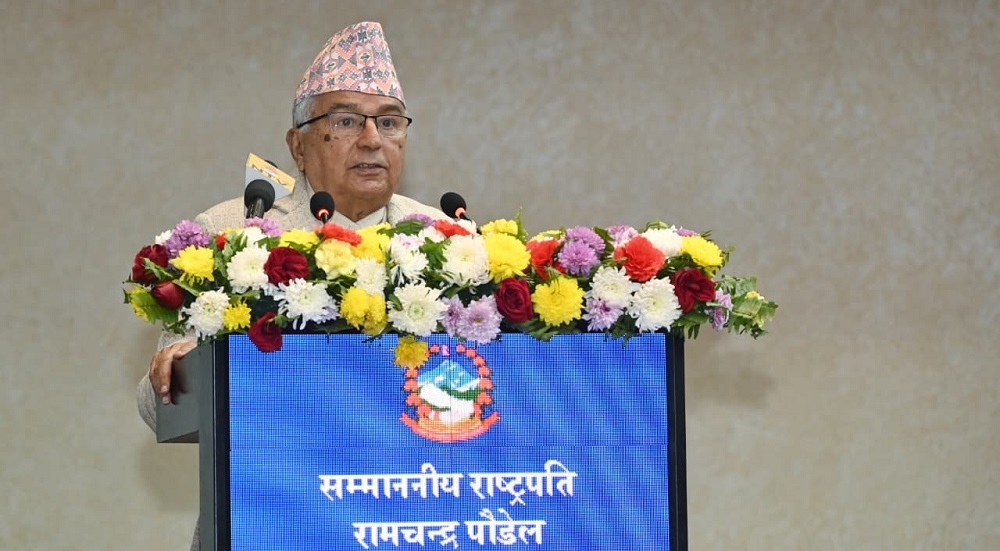
By TRN Online, Kathmandu, Feb.11: President Ramchandra Paudel has said that the abuse of authority is not a minor mistake, but a serious challenge to the legitimacy of the state and social justice.
President Paudel said that abuse of authority is not merely a violation of the law, but also a deep blow to the faith, trust, and future aspirations of citizens.
“Abuse of authority is not just a violation of the law; it is also a profound attack on the faith, trust, and future dreams of citizens. It goes far beyond economic loss or moral deviation and strikes at the bridge of trust between the state and its citizens,” he said.
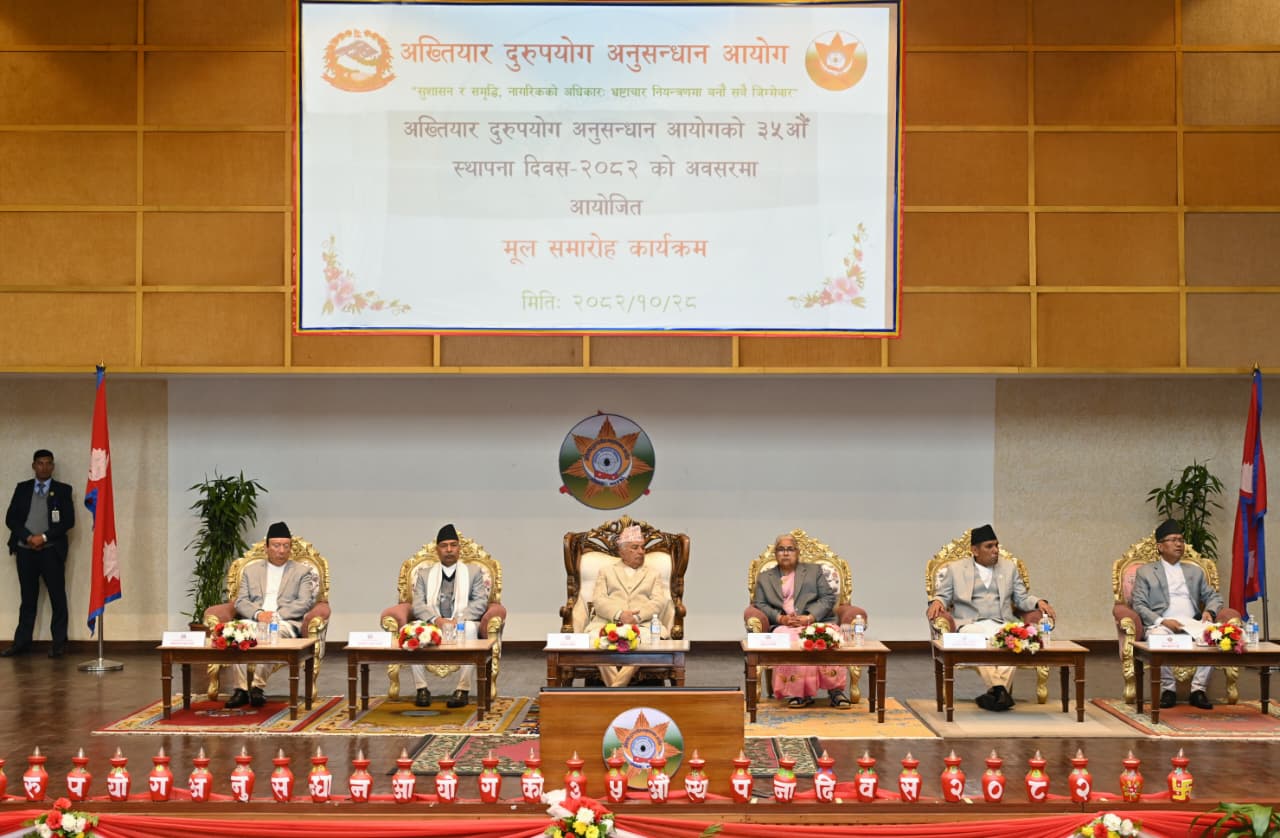
President Paudel said, “When public power is used for personal interests, not only is the trust that the state places in its citizens weakened, but the trust that citizens place in the state also deteriorates. This gives rise to frustration toward the system of governance, weakens confidence in the rule of law, and damages the fundamental values of democracy.”
He also stated that there is still a need for the Commission for the Investigation of Abuse of Authority (CIAA) to work in a way that assures citizens that no one is above legal accountability simply because they hold power or office.
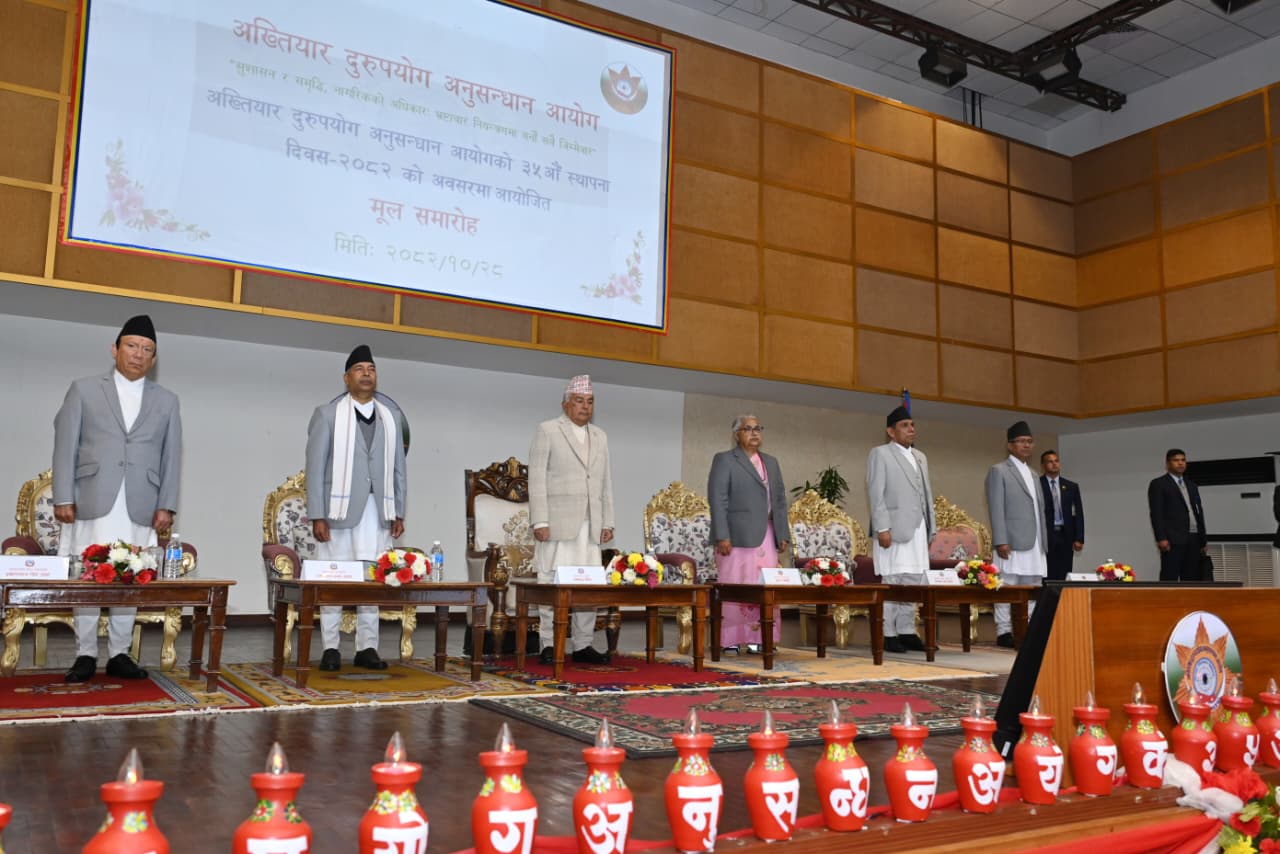
He expressed these views while addressing a program held in Kathmandu on Wednesday on the occasion of the 35th anniversary of the Commission for the Investigation of Abuse of Authority.
“Abuse of authority is not a minor error; it is a serious challenge to the legitimacy of the state and social justice,” he said. “However, this is not the time to be self-satisfied. I still see a need for the Commission to work in a manner that convinces citizens that no one is exempt from legal accountability merely because they hold power or position.”
The President mentioned that corruption could be rooted out if hunger of power, position and property wealth is controlled.
It is possible to combat and prevent corruption if good conduct, integrity, impartiality, transparency, and fearlessness are embraced as a way of life, the President said, adding that he wished to see greater effectiveness in policy, methods, technology, and attitudinal reforms, as well as the development of discipline and good conduct as a system.
Stating that accessible and efficient service delivery for citizens and the proper functioning of the Constitution through good governance are the desired goals of the Constitution, the Head of State said that voices have repeatedly been raised urging the authorities concerned to fulfill these aspirations.
He made it clear that the recent youth movement was a demonstration of such expressions and desires, and called on everyone not to ignore these voices.
The President asserted that the fight against corruption is not the responsibility of any single institution; rather, it is a shared responsibility of all state apparatuses, political leadership, the bureaucracy, and civil society. According to the President, the fight against corruption will achieve its goals only through the joint commitment and coordinated actions of all these bodies.
“The struggle against the abuse of authority is ultimately a struggle for justice, equality, and good governance. Through this struggle, we can restore citizens’ trust in the system, strengthen democracy, and hand over a clean, competent, and reliable state to future generations.”
Strong political will is the first condition for combating corruption, the Head of State said, adding that he believes positive changes in the work culture of political officials will also guide the administrative sector toward greater accountability and integrity.