- Wednesday, 27 May 2026

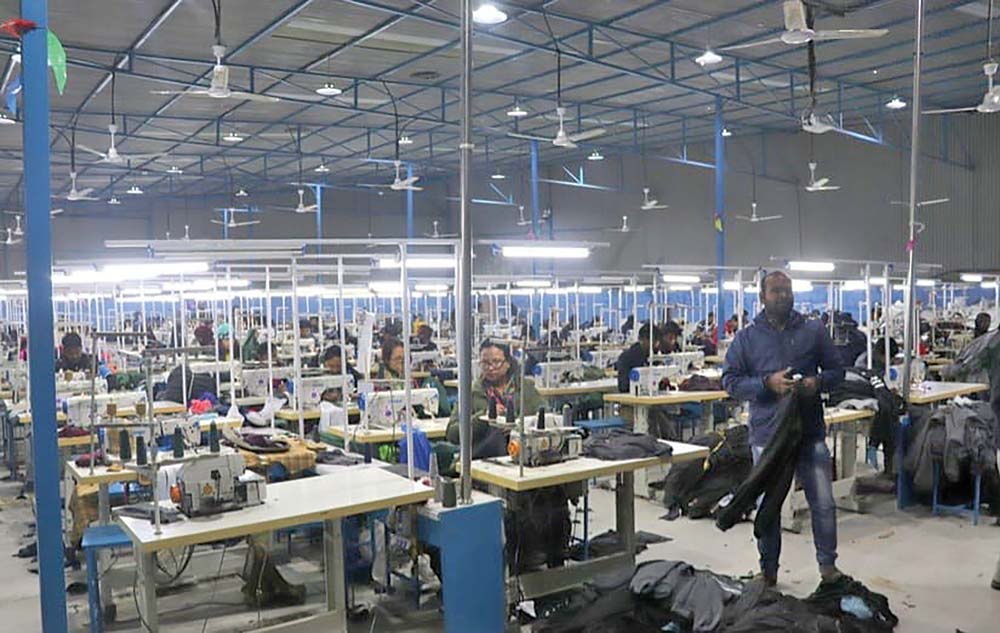
Land cost, labour shortage trouble garment industry
By A Staff Reporter
Kathmandu, Jan. 30: Nepali apparel industry is reeling from labour shortage, high labour turnover and poor export logistics, concluded a study conducted by the South Asia Watch on Trade, Economics and Environment (SAWTEE) and Garment Association Nepal (GAN).
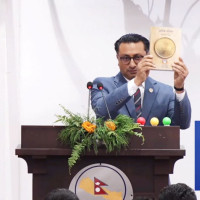
More than three-fourth of the firms in the sector said that they are troubled by high cost of land, labour shortage and poor logistics, Dr. Paras Kharel, Executive Director of SAWTEE who led the study on 'Nepal’s garment and textile supply chain: Insights into constraints and enablers' said at a programme organised in Kathmandu on Wednesday.
According to him, labour productivity, skill gap, time to import raw materials and access to finance have also emerged as the major concerns for entrepreneurs. They are also facing inadequate water supply for production. Nearly 70 per cent of the 25 enterprises participating in the study said so.
Dr. Kharel noted that unique designs and craftwork are the major selling point of Nepali apparels. He added that if critical constraints are addressed, firms expect exports to increase by an average of 87.4 per cent compared to a business-as-usual scenario.
He highlighted the need to increase investment in skills development, strengthen linkages between garment producers and the Council for Technical Education and Vocational Training (CTEVT), and make training programmes more effective.
"We need to explore alternative markets through more effective utilization of existing trade agreements as well as through the negotiation of new trade arrangements, economic partnership agreements, and strengthened economic diplomacy," said Dr. Kharel.
The study was made public at a dialogue on 'Apparel exports: Competitiveness, critical challenges and way forward'.
However, the study concluded that Nepal’s garment sector shows strong growth potential despite structural challenges, and called for urgent actions to address those critical constraints.
The dialogue presented the key findings of the diagnostic study which examines the opportunities and challenges facing Nepal’s garment sector in the context of the country’s impending graduation from the least developed country (LDC) category and the evolving international trade landscape.
Speaking at the programe, Rabi Shanker Sainju, Vice Chair of SAWTEE, pointed out that logistics remains a major obstacle to competitiveness and emphasised that the absence of an integrated industrial ecosystem is affecting the country’s supply chain. He also stressed that Nepal’s diplomatic missions should actively work to create new international markets.
Referring to the EU-India free trade agreement (FTA), Sainju noted that trade negotiations are a continuous process rather than a one-time event and observed that, while FTAs result from lengthy and structured negotiations, Nepal still lacks even a standard operating procedure for conducting them.
Pashupati Dev Pandey, President of the GAN, urged the government to prioritise the garment and apparel sector, emphasising the need for close coordination among labour, producers and policymakers.
He also cautioned that India’s FTA with the EU could pose additional challenges for Nepal, particularly in the context of the country’s impending graduation from LDC status.
Similarly, Prakash Sharma, National Project Coordinator of the LDC Graduation Project at ILO Nepal, noted that the garment and textile sector is expected to be among the most affected by LDC graduation, including in terms of job losses.
Rajendra Sangraula, President of the Nepal Freight Forwarders’ Association, underscored the importance of strengthening the national flag carrier to reduce airfreight costs, noting that its rates are significantly lower than those of international airlines.
He further pointed out that the absence of multimodal transport laws has discouraged shipping companies from operating in Nepal, effectively forcing freight forwarders to make payments in Indian currency and often through informal channels.
Likewise, Sharad Bikram Rana, Executive Director of the Trade and Export Promotion Centre (TEPC), emphasised the need for a strategic approach and called for the development of a comprehensive roadmap identifying short, medium, and long-term challenges. He suggested for clear definition of the roles of key stakeholders, including the government and the private sector, to address these challenges effectively.
Govinda Prasad Ghimire, Chairman of the Federation of Export Entrepreneurs Nepal, expressed concern over the capacity of SMEs and micro enterprises to withstand the impacts of LDC graduation.
Dr. Ram Prasad Ghimire, Secretary of the Ministry of Industry, Commerce and Supplies, emphasised that the textile and garment sector holds high potential, highlighting its resilience and long-term prospects despite multiple structural challenges. He noted that while the sector faced a downturn following the phase-out of the Multi-Fibre Arrangement (MFA), its continued performance demonstrates strong adaptability.
"Apparel is one of the areas of comparative advantage. We must set high-quality standards and strictly adhere to environmental and social measures set for garment industry," said Ghimire.



-original-thumb.jpg)